Tesla Tanked This Year: One Of Tech’s Biggest Bulls Says 70% Are On The Horizon
Tesla has shed more than 20% this year while the broader market climbs, yet one of Wall Street's loudest technology bulls just doubled down with a target that would require the stock to do something remarkable from here.

This post may contain links from our sponsors and affiliates, and Flywheel Publishing may receive compensation for actions taken through them.

Tesla (NASDAQ:TSLA | TSLA Price Prediction) currently trades at $356.58, while Wall Street’s average price target sits at $390.09, an implied gap of roughly 9%. The louder call comes from Wedbush’s Dan Ives, whose $600 bull-case target implies close to 70% upside from here.
Tesla builds electric vehicles, energy storage, and increasingly positions itself as an AI and robotics platform. Wall Street’s attention has migrated from quarterly deliveries to Full Self-Driving, the Robotaxi network, and the Optimus humanoid robot. The gap matters because the market is punishing today’s margins while a subset of analysts are underwriting a very different business three to five years out.
Cybercab Headlines and a Margin Air Pocket
The slide accelerated after a federal probe into the pedalless Cybercab and a fresh wave of AI-capex jitters, with Tesla shares dropping as Musk added to the chorus of AI concern. Shares are down 20.71% year to date, versus an S&P 500 that has climbed 11.07% over the same stretch.
The fundamentals gave bears ammunition. Q2 2026 revenue rose 25.5% to $28.24 billion, but non-GAAP EPS of $0.33 missed estimates by 38.51%, operating margin collapsed to 1.4%, operating expenses surged 47% year over year, and free cash flow flipped to negative $1.09 billion. Management now expects 2026 CapEx to exceed $25 billion and to keep growing for two or three more years.
Retail sentiment tracked the damage. Reddit sentiment scores fell as low as 22 on September 8–10 around Cybercab safety headlines before rebounding to a thinly-sampled 75 on September 14.
Why Ives and the Bulls Are Not Backing Down
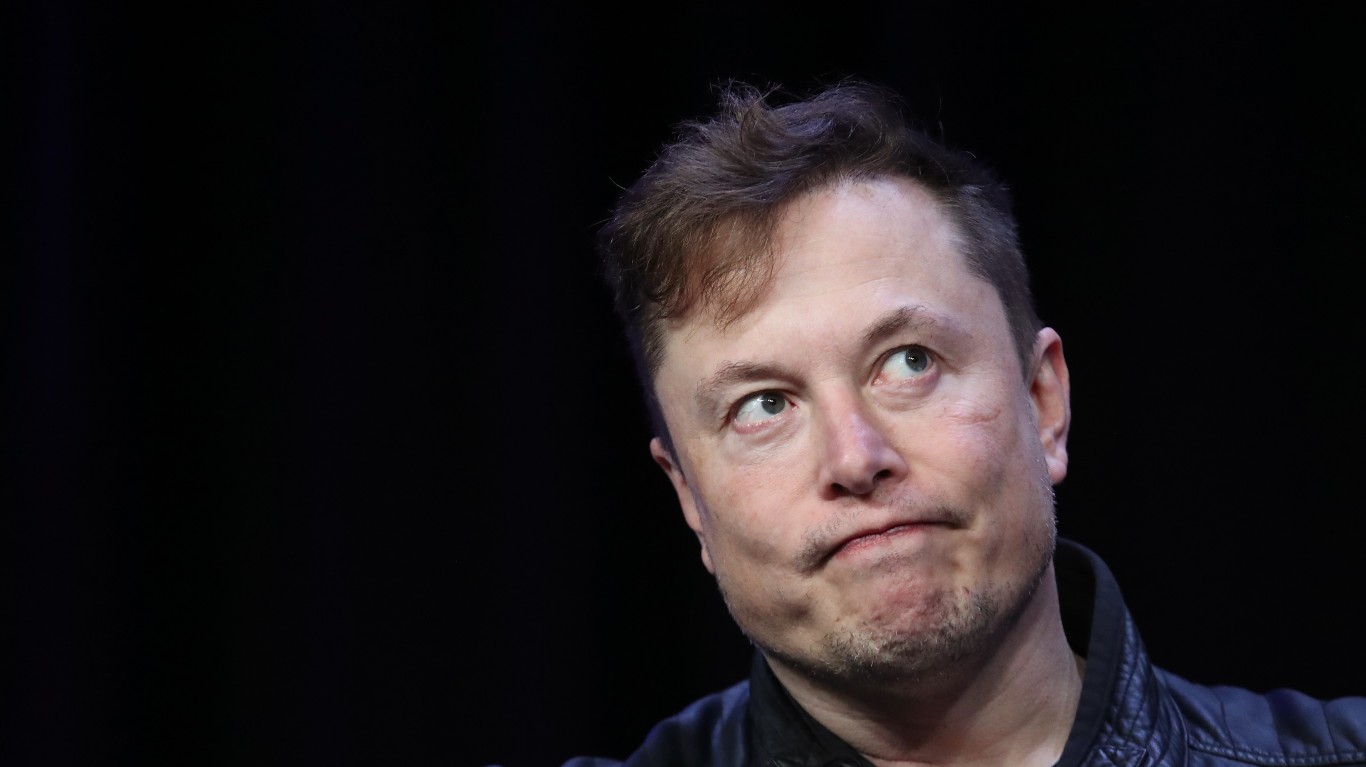
At the center of the bull case is Ives, who values Tesla primarily as an artificial intelligence and physical-robotics platform rather than as an EV manufacturer. His framework prices FSD closer to software economics (gross margins above 80%) than to automotive-tier margins, layers in licensing of the autonomy stack to rival OEMs, and estimates the combined autonomous and AI ecosystem alone is worth over $1 trillion in market cap. Optimus and a faster regulatory runway for unsupervised fleets round out the case.
The catalysts are visible in Tesla’s own filings. Robotaxi operations have expanded to seven U.S. markets with more than 380,000 miles of unsupervised driving and zero notable incidents. Paid FSD customers reached nearly 1.5 million globally, with an attach rate above 55% on new North American deliveries. Musk described aspirational Optimus targets of 1 million units a year for Optimus 3 and 10 million for Optimus 4.
The broader analyst pool is more cautious. The consensus target of $390.09 implies less than 10% upside, and estimate revisions have leaned negative: 18 downward FY2026 EPS revisions versus 7 upward in the trailing 30 days. Analyst targets are one input among many, and the Ives-versus-consensus spread is the widest debate on the Street.
Detroit Held Up, Rivian Sold Off With Tesla
The auto complex split. Detroit rallied while EV-only names fell.
General Motors (NYSE:GM) sits at $85.37, up 5.68% YTD, with an analyst target of $101.64 for roughly 19% upside. Ratings skew Buy: 7 Strong Buy, 15 Buy, 4 Hold, 1 Sell. GM raised full-year 2026 adjusted EPS guidance to $12.00 to $14.00 after a strong Q2 beat.
Rivian (NASDAQ:RIVN) trades at $15.54, down 21.16% YTD, with an analyst target of $19.23 for about 24% upside. Ratings: 5 Strong Buy, 7 Buy, 8 Hold, 3 Sell, 2 Strong Sell. The R2 launch and the Uber robotaxi partnership are the swing factors.
On the consensus number, Rivian carries the biggest implied upside in the group, GM is next, and Tesla is last. Extend the frame to the loudest bull, however, and Ives’ 70% call blows past both.
What Consensus and the Estimates Actually Show
Tesla is at $356.58, down 20.71% year to date and 13.04% over the past year, versus an S&P 500 up 11.07% YTD. That is more than 30 percentage points of relative underperformance in nine months. Consensus draws from 34 analysts on the EPS side and 45 on revenue, with a target of $390.09.
Alpha Vantage lists the ratings breakdown as follows:
- Strong Buy: 6
- Buy: 16
- Hold: 19
- Sell: 3
- Strong Sell: 2

Valuation stays extreme: trailing P/E of 326, forward P/E of 154, and EV/EBITDA of 118. FY2026 EPS estimates have drifted from $2.11 sixty days ago to $1.77 today.
Where I Land on Ives’ $600 Call
The bull case holds if you believe FSD graduates into a genuine software subscription franchise (1.5 million paid subs is a real starting base), Robotaxi scales beyond seven cities without a serious safety incident, and Optimus lines actually ship in volume. That combination is the only credible path to Ives’ $600.
But the bear case strengthens if the Q2 pattern hardens. A 1.4% operating margin, negative free cash flow, a $25 billion-plus CapEx bill still climbing, and downward EPS revisions running nearly three to one against upward ones is a lot to underwrite at 154x forward earnings.
Personally, I lean cautious. Consensus 9% upside does not compensate for the execution risk, and the Ives thesis, while intellectually clean, is a multi-year vision priced today. I would rather see Q3 margins stabilize before paying up for the AI optionality.
Contact [email protected] for any questions or corrections.
Alex Sirois is a financial writer with experience spanning both retail and institutional investing. He has written for InvestorPlace and held roles at BNY Mellon and Bernstein, giving him a perspective that bridges Main Street portfolios and Wall Street analysis.
Alex holds an MBA from George Washington University and has built his career across multiple industries, including e-commerce, education, and translation — a breadth of experience that informs how he breaks down complex financial topics for everyday investors. His writing is conversational, actionable, and grounded in long-term, buy-and-hold investing principles.
At 247 Wall St., Alex focuses on delivering analysis that is both accessible and useful, with a clear emphasis on helping readers make more informed decisions with their money.