Here’s What “Iran’s Secret Plan To Escalate The War” Means For Oil Stocks
The Strait of Hormuz has nearly shut down, Iran's hardliners reportedly treated the ceasefire as cover to rearm, and oil stocks are sitting on massive year-to-date gains. So why is crude barely moving, and what does that signal for investors…


The Wall Street Journal published a report today, Monday, August 17, 2026, titled “Iran’s Secret Plan to Escalate the War,” the same day the 60-day US-Iran memorandum of understanding signed in June expires with no follow-on deal in sight. For investors, the question is narrower: if the ceasefire framework is dead and the Strait of Hormuz has effectively stopped moving cargo, why aren’t oil equities rising on the news?
The WSJ report, based on Arab and Iranian sources, alleges that hardline elements in Iran’s leadership treated the June memorandum as preparation for future conflict and reportedly decided to violate it from the moment it was signed. According to the report, the hardliners gave the Islamic Revolutionary Guard Corps greater authority over Iran’s military, appointed veteran Iran-Iraq War commanders to senior posts, and accelerated missile and UAV production. US officials reportedly warned Gulf countries, particularly Kuwait, that Iran was preparing to strike in “enemy territory.”
The Strait Has Effectively Stopped
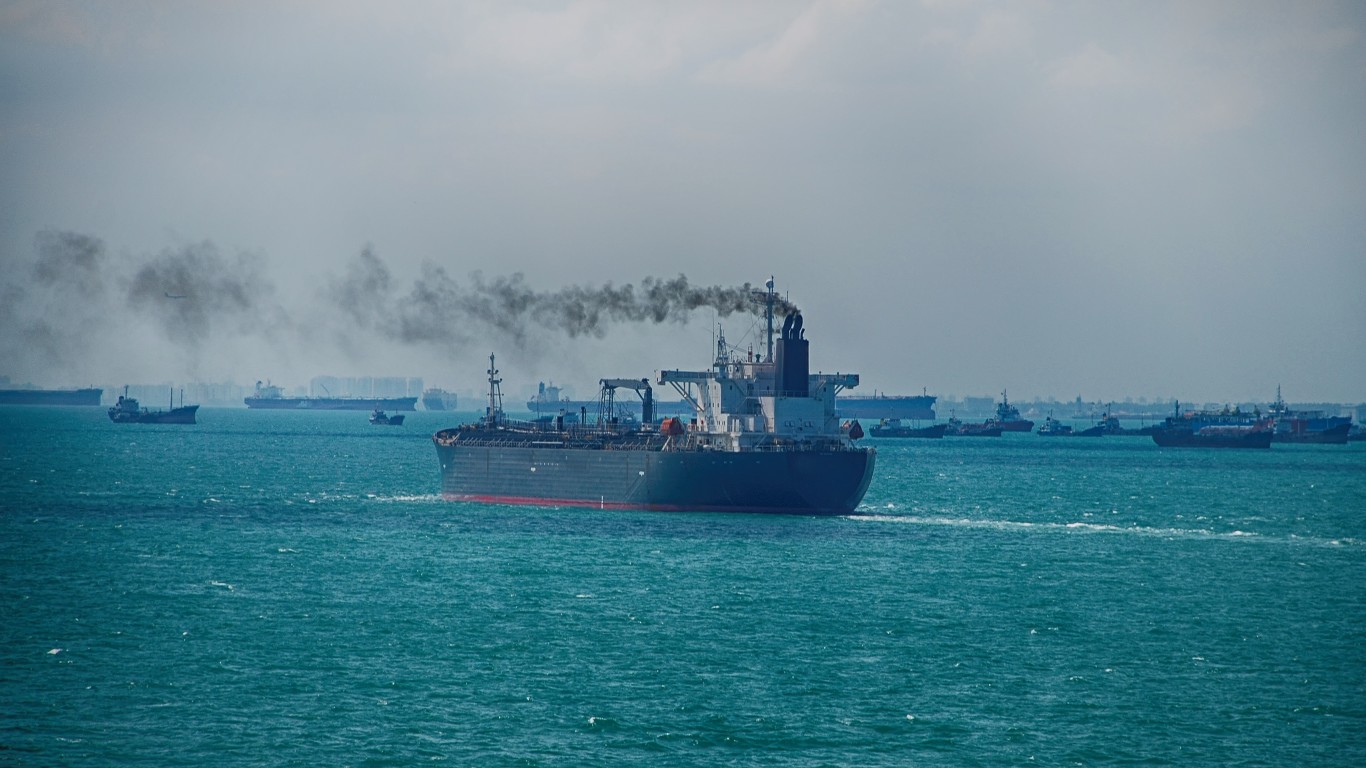
Kpler data cited by Reuters and CNBC shows the mechanism. Only five cargo ships passed through the Strait of Hormuz on Saturday, versus 31 the previous weekend, and no ships were registered to pass on Sunday. Shipping is down 90% since the war began February 28, 2026. The Strait normally averages about 130 vessel transits per day and carries about one fifth of the world’s oil. Yet Monday morning, per CNBC, Brent crude futures traded at $88.45 per barrel, down 0.15%, and WTI at $81.79, down 0.74%. Reuters reported the near-term potential for gains is seen as limited amid the stalemate. The muted crude reaction is itself the story.
The Majors and the War Premium
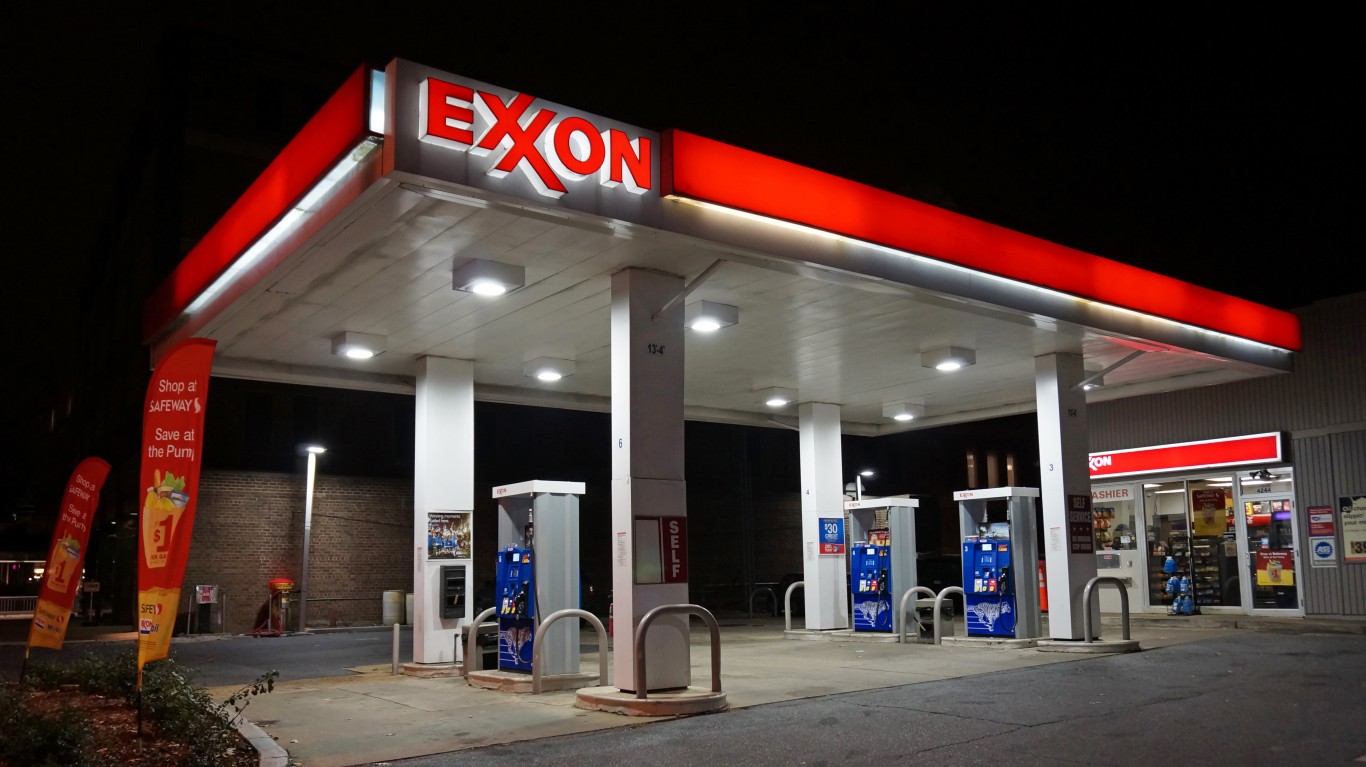
At Friday’s close, Exxon Mobil (NYSE:XOM | XOM Price Prediction) sat at $160.10, up 34.83% year to date and 53.82% over the past year. Chevron (NYSE:CVX) closed at $200.00, up 33.71% year to date, and Occidental Petroleum (NYSE:OXY) at $58.36, up 43.27% year to date. Exxon CEO Darren Woods told analysts the company absorbed “the temporary loss of approximately 10% of our upstream production” from the Middle East conflict.
The war premium moves violently in both directions. WTI peaked at $114.58 on April 7, 2026, fell to $69.60 by July 6, rebounded to $93.08 on July 23, dropped to $76.78 on August 5, and stood at $84.77 on August 11.
Exxon’s Valuation Tension
Wall Street’s consensus target of $168.55 sits above Friday’s close, but the ratings mix, 3 strong buy, 7 buy, 14 hold, 1 sell, tilts to holds. Our proprietary model rates XOM a HOLD with a base case of $138.68, citing roughly 13% overvaluation. Forward EPS of $7.07 implies a P/E around 25 on a $658.3 billion market cap.
The Tanker Trade
Frontline (NYSE:FRO) closed Friday at $41.21, up 102.93% year to date and 143.50% over the past year. DHT Holdings (NYSE:DHT) closed at $19.52, up 69.65% year to date. Both posted far larger year-to-date gains than the three majors. Tankers benefit directly from rerouting and higher freight rates.
A caveat on DHT: the latest quarterly dividend was $1.22, versus $0.24 in the same quarter of 2025, and the company pays 100% of ordinary net income. That payout structure means the yield falls when VLCC spot rates fall, not a fixed coupon.
Insurance and the Close
Per The National, citing Marsh broker Marcus Baker, war-risk premiums on tanker hull value rose from a pre-war baseline of about 0.25% of hull value to roughly 3% to 10% now. Insurers collect; operators absorb. HSBC’s Parash Jain told CNBC’s Squawk Box Europe Monday that investors should treat “chaos is the norm” as the base assumption. Watch Kpler’s Strait transit count over the next two weeks and whether Qatar and Pakistan, the current message-carriers, produce anything resembling resumed negotiation.
Contact [email protected] for any questions or corrections.
AJ spent 10 years writing about financial markets at The Motley Fool. His coverage centers on technology stocks and the broader macroeconomic trends, from interest rates to geopolitics, that shape where markets are headed next. AJ is drawn to the stories where big-picture economics and individual companies collide.