The Best Car CEO: Elon Musk Loses by 7x to Someone You’ve Probably Never Heard of
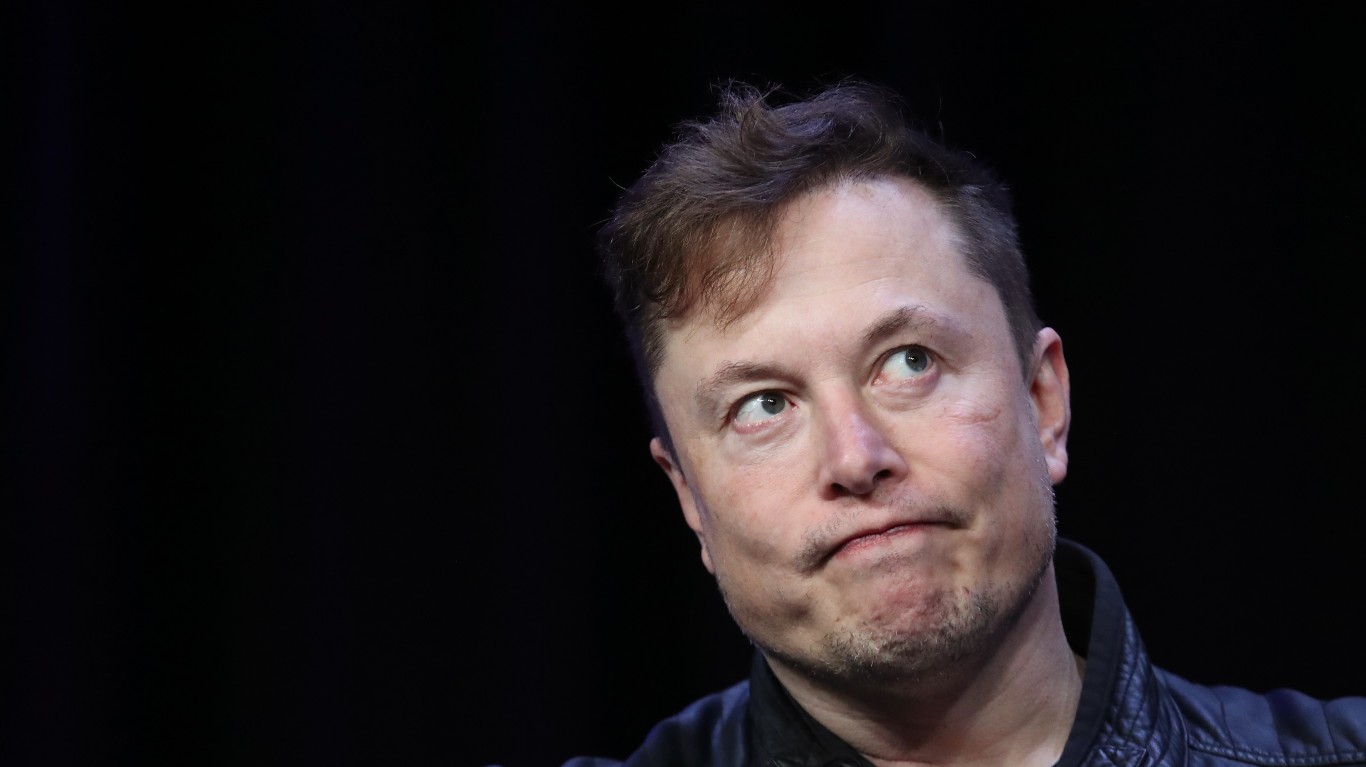
Elon Musk runs the world's most talked-about car company, yet a quiet physicist from Pisa is handing him a humiliating defeat on every metric that actually measures a car business.

This post may contain links from our sponsors and affiliates, and Flywheel Publishing may receive compensation for actions taken through them.
Elon Musk runs the most talked-about car company on earth. On the metrics that actually describe a car business, Benedetto Vigna runs a significantly better one, by a margin of at least 7-to-1.
Math
There are three core numbers that show how decisively Vigna’s Ferrari (NYSE:RACE | RACE Price Prediction) is outperforming Musk’s Tesla (NASDAQ:TSLA). Return on equity: Ferrari 45.4% against Tesla 4.67%. (9x outperformance. But who’s counting?) Return on assets: Ferrari 13.6% against Tesla 1.93%. (Yep, that’s a 7x outperformance.) Operating margin: Ferrari 31.1% against Tesla 1.41%. (That’s more than 20x outperformance.) Vigna wins each metric by a wide, visible margin.
| Metric (TTM, June 30, 2026) | Ferrari (Vigna) | Tesla (Musk) |
|---|---|---|
| Return on equity | 45.4% | 4.67% |
| Return on assets | 13.6% | 1.93% |
| Operating margin | 31.1% | 1.41% |
| P/E | 39 | 311 |
Return on equity measures how many cents of profit a company generates for every dollar of shareholder capital it holds. Ferrari’s number carries an asterisk: the company is running a roughly 3.5 billion euro repurchase program through 2030, and its price-to-book is 17.29, so equity is thin and buybacks flatter the ratio. But Ferrari is beating Tesla 9-to-1 and a 3.5 billion euro repurchase program doesn’t juice the numbers nearly enough to explain the deficit.
Plus…Return on assets is leverage-neutral, and Ferrari still delivers 13.6% against Tesla’s 1.93%. Operating margin is purely operational, and Ferrari sits at 31.1% against Tesla’s 1.41%. Neither of those metrics moves with a buyback.
How Ferrari won so decisively
Ferrari hired a semiconductor executive to run a car company. Vigna came from STMicroelectronics, where he ran the Analog, MEMS and Sensors Group, described by Ferrari as ST’s largest and most profitable operating business in 2020. He is a physicist, graduated cum laude from the University of Pisa, joined ST in 1995, and spent 26 years in semiconductors. He took the Ferrari CEO seat on September 1, 2021. Ferrari Chairman John Elkann has said Vigna was hired for his deep understanding of the technologies driving change in the industry, and it’s hard to argue with that choice given everything Vigna has achieved.
Of course, none of this is intended to diminish Musk and Tesla’s very real achievements. At its core, Tesla is solving a structurally harder problem: mass-market vehicle manufacturing at global scale, with $103.6 billion in TTM revenue against Ferrari’s $7.35 billion. Musk built the dominant US EV manufacturer and a large energy storage business alongside it; Tesla deployed 13.5 gigawatt hours of energy storage in Q2.
Ferrari’s business is easier by design. It shipped 3,366 cars in the June 2026 quarter at supercar prices. Controlled-volume exclusivity is not a template Tesla can copy. Ferrari also carries real risks: higher US import tariffs raising cost of sales, a model changeover suppressing volumes, an effective tax rate that rose to 23.0%, and an unproven electric transition led by the full-electric Luce which premiered earlier this year.
Vigna’s business is simply easier to execute on. And if your goal is shareholder returns, why wouldn’t you pick that, every time?
Where things can change
Musk’s investment case is a future-earnings case; the market is pricing Tesla at a P/E of 311 on that basis, and free cash flow ran negative for the quarter as capex more than doubled sequentially. Vigna’s growth and profitability plans are narrower: Per Ferrari, an EBIT margin floor of 30% as the multi-year target.
If Musk achieves incredible growth from here – turning back the Chinese EV competition, maintaining pricing power, and boosting Tesla sales to boot (perhaps through robotics and continued improvement in FSD – these are none of them easy, and together they’re even harder, but perhaps not impossible), Tesla shareholders would likely be richly rewarded. Compare that against the steady compounding performance of Ferrari, which is +12% while Tesla is down 23% YTD. Leaving all the metrics aside, I have a suspicion that price returns are how every CEO will ultimately be measured.
Time will tell. But in the meantime – by the important operational metrics I’ve highlighted that he can directly control, Vigna is beating Elon Musk by at least 7x.
Contact [email protected] for any questions or corrections.
I've spent more than 15 years inside enterprise software, working alongside the finance, sales operations, and HR leaders who run the revenue engines at some of the largest tech companies in the country.
My day job is helping enterprise executives make smarter decisions about retention, compensation, and growth. These are the same operational levers that show up in every earnings report investors actually read. That perspective shapes my writing for 24/7 Wall St.
The headline numbers are easy. The interesting stuff is underneath: how companies make money, what executives are worried about, and what any of it means for the person checking their 401(k) on a Sunday afternoon. I write about personal finance and business as someone who has spent her career inside the rooms where these decisions get made.