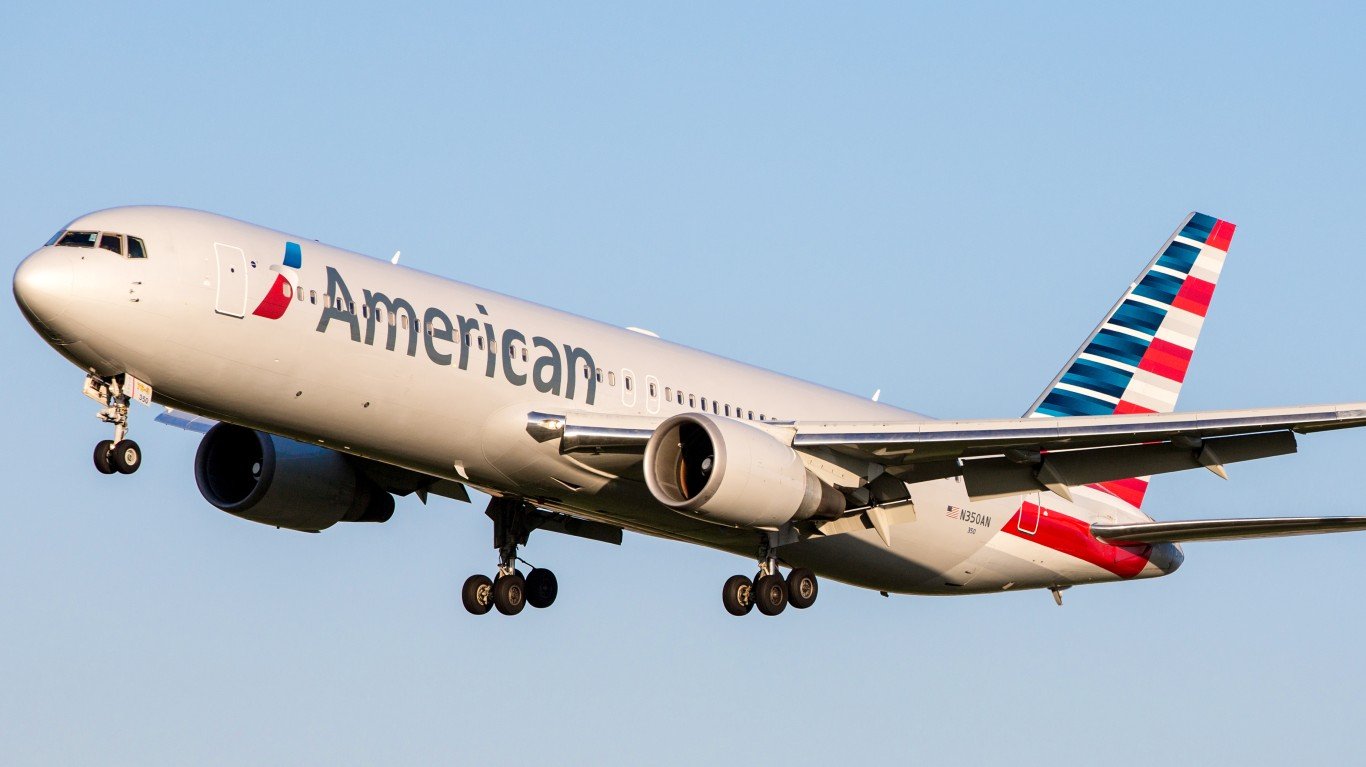
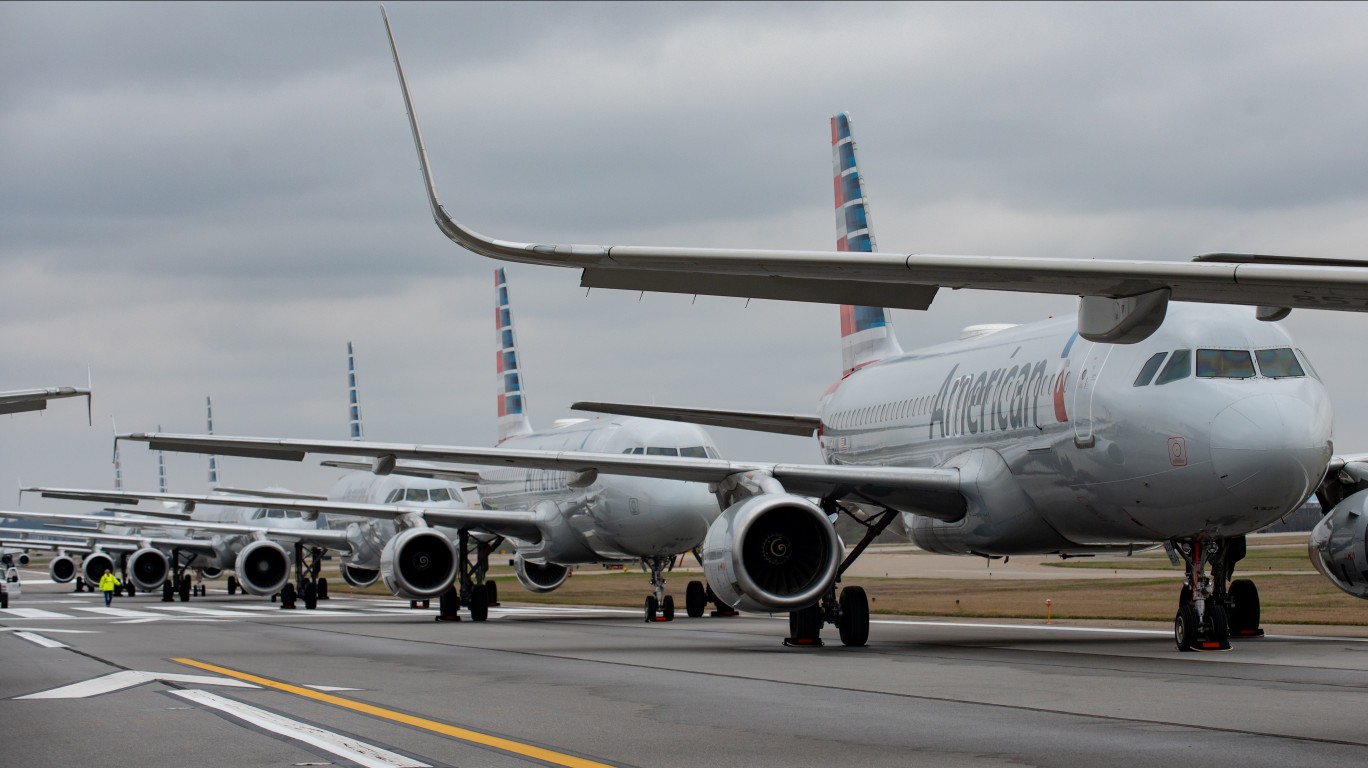
American Airlines Faces a Reckoning: Merger Off the Table, Turnaround Uncertain
Delta and United soared while American Airlines sank, and now a rejected merger offer has left the carrier fighting a turnaround battle with no clear timeline and a balance sheet still deep in the red.


Five years after the pandemic bottom, American Airlines (NASDAQ:AAL | AAL Price Prediction) is down 30.5% over five years and down 61.8% over ten. Delta Air Lines (NYSE:DAL) is up 103.8% over five years and 130.2% over ten. United Airlines (NASDAQ:UAL) is up 144.3% and 145.0% over the same windows. American’s market cap is roughly $9.2 billion, compared with $54.6 billion at Delta and $37.3 billion at United.
Same Fuel Bill, Very Different Outcomes
All three carriers absorbed the same fuel shock. American’s Q2 2026 fuel expense jumped 83.3% year over year to $4.881 billion, compressing operating margin to 2.7% from 7.9%. Delta, absorbing what CEO Ed Bastian called “the highest quarterly fuel expense in our history,” still delivered a 9% operating margin and $1.56 EPS. United posted $10.79 in trailing EPS. American’s full-year 2026 adjusted EPS guidance was reset to a loss of $0.65 to a profit of $0.65.
What Would Have to Change
Chief Financial Officer Devon May named the scorecard on the Q2 call: “What we will measure over time is: Are we closing this revenue gap and closing the unit revenue gap?” CEO Robert Isom told CNBC the “long-range plan is certainly making up the margin gap,” but offered no timeline.
- Premium mix. American runs roughly 80% domestic, 20% international, and a long-haul lie-flat seat can fetch close to $10,000 versus $2,000 or less in the back. Delta had a two-decade head start selling first class instead of giving away about 90% of domestic first-class seats as upgrades.
- Fleet. A new wide-body order is on the table this year. Isom told CNBC, “I think that Airbus could play a big role.” Deliveries would arrive early to mid next decade.
- Operations. American ranked 6th of 11 U.S. airlines on first-half punctuality at 76.6%, behind Delta and United. DFW rebanking already cut misconnects nearly 25% year over year.
- Loyalty. Citi co-brand spend rose 8% year over year, while Delta’s Amex partnership is targeted at $9 billion this year.
- Balance sheet. Debt was cut from roughly $54 billion at the pandemic peak to about $35 billion, with shareholder equity still at negative $3.972 billion.
Merger Talk and Antitrust Reality
Allied Pilots Association spokesman Dennis Tajer put it plainly: “They’re a giant, with a limp.” United’s Scott Kirby floated a merger in 2026; American rejected talks in April 2026. Isom said he and his advisors saw “no chance of this happening” on antitrust grounds. Cranky Flier’s Brett Snyder framed United’s calculus: “Why buy the cow if you’re getting the milk for free?”
Analyst Split and Verdict
Analysts are split on American but far more positive on its rivals. Its $18.59 consensus target signals less upside potential than analysts see for United.


Debt is falling and analyst estimates put adjusted EPS at about $0.05 this year and roughly $2.39 in 2027. Debt levels remain manageable, though the cushion is thinner than at Delta or United.
Four things to watch:
- The wide-body order decision
- The unit revenue gap the CFO named
- The on-time rate
- Debt continuing to decline
Contact [email protected] for any questions or corrections.
Trey has been an editor and author at 24/7 Wall St. for more than a decade, where he has published thousands of articles analyzing corporate earnings, dividend stocks, short interest, insider buying, private equity, and market trends. His comprehensive coverage spans the full spectrum of financial markets, from blue-chip stalwarts to emerging growth companies.
Beyond 24/7 Wall St., Trey has created and edited financial content for Benzinga and AOL's BloggingStocks, contributing additional hundreds of articles to the investment community.
Trey's editorial expertise extends across multiple publishing environments. He served as production editor at Dearborn Financial Publishing and development editor at Kaplan, where he helped shape financial education materials. Earlier in his career, he worked as a writer-producer at SVE. His freelance editing portfolio includes work for prestigious clients such as Sage Publications, Rand McNally, the Institute for Supply Management, the American Library Association, Eggplant Literary Productions, and Spiegel.
Outside of financial journalism, Trey writes fiction and has been an active member of the writing community for years, moderating workshop sessions at regional conventions.