Apple Is Suddenly an AI Infrastructure Stock as OpenAI Buys Macs by the Tens of Thousands
OpenAI has been quietly buying Apple hardware by the tens of thousands, and it has nothing to do with iPhones or consumer gadgets. The reason reveals a surprising gap in how AI labs are building the infrastructure behind their most…

AI infrastructure is expanding beyond the giant GPU clusters that have defined the boom. The next phase of artificial intelligence is increasingly about agents that can use computers, write and test code, navigate software, manage files, and complete tasks with limited human intervention. That changes the hardware equation. Training these agents can require thousands of independent machines rather than one enormous interconnected supercomputer. Suddenly, consumer desktops can look a lot more like infrastructure.
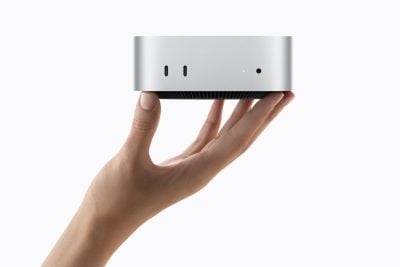
That shift has created an unexpected beneficiary: Apple (NASDAQ:AAPL | AAPL Price Prediction). According to The Information, OpenAI has reportedly purchased tens of thousands of Mac minis and Mac Studios in recent months for reinforcement learning and training computer-use agents. Apple did not build its Macs to become AI infrastructure, but its silicon may have found an unexpectedly good role.
AI Agents Need A Different Kind Of Compute
Training a frontier model such as GPT requires enormous clusters of interconnected GPUs, where Nvidia (NASDAQ:NVDA) remains the dominant supplier. Agentic AI, however, has a different requirement. An agent can be placed inside a virtual or physical desktop, told to complete a task, scored on the result, and then trained to do better. Running thousands of those sessions simultaneously favors breadth over raw horsepower.
That’s where Apple silicon’s unified-memory architecture becomes useful. A Mac can keep the CPU, GPU, and memory working from the same pool rather than relying on a discrete graphics card and separate system memory.
OpenAI isn’t alone. Anthropic has reportedly rented Apple silicon capacity through Amazon’s (NASDAQ:AMZN) AWS for similar workloads. The message for investors is bigger than a few bulk orders: AI labs are looking for compute wherever the economics make sense.
Apple’s Accidental AI Sales Boost
The timing is particularly interesting because Apple’s Mac business is already growing rapidly.
Apple generated roughly $10.4 billion in Mac revenue in its fiscal third quarter, an increase of about 29% from the prior year. Apple doesn’t disclose how much of that came from Mac minis and Studios, so it would be premature to attribute the growth directly to AI labs. But shortages of higher-memory configurations and reports of large institutional purchases suggest the AI market is adding another source of demand.
Apple hasn’t commented on the report, but there is apparently enough demand from AI labs that it adjusted its traditional fall Mac release cycle to accommodate it. Just last week, Apple refreshed the Mac mini with its M6 chip and the Mac Studio with M5 Max and M5 Ultra processors. The company is also positioning the machines more explicitly for AI, including local large language model workloads and clustered systems connected through Thunderbolt 5.
That’s an important strategic development. Apple doesn’t need to build a $100 billion AI data center to participate in AI infrastructure spending. It can just sell the silicon.
The Opportunity Comes With A Catch
Granted, this isn’t a new Nvidia. Apple’s opportunity exists because agentic workloads can be divided across thousands of relatively independent machines. That makes Macs useful complements to GPU clusters, not substitutes for them. Nvidia’s economics remain far more attractive for massive model pretraining and other workloads that demand concentrated GPU horsepower.
There is also a practical problem. Apple apparently wasn’t prepared for enterprise customers to buy Macs by the thousands and treat them as compute nodes. Reports indicate the company lacks a dedicated enterprise AI organization and has historically focused its Mac business on consumers and creative professionals.
Memory shortages make that problem harder. AI data centers are already consuming enormous quantities of high-bandwidth memory and other components, putting pressure on the broader supply chain.
Ironically, the shortage that helped create this opportunity could limit it.
Key Takeaway
In short, investors shouldn’t mistake OpenAI’s reported Mac purchases for a threat to Nvidia’s data-center dominance. The more interesting takeaway is that Apple has stumbled into a new AI market without having to reinvent the Mac.
Mac revenue is already growing at roughly 29% annually, and tens of thousands of additional machines potentially going to AI labs would add another demand stream. More importantly, Apple silicon is proving useful for a workload that didn’t exist at meaningful scale when Apple designed today’s Mac strategy.
That doesn’t make Apple an AI infrastructure pure play; rather, it makes the Mac more valuable.
For shareholders, that’s the real opportunity: Apple may not have planned to build an AI empire, but its silicon is increasingly becoming part of the infrastructure needed to run one.
Contact [email protected] for any questions or corrections.
After two decades of patrolling the dark corners of suburbia as a police officer, Rich Duprey hung up his badge and gun to begin writing full time about stocks and investing. For the past 20 years, he’s been cruising the markets looking for companies to lock up as long-term holdings in a portfolio while writing extensively on the broad sectors of consumer goods, technology, and industrials. Because his experience isn’t from the typical financial analyst track, Rich is able to break down complex topics into understandable and useful action points for the average investor. His writings have appeared on The Motley Fool, InvestorPlace, Yahoo! Finance, Money Morning, and, of course, 24/7 Wall St. He has been featured in both U.S. and international publications, including MarketWatch, Financial Times, Forbes, Fast Company, and USA Today.