’65 Months of Above Target Inflation’: Powell’s Legacy May Echo Arthur Burns
History judges Fed chairs on inflation above almost everything else, and a count of months that Kevin Warsh keeps reciting in speeches has started drawing an uncomfortable comparison between Jerome Powell and the Fed chair nobody wants to be remembered…

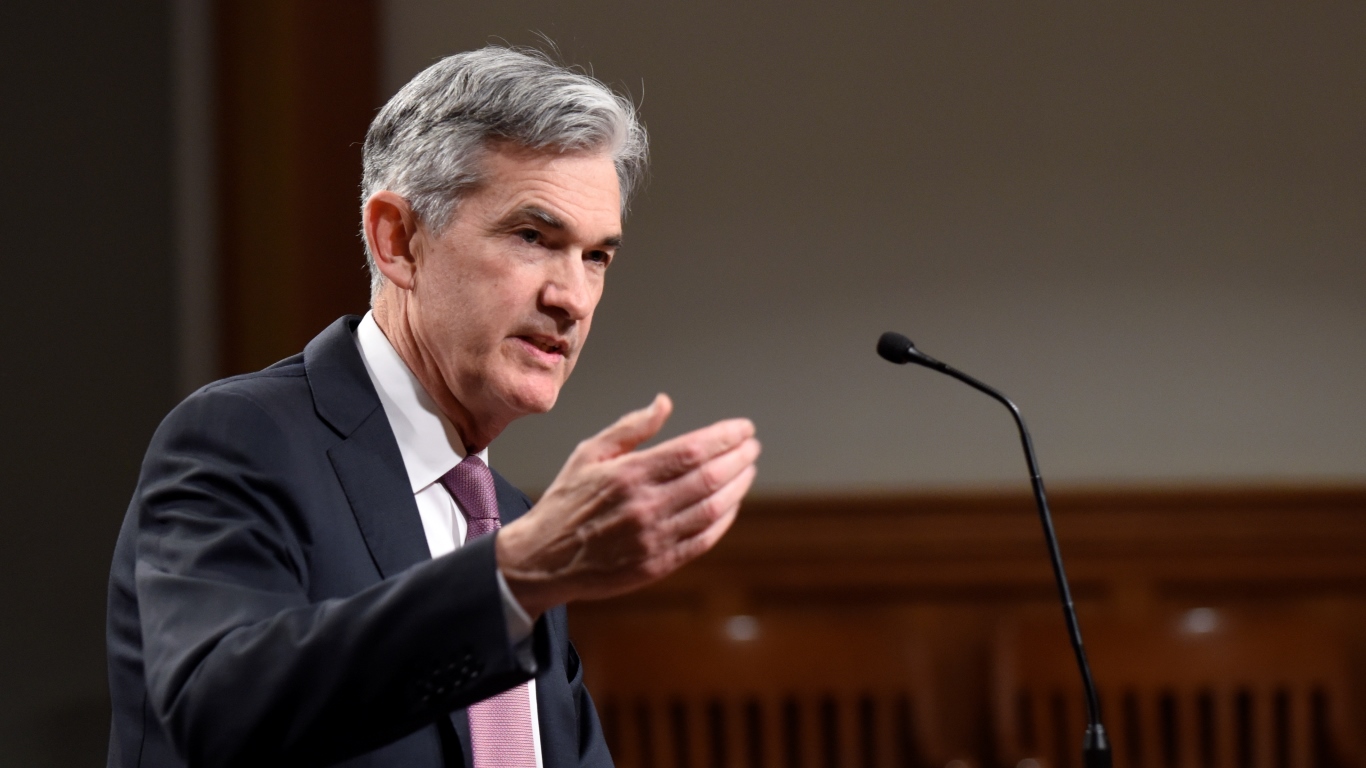
Although Jerome Powell steered Wall Street through a pandemic, a banking scare, and the fastest hiking cycle in four decades, his tenure now carries a scoreboard that history tends to punish. On the Odd Lots podcast, Bloomberg’s Joe Wiesenthal seized on a number that new Fed Chair Kevin Warsh has been reciting in speeches: 64, 65 months of above target inflation. That is an alarming streak measured in years, not quarters.
The 1970s era earned the distinction of the Great Inflation, and Arthur Burns, Fed chair from 1970 to 1978, presided over much of it. What makes the comparison gloomy for Powell’s reputation is the historical asymmetry Wiesenthal invoked in the same breath: high unemployment under your watch does not get penalized to the same degree as high inflation. The Fed chairs who are remembered badly are almost never remembered for jobs.
The benchmark that matters here is core PCE, the Fed’s preferred inflation gauge. It sat at 130.66 in July 2026, up from 126.954 in September 2025. Year over year, core PCE printed at 3.34% in July, essentially unchanged from 3.34% in June and 3.46% in May. Headline PCE was hotter still, at 3.7% year over year in July, after topping out at 4.11% in May. That is more than a rounding error above the Fed’s 2% annual target. It is a regime.
Why the 64-Month Number Matters
Warsh’s count amounts to a claim that the Powell-era Fed allowed inflation momentum to compound, and that the compounding has not stopped. Peterson Institute president Adam Posen, speaking on the same podcast, said Powell was “late to the game in hiking in 2022” and “profoundly mistaken to cut multiple times last year.” Posen expects inflation to hold in a 3.5% to 4.5% range with upside risk until rate hikes bite. If he is right, the streak Powell inherited a share of the blame for keeps ticking upward under his successor.
What has kept the pressure on is services and energy. Services PCE has stayed above 3.4 in every month from January 2024 through July 2026. Energy year over year ran at 24.11% in May and was still 15.31% in July. Goods inflation, which had faded to 1.8 in February, vaulted to 4.76 by May. This profile is broad and durable, well beyond anything a stray shock would produce.
What Arthur Burns Got Wrong
The historical mirror is Arthur Burns, whose reputation Wiesenthal cited as the cautionary end of the distribution. Burns’s mistake was that he blamed inflation on food, energy, unions, and White House arm-twisting rather than on money, exacerbating the situation by cutting rates too soon and too often between the shocks. Inflation broke out, receded, and worsened. By the time Paul Volcker inherited the chair, price expectations had come unmoored, and it took a double-dip recession to reset them. Burns presided over years of elevated joblessness too, yet the tape historians replay is the inflation loop.
Ben Bernanke sits at the opposite pole. He presided over a financial crisis and several years of high unemployment. History remembers him fondly. The asymmetry Wiesenthal flags shows up in the historical record itself.
An Uncomfortable Parallel
To be clear, Powell is not Burns. He hiked to a 4.5% upper bound and kept it restrictive long enough to pull unemployment off its 2024 lows without a break. The jobless rate was 4.1 in July 2026, off the 4.5 peak of November 2025. But the Fed under Powell then trimmed the upper bound to 3.75% by December 10, 2025, and it has sat there since.
Meanwhile the bond market is voting. The 10-year Treasury yield hit 4.79% on September 1, 2026, the highest reading in the past year, with a percentile rank of 99.6. Consumer sentiment sits at 55.2, below the 60 recessionary threshold. Both are sending the same warning signal about credibility. Warsh’s framing that policy has been “insufficiently restricted” and that inflation is “going in the wrong direction” effectively locates the 64-month tally at his predecessor’s door. Whether it stays there depends on what happens next.
Long term, Wall Street still heads higher over the decades, and Fed chairs get rehabilitated as new data comes in. But the question Wiesenthal put on the table, whether Powell ends up filed next to Burns or next to Bernanke, is decided by inflation, not employment. On today’s readings, the answer is not yet written, and the streak is still running.
What to Watch Next
Keep an eye on the three-month annualized core PCE run rate, the direction of services inflation, and whether Warsh converts hawkish language into an actual hike. Each additional month above 2% lengthens the tally that will define the Powell chapter of Fed history.
Contact [email protected] for any questions or corrections.
Gerelyn Terzo is the author of dividend investing handbook "Dividend Investing Strategies: How to Have Your Cake & Eat It Too." A veteran financial journalist, she covers agri-finance for outlets like Global AgInvesting and the broader stock market and personal finance for 24/7 Wall Street. She began at CNBC and later helped launch Fox Business in New York. Gerelyn currently resides in Woodland Park, Colorado and dabbles in nature photography as a hobby.