Kevin Warsh Inherited the Most Divided Fed in Half a Century. Here Is the Number That Proves It.
Kevin Warsh walked into the Federal Reserve chairmanship and immediately faced a level of internal opposition not seen since Nixon was in the White House. What that number reveals about the next rate move could upend the income trades millions…

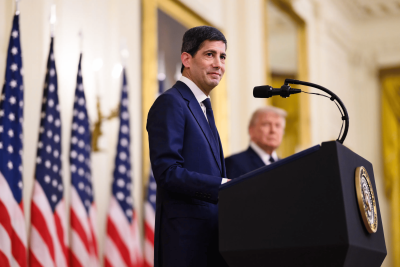
At the July 2026 meeting of the Federal Open Market Committee, three officials voted against holding interest rates steady, according to Axios. According to U.S. News & World Report, those are the most early dissents against a new Fed chair since 1970, according to U.S. News & World Report. Kevin Warsh inherited a committee where three governors or regional bank presidents signed their names to a public no vote in his first months. That has not happened at this scale in more than half a century.
What an FOMC Dissent Actually Is
The FOMC issues a policy statement after each meeting. Twelve members vote. The overwhelming norm is unanimity, or a single dissent from a regional bank president. Two dissents is notable. Three dissents pointing the same direction signals the chair lacks consensus on policy substance.
Warsh embraced the split. He described an openly contested committee as a good family fight and welcomed the dissenting votes rather than papering over them. That breaks from the Powell era, when the chair spent enormous effort corralling members toward a single message. The Warsh Fed tells the public that reasonable people inside the building disagree about what to do next.
Macro Backdrop Making the Fight Real
The disagreement has real stakes. The federal funds target upper bound sits at 3.75%, down from 4.5% a year ago. The 10-year Treasury yield is 4.78% and the 30-year is 5.24%. The Fed’s preferred inflation gauge, core Personal Consumption Expenditures, printed 130.66 in July, up 0.2% from the prior month, with every monthly reading in the past year higher than the one before. A committee watching a stubbornly rising inflation index while short rates come down has every reason to argue.
Annaly’s David Finkelstein told analysts that “after pricing roughly 225 basis point cuts earlier this year, current market pricing suggests the Fed will hike at least once in 2026″. That is the whipsaw the dissents reflect.
What It Means for Savers and Income Investors
For anyone holding cash, a divided Fed is a mixed message. The FDIC national average 12-month CD yield is 1.71%, barely off its 1.52% low in March. If dissenters win and rates stay higher for longer, CD renewals hold their yield. If the doves win, that window closes fast.
For rate-sensitive equities, the split has produced unusual trading. Realty Income (NYSE:O) is up 12.35% year to date and pays an annualized $3.252 per share on a monthly schedule (we rounded up seven monthly payers built for exactly this kind of environment in a free report). CEO Sumit Roy told analysts the “inverse correlation that exists between how net lease generally trade versus the ten year largely holds true. But what has happened over the last two months is that inverse correlation hasn’t held true.” Mortgage REIT Annaly Capital Management (NYSE:NLY) has gained 19.26% over the past year and raised its dividend to $0.75 from $0.70. Both trades assume the Fed has a plan.
The signal to watch is the September dot plot. If the dispersion of individual member forecasts widens further, Warsh’s family fight becomes the market’s problem, and the tidy narratives priced into O and NLY get tested in a hurry.
Contact [email protected] for any questions or corrections.
Joel South covers large-cap stocks, dividend investing, and major market trends, with a focus on earnings analysis, valuation, and turning complex data into actionable insights for investors.
He brings more than 15 years of experience as an investor and financial journalist, including 12 years at The Motley Fool, where he served as an investment analyst, Bureau Chief, and later led the Fool.com investing news desk. He has also co-hosted an investing podcast and appeared across TV and radio discussing market trends.