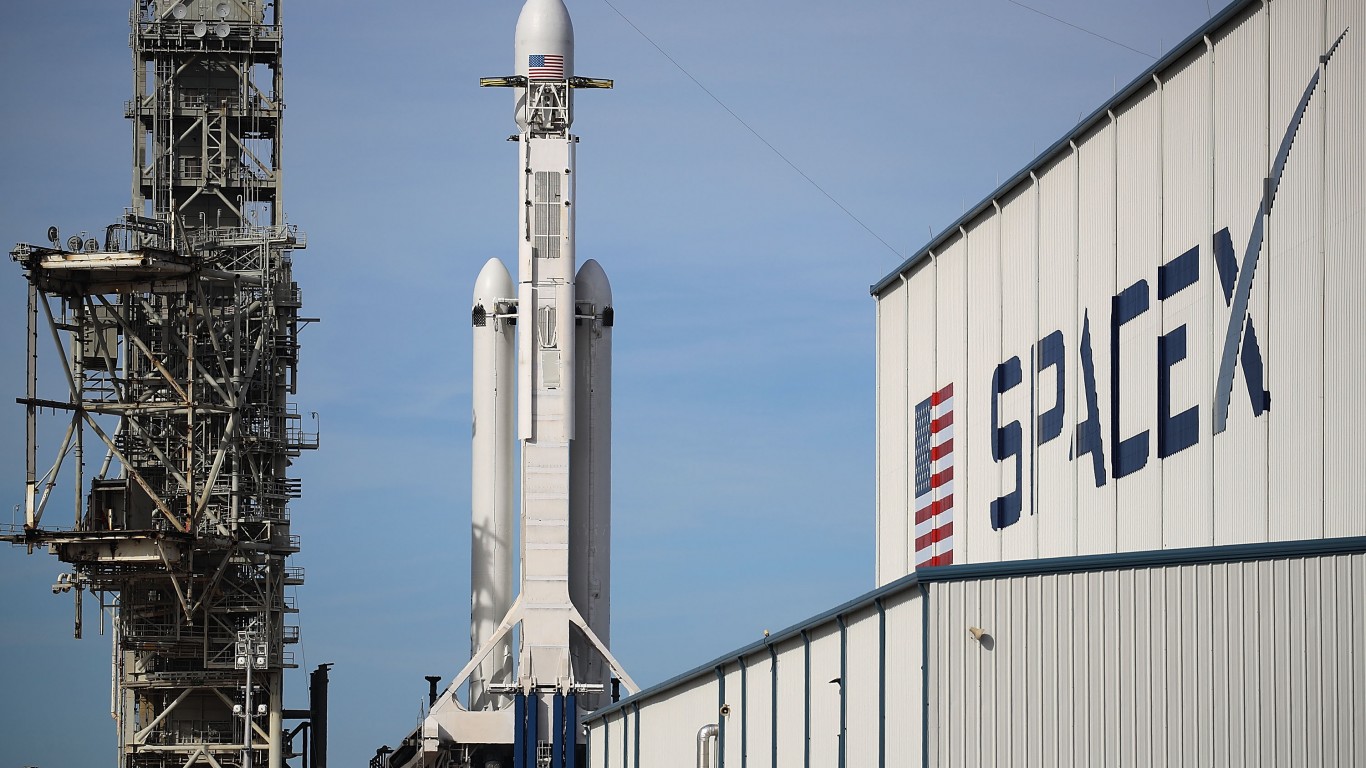
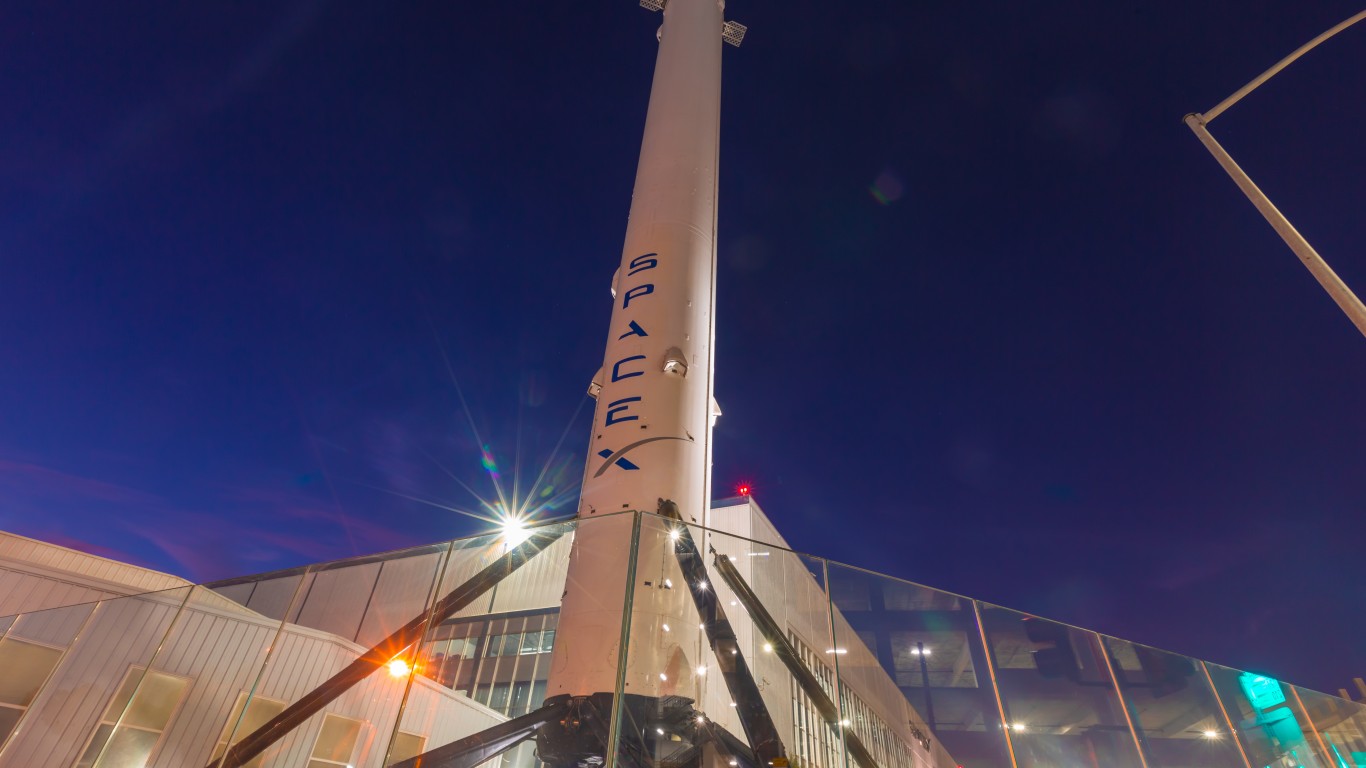
Britain Just Admitted It Uses SpaceX’s Secret Military Network. The Contracts Already Top $6 Billion.
Britain just went on the record as the first foreign government to confirm it uses SpaceX's classified military satellite network, and that admission quietly unlocks a question every defense ministry has been watching: who signs the next contract?

Britain’s Ministry of Defence just became the first government outside the United States to publicly confirm it uses Starshield, the military variant of Starlink built by SpaceX (NASDAQ:SPCX | SPCX Price Prediction). Reuters reported the disclosure on September 10, noting UK spending of nearly $40 million on the company’s satellite services.
That admission matters because Starshield’s customer roster, payloads and missions remain officially undisclosed, even though the program itself is not secret. For SpaceX investors, the news reframes a question the market has circled since the IPO: can Starshield become a second lucrative network business alongside Starlink? The company has already booked over $6 billion in multi-year U.S. government Starshield contracts from Space Force for LEO-based communications and sensing, and management sounded openly bullish on government demand on the August 4 earnings call.
What Britain’s Admission Reveals
The UK deployment is small in dollar terms but operational. The capped Starshield service tier in Britain includes five terabytes of monthly data, with per-terminal hardware starting at £4,000. Those price points sit well above consumer Starlink economics.
A five-terabyte allowance is a working military tier for a forward unit or a headquarters node, with unlimited plans above it for streaming sensor feeds or persistent video. The premium reflects encrypted routing, priority access and sovereign controls that consumer broadband never touches.
Britain’s participation matters more for validating the export story than for moving SpaceX’s revenue line. Allied defense ministries watch each other, and the UK going on the record gives cover to the next buyer.
Starshield’s existence is public and officially acknowledged. What stays classified is the roster of customers, payloads, and missions the constellation actually supports, and that distinction matters when you read the headlines.
Where the $6 Billion Actually Comes From
The disclosed Starshield awards are overwhelmingly American, with two United States Space Force satellite programs behind most of them.
Gwynne Shotwell told analysts on the second-quarter call:
“On the government side, we won more than $6 billion in U.S. contracts in Q2, supporting major Space Force programs that offer our nation mission-critical communications and sensing capabilities, and we see even more room for growth in this sector in this coming year.”
Enterprise & Government revenue reached $1.806 billion in the quarter, up 108% YoY, driven by airline partnerships and Starshield. Management called that line “a durable source of revenue, contributing to strong segment margins overall.”
The federal appetite behind these awards is real. The FY 2027 Space Force request includes $9.8 billion in Satellite Communication and $10.8 billion in Space-Based Sensing and Targeting, the exact phenomenologies Starshield is built to serve.
Constraints on the Second Network Story
Starshield is small next to Starlink today. Starlink ended the quarter with 12.0 million subscribers and Connectivity revenue of $4.29 billion, +66% YoY, dwarfing the government line.
Three constraints deserve serious weight. Political dependence on Elon Musk as a single decision-maker is one, and allied capitals have said as much publicly, which is why European sovereign-constellation programs exist.
Government customer concentration is the second. Budgets shift, and the FY 2027 request has to survive Congress before it becomes contracted revenue.
Execution is the third. SpaceX spent $18.37 billion in capex in the quarter, with $15.83 billion directed to AI compute infrastructure, while posting a $541 million net loss. Government revenue has to scale into that capital base rather than merely grow alongside it.
Is SPCX Stock a Buy?
At $148.18 as of September 10, SPCX trades above both its 50-day moving average of $135.65 and its 200-day moving average of $141.97, with a forward PE of 204x and a price-to-sales ratio of 84x.
The Street is broadly constructive: 6 Strong Buy, 22 Buy, 5 Hold, 2 Sell, with a target of $214.57.

Starshield’s export path is credible, and the Space Force baseline gives the segment a real floor that pure-play defense primes cannot match on timeline or price. Starship losses and AI capex intensity remain unaddressed by that segment.
I’d call it a Hold. The government network story is real and growing, but the valuation already discounts much of it, and the pending $60 billion Cursor acquisition plus the AI capex profile add execution risk that is hard to justify at this price.

Contact [email protected] for any questions or corrections.
Omor Ibne Ehsan is a writer at 24/7 Wall St. He is a self-taught investor with a focus on growth, cyclical, and dividend equities that have strong fundamentals, value, and long-term potential. He also has an interest in high-risk, high-reward investments such as penny stocks.