Nike Is Now Down 40% This Year. Is NKE Stock Dead Money or Due for a Bounce?
Nike shares have shed nearly half their value this year, yet the chart hides a detail that reframes whether this is a company in crisis or a category caught in a broader storm. The answer changes everything about what comes…


Shares of Nike (NYSE:NKE | NKE Price Prediction) are up 0.96% in Friday afternoon and trading at $36.97, a small bid that barely dents a brutal year. Nike stock is down 40% year to date (YTD), and today’s uptick doesn’t answer the bigger question hanging over the name.
That question, dead money or due for a bounce, becomes more interesting once the peers are placed on the same chart. Taken by itself, a 40% drawdown in a Dow Jones component reads as a verdict on management. Placed inside the athletic category, Nike’s chart looks quite different.
Nike is cheap versus its own history at these levels, and the group it sits inside has kept selling anyway. Both are true at once, which is why the bounce and dead-money cases end up leaning on the same evidence.

Athletic Peers Tell a Nearly Identical Story
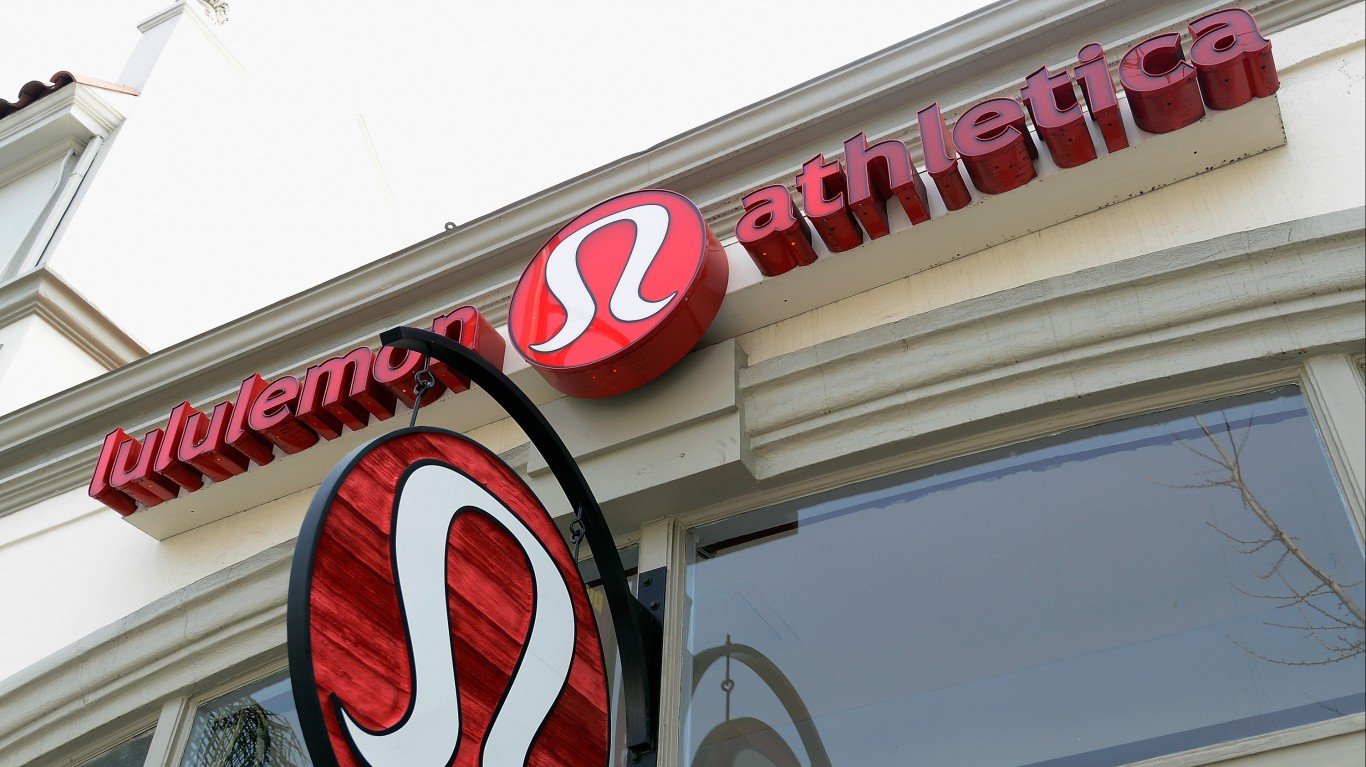
Checking in on Nike’s peers, On Holding (NYSE:ONON) stock is down 41% year to date to $27.52, an almost identical drawdown to Nike stock despite On’s much faster growth profile and premium brand positioning. Meanwhile, Lululemon Athletica (NASDAQ:LULU) stock is down 53% year to date to $98.61, an even deeper cut than Nike shares have absorbed.
Three athletic apparel and footwear names, three similar-sized holes in the chart. If the market were penalizing Nike alone for execution, On Holding stock wouldn’t be sitting on nearly the same year-to-date loss and Lululemon stock wouldn’t be down considerably more. The selling reads as broad and category-wide, and that reframes what Nike shareholders are actually looking at.
Nike stock’s drop within that group looks like a middle case. On Holding stock has fallen a hair more, Lululemon stock has fallen much more, and Nike sits between the two despite carrying the biggest brand and the most defensive balance sheet of the three. That positioning is what makes the bounce and dead money framings both defensible for Nike.
Damage Sits in the Category
The broader consumer complex sharpens the picture around Nike. The Consumer Discretionary Select Sector SPDR ETF (NYSEARCA:XLY) is down 5% in 2026 so far, a rounding error next to what athletic footwear and apparel have absorbed. For a bigger-picture context, the SPDR S&P 500 ETF Trust (NYSEARCA:SPY) is up 12% year to date over the same stretch.
The consumer discretionary group is barely down and the broad U.S. market is comfortably higher, yet the athletic apparel and footwear names are in freefall. That’s a category being repriced, and it puts Nike’s drawdown into a different frame than a purely company-specific verdict would sit in.
Bounce Case Meets Dead Money Case
The bounce case for Nike rests on how far the category has already fallen. Nike is a Dow component trading near the low end of its recent range, the athletic footwear peer group has absorbed similar or worse punishment, and category-wide de-ratings tend to end once the last incremental seller finishes selling. If athletic apparel is closer to that floor than the year-to-date charts suggest, Nike is the largest, most liquid way for investors to express the view.
A dead-money case for Nike rests on the same evidence. On Holding’s growth story didn’t shield its stock, and Lululemon’s premium positioning didn’t shield its stock, so nothing in the peer group tells Nike shareholders that management alone can fix this problem. A continued category de-rate would take Nike shares with it regardless of what happens inside the Beaverton campus, and that leaves Nike range-bound even at these prices.
There is also a franchise discount worth flagging inside Nike’s chart. Nike carries a Dow-caliber brand, a global distribution footprint and category leadership at scale, and the shares trade as if none of that matters. That gap between franchise quality and price is where the bounce case draws its energy, even if the group hasn’t cooperated yet.

What to Watch Next
Nike’s next scheduled catalyst is the company’s investor day on November 16 and 17, which management has flagged as the venue for laying out the next phase of its growth strategy. Between now and then, the read on Nike stock is really a read on the group. Investors can watch for signs that On Holding and Lululemon shares are carving out lows of their own, because a stabilizing category is what a Nike bounce case ultimately depends on.

Nike shareholders sizing their exposure into that window may want to keep their allocation modest until the peer group shows that a floor is in place. Today’s 0.96% tick higher in Nike stock is a start, but a single session doesn’t reverse a 40% year. The November investor day, and the next set of peer earnings along the way, may settle whether this is a floor being built or another leg lower waiting to happen.
Contact [email protected] for any questions or corrections.
David Moadel is financial writer specializing in stocks, ETFs, options, precious metals, and Bitcoin. David has written well over 1,000 articles for leading online publications, helping investors understand markets, income strategies, and risk.His work has appeared in The Motley Fool, InvestorPlace, U.S. News & World Report, TipRanks, ValueWalk, Benzinga, Market Realist, TalkMarkets, Finmasters, 24/7 Wall St., and others.With a master’s degree in education, David has taught at the elementary, high school, and college levels. That teaching background shapes his writing style: clear, educational, and practical. David has also built a loyal social-media audience by providing trustworthy financial content on YouTube, X/Twitter, and StockTwits.