NVIDIA’s Export Ban Backfires as Chinese Competitors Raise Prices 50%
China's homegrown AI chips were supposed to make NVIDIA irrelevant in the world's second-largest market, but a supply crisis is quietly dismantling that argument and reshaping the competitive math in ways Beijing did not anticipate.

China’s push to swap out NVIDIA (NASDAQ:NVDA | NVDA Price Prediction) silicon for homegrown accelerators just got noticeably more expensive. Huawei’s forthcoming Ascend part and Cambricon’s next-generation processor have been repriced upward by as much as 50% against quotes given only two months earlier, with the culprit being a shortage of high-bandwidth memory that Chinese fabricators can only obtain through grey-market resellers who mark it up several times over the prices paid in the United States and Korea.
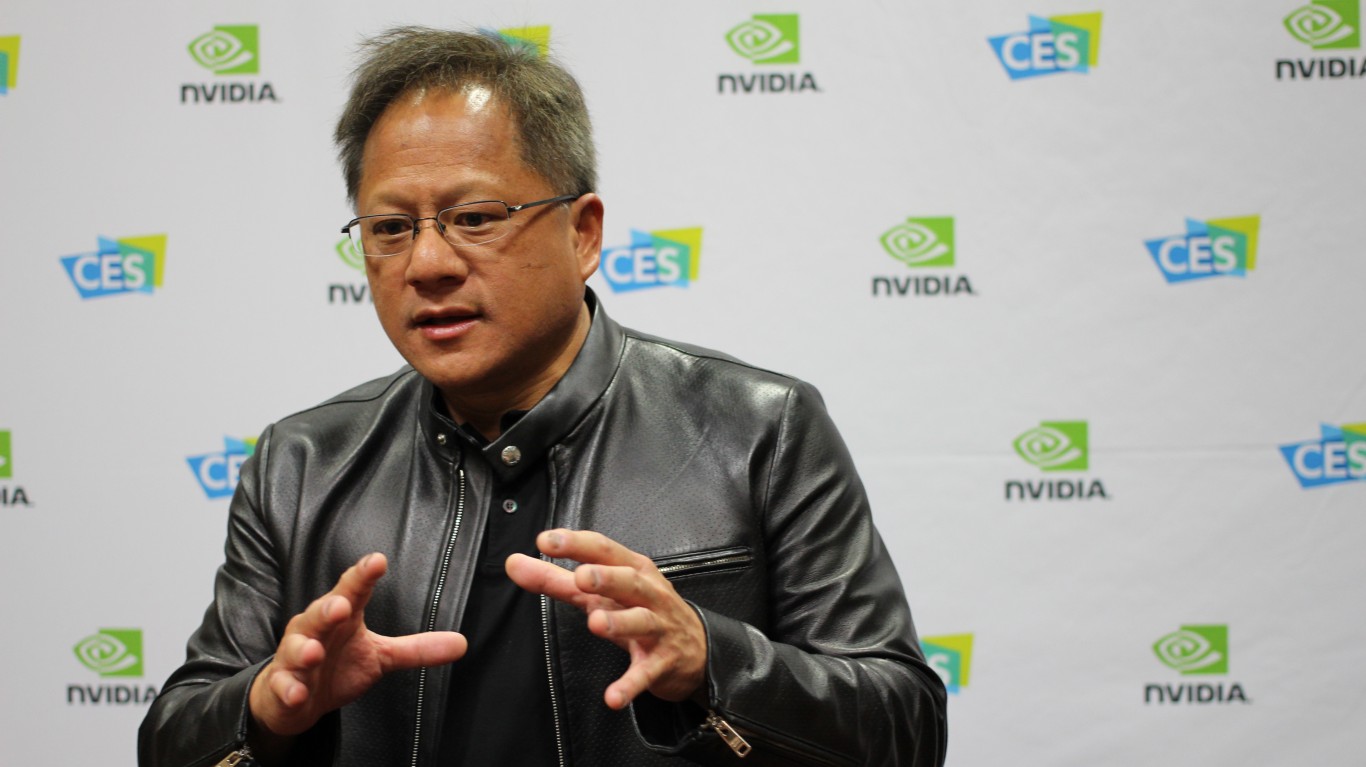
NVIDIA is locked out of Chinese data center compute revenue by export rules, so none of that flows to its top line. But the pricing signal matters. When the cheap alternative stops being cheap, the argument that Jensen Huang’s platform is optional gets weaker.
Memory Bottleneck Squeezing the Substitutes
High-bandwidth memory, or HBM, is the stacked DRAM that sits next to a GPU and feeds it training data at extreme speed. Without enough of it, a modern AI accelerator stalls on its own bandwidth ceiling and delivers a fraction of its rated throughput.
Export controls have cut Chinese buyers off from direct HBM supply, so Huawei and Cambricon reach the parts through third-country intermediaries who charge multiples of the sticker price. That cost lands inside the finished accelerator, which is why two vendors raised prices at roughly the same time.
NVIDIA is fighting the same shortage from the other side. On the August 26 call, the company described “extreme pricing conditions in memory” and said the increases had “exceeded our prior expectations and are headed even higher into next year.”
The difference is scale and access. NVIDIA has direct relationships with all three HBM suppliers and a multiyear partnership with SK hynix (NASDAQ:SKHY); Chinese buyers pay a grey-market premium on top of an already tight market.
What NVIDIA’s Numbers Say About Pricing Power
Second-quarter revenue reached $96.22 billion, up 105.8% year over year, with Data Center at $89.02 billion. Guidance for the October quarter is $108 billion, plus or minus 2%, explicitly excluding any China data center compute revenue.

China Hopper shipments came in at less than 1% of Data Center revenue last quarter. The company is growing at this pace without the second-largest AI market on Earth contributing meaningfully.
Huang framed the moment plainly: “AI has reached its inflection point. It’s doing useful work. Its tokens are productive and profitable. Now, compute is revenue.”
Management said fiscal 2028 revenue should grow roughly 70% year over year, and even that is a “supply-constrained outlook” against demand growing near 100%.
Does This Hand NVIDIA the China Market Back?
Some observers argue that expensive domestic silicon builds political pressure inside China for a negotiated reopening of NVIDIA sales. The more likely outcome is the opposite.
Beijing has been consistent: pay more now, build the domestic stack later. Rising Ascend and Cambricon prices are far more likely to accelerate Chinese investment in domestic HBM production than to trigger a policy reversal in Washington.
Over a three-year horizon, that is the real risk to the moat. Chinese memory fabs will eventually close some of the gap, and when they do, the substitution math changes.
For now, the takeaway is narrower and cleaner. The cheap alternative to NVIDIA is disappearing, which validates the pricing power NVIDIA already commands everywhere it can sell. All of that compute still has to be powered, cooled, and networked by somebody, which is why we pulled seven suppliers behind the AI buildout into a free report you can grab here.
Is NVDA Stock a Buy?

At $218.36, NVIDIA trades at a P/E near 44x with 57 buy ratings against 2 holds and 1 sell. Against custom-silicon competition from hyperscalers and a Chinese substitute pool that just got more expensive, the platform advantage is intact, and the demand backlog is real. NVDA remains a buy, since the forward PE ratio is still cheap and the company keeps growing at hypergrowth levels.

Contact [email protected] for any questions or corrections.
Omor Ibne Ehsan is a writer at 24/7 Wall St. He is a self-taught investor with a focus on growth, cyclical, and dividend equities that have strong fundamentals, value, and long-term potential. He also has an interest in high-risk, high-reward investments such as penny stocks.