‘They Don’t Call It an Extra Value Meal for Nothing’: McDonald’s Pitches $8 Big Macs as Diesel Hits $6.23
McDonald's is slashing Big Mac meal prices to lure back customers at the same moment diesel costs shatter records, leaving franchisees caught between a value-hungry public and a supply chain bleeding money at every mile.

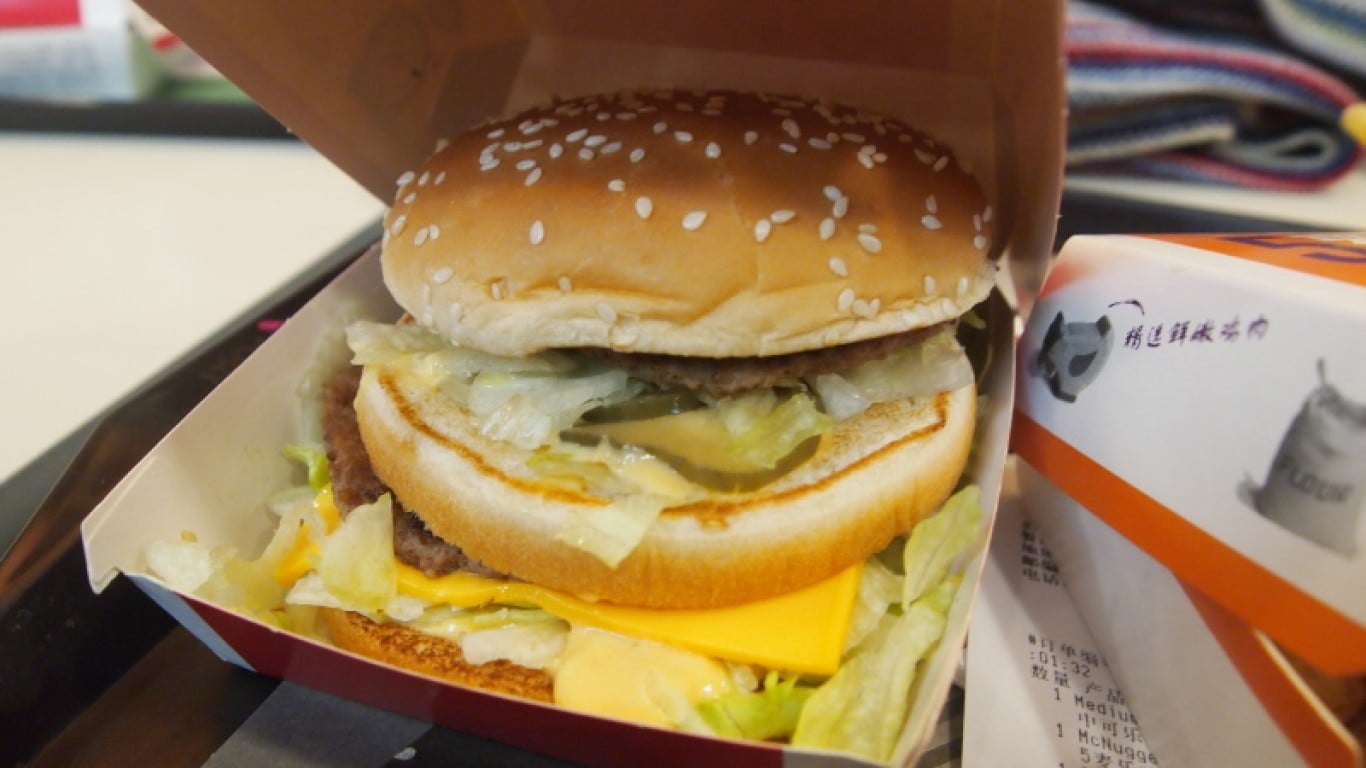
The Marketplace Morning Report episode titled “More pain at the pump to come” closed on September 14 with an ad from McDonald’s (NYSE:MCD | MCD Price Prediction) pitching a Big Mac meal for $8. The read: “a burger, fries and a drink” for $8 “for a limited time,” with the fine print noting “Price and participation may vary” and “Promotion pricing may be lower than meal pricing.” They don’t call it an Extra Value Meal for nothing.
The same broadcast reported diesel crossing $6 a gallon for the first time ever at $6.23, gasoline up 16 cents in a week to $4.31 per AAA, and Marketplace’s own framing that “pretty much everything we buy at the store comes on a diesel truck.” Every patty, bun and fry moving to 46,028 restaurants rides the same trucks.
Discounting Into a Fuel Shock
McDonald’s is cutting menu prices to buy back traffic at the exact moment its franchisees’ delivery costs are hitting an all-time high. The company’s Q2 FY2026 earnings, filed August 4, 2026, showed the strain: global comparable sales grew just 1.3%, decelerating from 3.8% in the year-ago quarter, with negative U.S. comparable guest counts and continued inflationary cost pressures on company-owned restaurant margins. U.S. revenue nudged up 1% to $2.726 billion.

CEO Chris Kempczinski was blunt on the call: “We don’t have a strategy problem. We simply didn’t execute at the level we needed to in the second quarter.” He conceded the pullback on digital offers and the removal of the buy-one-add-one program alongside the under-$3 menu launch was “a bad trade,” adding that “as service times went up, satisfaction scores went down.” Roughly a third of the system did not follow the recommended value pricing.
Who Eats the Margin
Reallocating marketing dollars “toward proven value offerings such as extra value meals” is the stated plan. But WTI crude printed $91.18 per barrel on September 4, 2026, and EIA’s national regular gas average sits at $4.157 per gallon, in the 88.5th percentile of the trailing year. SG&A expenses jumped 17% in Q2, and interest expense is guided up 4% to 6% for full-year 2026.
Investors are noticing. MCD trades near $257.27, down 14.43% over the past year and 14.17% year to date. Ian Borden’s promise, “We will not get beaten on value,” is being tested against a $6.23 diesel print. Kempczinski said the U.S. should be “fully back to where we need to be in 2027.” Between now and then, someone absorbs the freight.

Contact [email protected] for any questions or corrections.
AJ spent 10 years writing about financial markets at The Motley Fool. His coverage centers on technology stocks and the broader macroeconomic trends, from interest rates to geopolitics, that shape where markets are headed next. AJ is drawn to the stories where big-picture economics and individual companies collide.