Coca-Cola Stock Is Up 9,234% Since Warren Buffett’s Famous 1988 Bet. Here’s How Much He Would Have Made If He Bet On Pepsi Instead.
Warren Buffett held Coca-Cola through a drawdown that wiped out more than half its value and lasted nearly five years, all while Pepsi looked like the smarter pick. Whether his loyalty to Coke actually paid off depends on a number…

This post may contain links from our sponsors and affiliates, and Flywheel Publishing may receive compensation for actions taken through them.
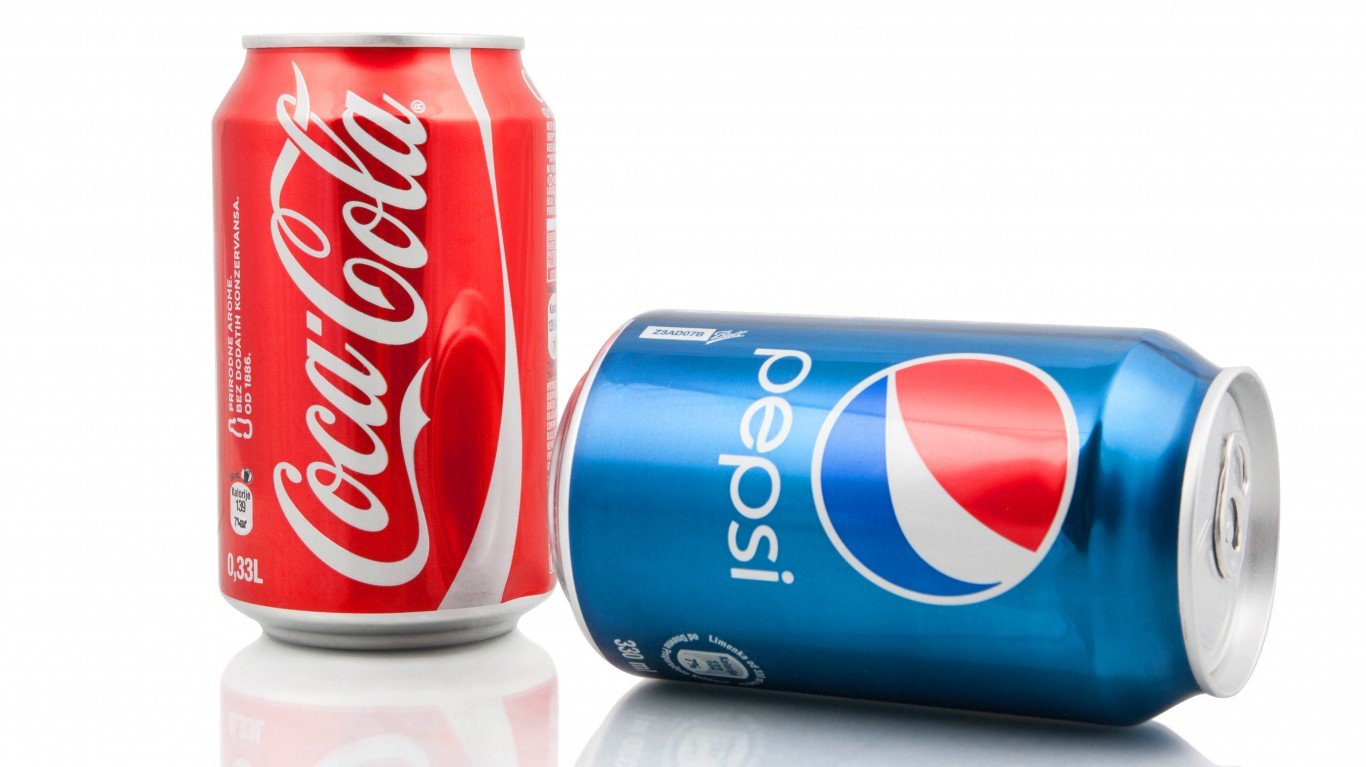
Warren Buffett is stepping down as chairman of Berkshire Hathaway, telling CNBC, “Father Time always wins.” The Australian Financial Review reported he is doing so at 96. His son Howard Buffett was named to replace him, and Greg Abel has been CEO for about a year. His 1988 bet on Coca-Cola (NYSE:KO | KO Price Prediction) is worth revisiting against the road not taken: PepsiCo (NASDAQ:PEP).
Coke Won, but Not the Way You Think
From December 31, 1987 through September 17, 2026, with dividends reinvested, Total Real Returns shows Coca-Cola delivered 9,234.32%, an annualized 12.43% per year. A $10,000 stake became $933,432.27. Pepsi returned 6,242.11%, an annualized 11.31%, turning the same stake into $634,211.15. Coke won.


Those are hypothetical figures for a reinvested $10,000. They are not Buffett’s actual return. His cost basis and the timing of his purchases are not known to us, so his personal profit is a different number we are not claiming to know.
Winning Position Spent Years Looking Wrong
The trophy came the hard way. Coca-Cola’s worst drawdown in this window was 55.29%, running from a July 14, 1998 peak to a bottom on March 10, 2003. More than half the position, gone, for nearly five years. Buffett did not sell. Pepsi’s worst was gentler: 40.41%, from a January 10, 2008 peak to March 9, 2009.
Pepsi Beat Coke for Long Stretches
The Pepsi pick genuinely looked smarter for years at a time. In 2000, Pepsi returned 42.63% against Coke’s 5.98%. In 2014, Pepsi delivered 17.27% versus Coke’s 5.27%. Whole chapters favored the other bottle.
Then Coke Ran Away
Rolling returns through September 17, 2026 tell a lopsided story now.
| Window | Coca-Cola | Pepsi |
|---|---|---|
| YTD | 28.41% | negative 4.04% |
| 1 year | 34.85% | negative 1.53% |
| 3 years | 65.69% | negative 17.18% |
| 5 years | 87.25% | 1.98% |
| 10 years | 184.91% | 73.07% |


Pepsi has essentially gone nowhere for five years.
Cheaper, Higher Yield, and Still the Laggard
Pepsi’s dividend yield sits at 4.22%, per Digrin, against Coca-Cola’s 2.36%. Pepsi trades 22.98% below its May 12, 2023 peak, while Coca-Cola is just 3.70% off its August 24, 2026 high. The cheaper, higher-yielding name is the loser of this comparison. Take from that what you will.
Buffett Is Leaving Still Holding
Berkshire’s most recent quarterly holdings disclosure, covering positions as of June 30, 2026 and filed on August 14, 2026, showed 400,000,000 Coca-Cola shares, or 9.296814516232121% of the company, according to Australian Financial Review. That disclosure describes June holdings reported in August rather than a live position.
What I Take From Nearly Four Decades
The clean number gets the headline. The story is the holding. Nearly forty years, a drawdown of more than half survived without a sale, and a long stretch when the other choice looked smarter. Coke paid only because the holder stayed, and he is leaving with the position still on the sheet. If you want to borrow the rest of his homework, we pulled the seven cheapest dividend payers still inside Berkshire’s portfolio into a free report here.
Contact [email protected] for any questions or corrections.
I've spent more than 15 years inside enterprise software, working alongside the finance, sales operations, and HR leaders who run the revenue engines at some of the largest tech companies in the country.
My day job is helping enterprise executives make smarter decisions about retention, compensation, and growth. These are the same operational levers that show up in every earnings report investors actually read. That perspective shapes my writing for 24/7 Wall St.
The headline numbers are easy. The interesting stuff is underneath: how companies make money, what executives are worried about, and what any of it means for the person checking their 401(k) on a Sunday afternoon. I write about personal finance and business as someone who has spent her career inside the rooms where these decisions get made.