While GPUs Get the Headlines, These 3 Stocks Build the Networks That Actually Move Data
AI training clusters stall the moment data cannot move fast enough between chips, which means the real bottleneck is not silicon but the fiber, switches, and optics surrounding it. Three under-the-radar infrastructure stocks sit at that choke point, and their…

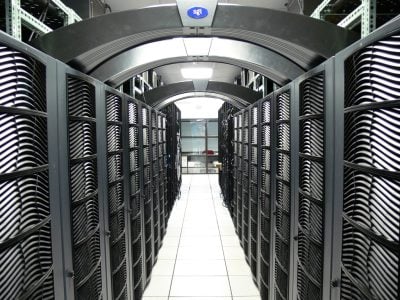
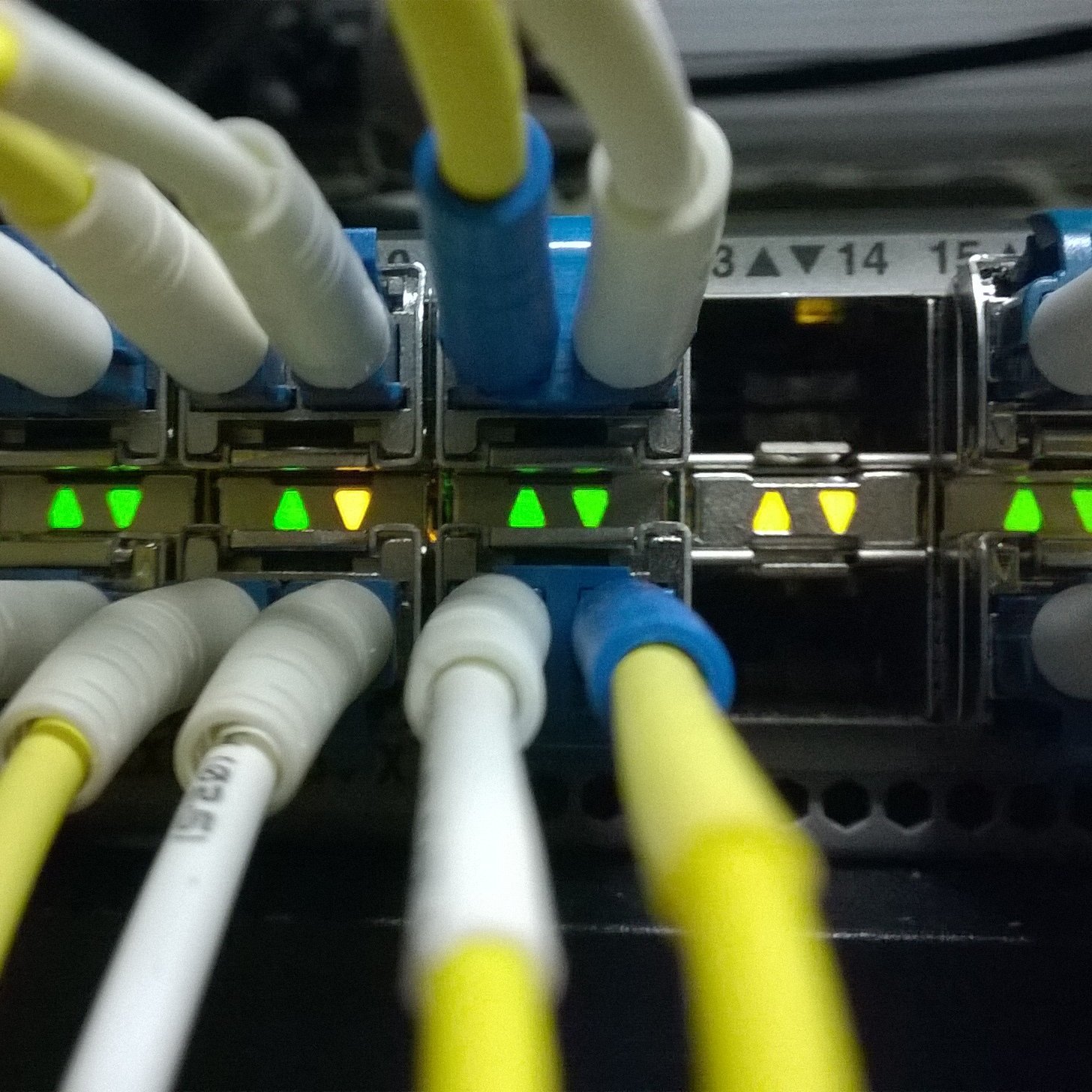
Every GPU headline glosses over the same physics problem: A training cluster is only as fast as its slowest link. When tens of thousands of accelerators have to swap gradients in near lockstep, and when a single job now spans multiple data centers hundreds of miles apart, the choke point stops being FLOPS and starts being fiber, switches and coherent optics.
If data cannot arrive on time, expensive silicon sits idle. That is why hyperscalers are pouring capex into the network fabric, and why Cisco booked $9.3 billion of AI infrastructure orders in fiscal 2026 while calling the moment a “networking supercycle.” Three U.S.-listed names sit at the center of this layer, and their AI exposure is nowhere near the same.
Arista Networks: The Pure-Play Ethernet Bet on AI Back-End Fabrics

Arista Networks (NYSE:ANET | ANET Price Prediction) designs the high-speed Ethernet switches, plus the EOS software that runs them, that hyperscalers use to wire GPU servers together inside AI data centers. Think of it as the plumbing that lets thousands of accelerators behave like one machine. Arista is the leading Ethernet-based challenger to NVIDIA’s proprietary InfiniBand stack for AI back-end networks, and it is the most direct beneficiary in this trio when a hyperscaler builds a new training cluster.
The numbers are the tell. In Q2 FY2026, Arista posted revenue of $3.04 billion, up 37.7% year over year (YoY), its first ever $3 billion quarter, with non-GAAP EPS of $1.02 beating consensus of $0.89. Management raised the 2026 revenue outlook to roughly $12.6 billion, a level it described as 40% annual growth, and said its AI Fabrics segment is on track for at least $3.5 billion in 2026. Market cap sits near $251.6 billion, with shares up 53.59% year to date (YTD) through Sept. 22.
The bull case: Arista is the merchant Ethernet vendor of choice as AI clusters get bigger and more distributed, and it is now selling into a third category, what it calls “scale-across” switching and routing, a market management sized at roughly $15 to $20 billion by 2030. Margins are expanding rather than compressing under the AI mix.
The risk: Concentration. CEO Jayshree Ullal said she “fully expects there to be one, maybe two, 10% customers” in the year ahead, and Microsoft and Meta remain the anchor buyers. Add sole-source component exposure and a trailing P/E of roughly 72, and there is no margin for a hyperscaler air pocket.
Cisco Systems: The Diversified Incumbent Where AI Is a Powerful Add-On

Cisco Systems (NASDAQ:CSCO) is the diversified incumbent. It sells routers, switches, security, observability, campus Wi-Fi, and, increasingly, its own Silicon One chips and Acacia coherent optics into hyperscaler AI builds. That breadth matters for the framing here: Cisco’s AI exposure is real, but it is diluted by a much larger legacy base, and investors should size the AI upside accordingly.
In Q4 FY2026, Cisco reported revenue of $17.252 billion, up 17.58% year over year, with non-GAAP EPS of $1.22 beating the $1.1688 estimate. Networking revenue was $9.791 billion, up 28% YoY, and networking product orders were up 40% YoY, the eighth consecutive quarter of double-digit growth. Crucially, AI infrastructure revenue was about 6% of total Cisco revenue in FY2026, up from less than 2% in FY2025, with management guiding it to $7.5 billion in FY2027. Market cap is roughly $431.8 billion and the stock is up nearly 40% YTD through Sept. 22.
The bull case: Scale plus the enterprise campus refresh Cisco owns. Chair and CEO Chuck Robbins said “we believe the accelerating adoption of agentic AI is fueling a networking super cycle” and that Cisco is “only at the beginning” of it. Optics and Silicon One design wins are stacking up, with Acacia orders exceeding $1 billion in Q4.
The risk: It’s mix. Non-GAAP gross margin fell to 66.3% from 68.4% year over year as lower-margin AI hardware ramps, and price-increase pass-throughs can only offset so much. If hyperscaler AI CapEx cools before the enterprise refresh matures, Cisco’s AI thesis loses its acceleration.
Ciena: The Pure-Play Optical Bet on Connecting Data Centers to Each Other

Ciena (NYSE:CIEN) is the specialist. It builds the coherent optical gear — WaveLogic chipsets, Waveserver platforms, RLS line systems and pluggable optics — that carry massive volumes of data across fiber between and inside AI data centers. As training clusters get too large for a single building and get split across sites tied together by dark fiber, Ciena’s data center interconnect (DCI) and “scale-across” products become the bridge that keeps distributed GPUs behaving like one supercomputer.
Fiscal Q3 2026 revenue hit $1.671 billion, up 37.05% year over year, with adjusted EPS of $2.11 versus a $1.7226 estimate. Cloud provider revenue was 53% of total, up 82% year over year, and Q3 backlog rose $800 million to $8.5 billion, with management targeting more than $10 billion by year end. Ciena also flagged a preliminary FY2027 outlook of at least 30% revenue growth and adjusted operating margin of 25% to 27%. Market cap is roughly $49.5 billion, and shares are up nearly 50% YTD through Sept. 22, even after a minor 0.91% pullback over the past month.
The bull case comes straight from management. CEO Gary Smith called this “the very early stages of a multi-year, highly durable network investment era” and described Ciena as “the only pure-play optical systems and interconnects provider”. Ciena expects its total addressable market to grow from roughly $25 billion today to about $50 billion by 2029, driven by DCI, submarine, and distributed AI training links.
The risk is customer concentration and cyclicality. Two customers were 41.7% of Q3 revenue, and optical component and substrate supply constraints continue to gate revenue. Any pause in cloud AI capex would show up in this backlog first.
How to Think About the Three Together
These are three different bets on the same physics problem. Arista is the highest-purity AI switching name with the tightest hyperscaler linkage. Cisco offers the most diversified, lowest-volatility way to own the buildout, at the cost of a diluted AI signal. Ciena is the optical transport specialist whose growth curve is levered directly to distributed training clusters that cannot be contained in a single building. All three sit outside the chipmaker spotlight, which is exactly the angle we took in a free report on seven AI infrastructure suppliers behind the buildout. What differs across these three is which link in the chain fails first if the AI order book ever pauses.
Contact [email protected] for any questions or corrections.
Joel South covers large-cap stocks, dividend investing, and major market trends, with a focus on earnings analysis, valuation, and turning complex data into actionable insights for investors.
He brings more than 15 years of experience as an investor and financial journalist, including 12 years at The Motley Fool, where he served as an investment analyst, Bureau Chief, and later led the Fool.com investing news desk. He has also co-hosted an investing podcast and appeared across TV and radio discussing market trends.