AI Debt To Top Germany’s GDP
AI hyperscalers are burning through capital at a pace that dwarfs entire national economies, and analysts warn the financing schemes growing in the shadows may be far less stable than anyone wants to admit.


Depending on who is answering the question, AI hyperscalers could invest $7 trillion between now and 2030. Germany’s GDP is about $5.5 trillion. More often than not, the question is where the money will come from, or whether it will come at all.
McKinsey puts the figure at $7 trillion. It says the figure is a “staggering number by any measure.”
S&P’s figure is about the same. Axios quotes the S&P analysis: “Every time we take a deep dive into this sector, we find that capex is rising faster than we anticipated, financings are becoming more complicated and less transparent, and that returns on investment will take years to realize.” Its numbers only include hyperscalers Amazon (NASDAQ: AMZN | AMZN Price Prediction), Microsoft, Alphabet (NASDAQ: GOOG), Oracle, SpaceX, and Meta (NASDAQ: META). What’s the figure if you add OpenAI and Anthropic?
The figure rises to $10.3 trillion if the timetable runs out to 2032. Then it’s about half of China’s GDP.
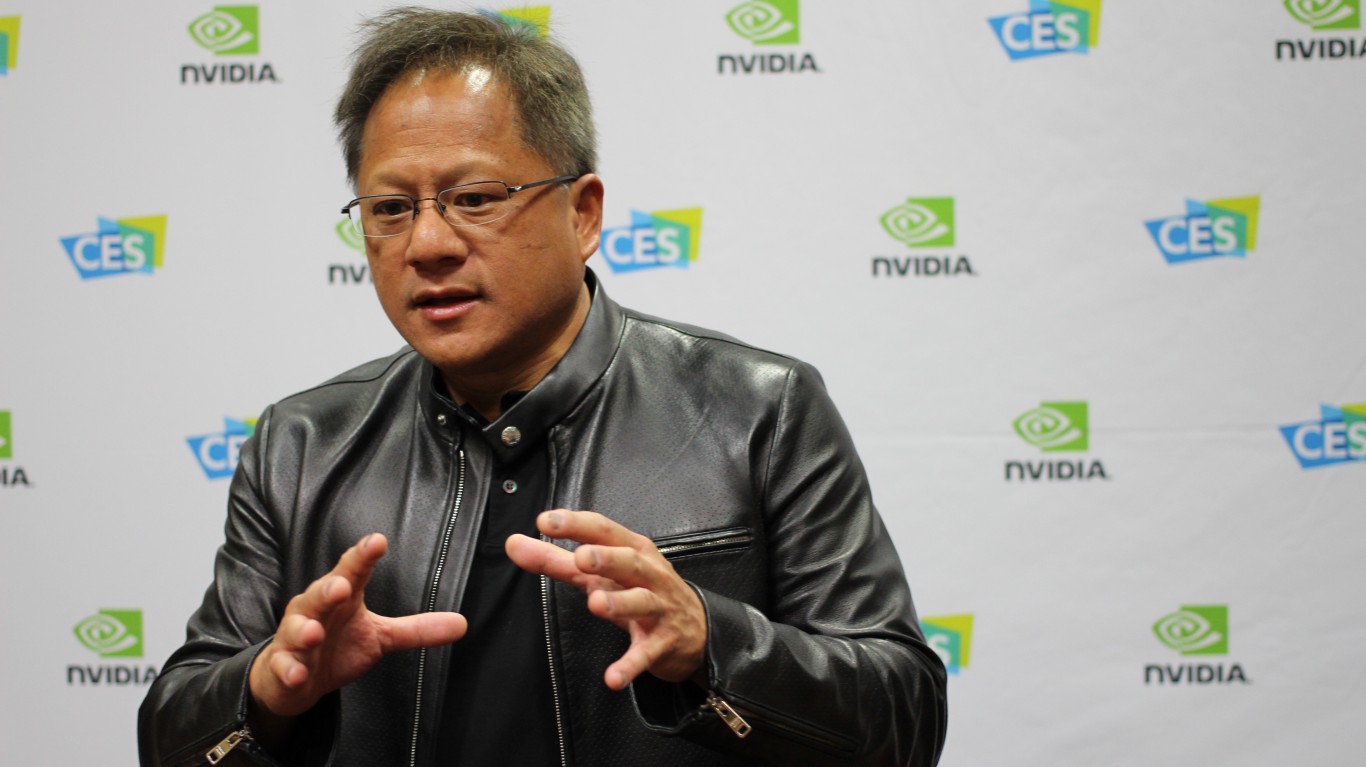
Not all of this money will come from these companies’ balance sheets. Some will come from Nvidia (NASDAQ: NVDA), the industry’s arms merchant and banker. For two years, investors have been anxious about an arrangement in which Nvidia sends money to companies for AI data centers, and then the data center uses some of it to buy AI chips.
What happens as this pot of money grows? The traditional answer is that it buys the future of the most important technology in human history. It helps humans with everything from curing cancer to freeing everyone in the world from work. Of course, the question of whether AI will kill everyone in the world will linger permanently. Bill Gates recently forecast deaths in the billions, but short of everyone.
The question raised again and again is where the money will come from. If AI growth slows, the answer may be “nowhere.” If growth is at the high end of estimates, financiers may have to sell the debt to individuals so they can buy it like they would corporate debt, using their Fidelity accounts. The debt may need to be spread that far to hit the $7 trillion number.
Contact [email protected] for any questions or corrections.
Douglas A. McIntyre is the co-founder, chief executive officer and editor in chief of 24/7 Wall St. and 24/7 Tempo. He has held these jobs since 2006.
McIntyre has written thousands of articles for 24/7 Wall St. He is an expert on corporate finance, the automotive industry, media companies and international finance. He has edited articles on national demographics, sports, personal income and travel.
His work has been quoted or mentioned in The New York Times, The Wall Street Journal, Los Angeles Times, The Washington Post, NBC News, Time, The New Yorker, HuffPost USA Today, Business Insider, Yahoo, AOL, MarketWatch, The Atlantic, Bloomberg, New York Post, Chicago Tribune, Forbes, The Guardian and many other major publications. McIntyre has been a guest on CNBC, the BBC and television and radio stations across the country.
A magna cum laude graduate of Harvard College, McIntyre also was president of The Harvard Advocate. Founded in 1866, the Advocate is the oldest college publication in the United States.
TheStreet.com, Comps.com and Edgar Online are some of the public companies for which McIntyre served on the board of directors. He was a Vicinity Corporation board member when the company was sold to Microsoft in 2002. He served on the audit committees of some of these companies.
McIntyre has been the CEO of FutureSource, a provider of trading terminals and news to commodities and futures traders. He was president of Switchboard, the online phone directory company. He served as chairman and CEO of On2 Technologies, the video compression company that provided video compression software for Adobe’s Flash. Google bought On2 in 2009.