Cramer Says Nvidia’s $150 Billion Buyback Only Matters If It Copies One Apple Executive
Jim Cramer says Nvidia's record buyback authorization is nearly worthless unless management follows a very specific playbook borrowed from a now-retired Apple executive. The difference between a transformative capital return and an expensive illusion comes down to one measurable behavior.

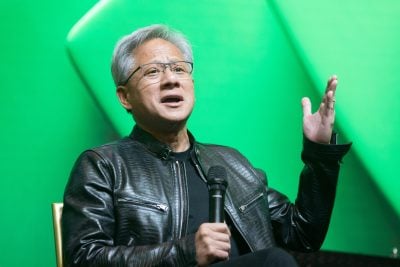
NVIDIA (NASDAQ:NVDA | NVDA Price Prediction) added a record $150 billion to its share repurchase authorization, and the stock closed at $228.86, up 1.68% in the session.

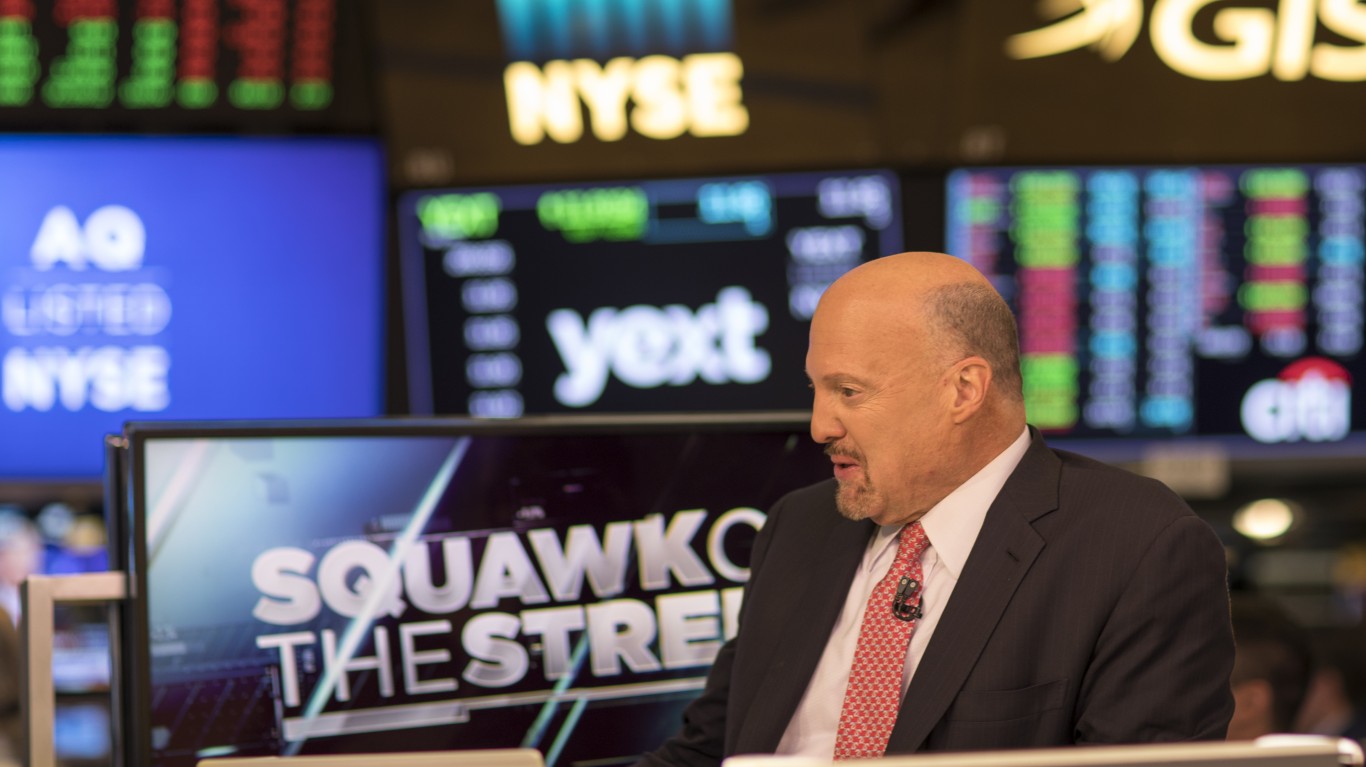
Jim Cramer reacted on CNBC’s Squawk on the Street. He measured the plan against Apple (NASDAQ:AAPL): “It depends on whether it’s going to be a Luca Maestri buyback. The former CFO of Apple who was always there when the stock dropped.”
An authorization is permission with no obligation and no deadline. Management can buy aggressively, slowly, or not at all.
That gap matters more at NVIDIA than almost anywhere. Against roughly 24.147 billion shares outstanding and a market value near $5.53 trillion, occasional purchases get absorbed by routine selling, and the share count barely moves.
The stock is also up 23% year to date and trades at 46 times earnings, so every retired share is bought into strength. Cadence and price discipline determine whether this authorization matters to you as a shareholder.
Why Cramer’s Maestri Standard Decides the Buyback’s Value
Apple’s former finance chief bought stock every quarter and bought more when shares fell, and retiring stock steadily raises per-share earnings faster than net income, which is the re-rating mechanism Cramer wants NVIDIA to copy.
NVIDIA has the cash. In the second quarter of fiscal 2027, it produced $21.34 billion in free cash flow and returned about $26 billion to shareholders, including $20 billion of buybacks.

Management said it has returned 60% of free cash flow year to date, above its 50% plan. The Maestri test adds one condition: purchases should accelerate on dips.
NVIDIA’s AI Safety Push Could Become a Software Moat
NVIDIA also released software built to keep agentic AI systems inside strict permission boundaries. Jensen Huang framed the problem as sandboxing and minimal rights, which puts the fix in engineers’ hands.
Cramer described a coalition of chip and security executives treating AI safety as an engineering task, and he pointed out that OpenAI is absent from the group.
My read is that permission controls will quickly become table stakes, because enterprise buyers will require them. A moat forms only if NVIDIA’s version becomes the default layer in CUDA deployments, where its software already holds developers.
Record Buybacks During a Capacity Race Reveal Management’s Confidence
NVIDIA carries $279 billion in supply commitments and has invested nearly $50 billion in frontier AI labs, yet it still returned a record $26 billion last quarter.
A company funding both is saying its own stock is a sound use of cash next to its reinvestment options. I read that as confidence. It is the same pattern 24/7 Wall St. reverse-engineered from past monster winners in a free playbook on spotting the next Nvidia early.
The ceiling that exists is physical. Management expects supply to remain a bottleneck at least through the end of fiscal 2028. So extra dollars cannot buy chips faster, and surplus cash flows back to shareholders.
The key disclosure is the shares repurchased line in NVIDIA’s next quarterly filing, alongside the diluted share count.
Meeting the Maestri standard would mean buybacks above the second quarter’s $20 billion pace and a diluted share count that falls sequentially. A flat count would show the program is mostly offsetting stock compensation.

Should You Buy or Sell NVDA Stock
The fundamentals lean positive. Revenue rose 105.8% to $96.22 billion last quarter, ahead of the $92.07 billion estimate, and guidance calls for $108.0 billion in the third quarter without any China data center computing.
A 60% operating margin and that growth rate justify a premium multiple for a company this size.
The buyback helps only if management buys through weakness, so a dip would offer both a better price and a live test of Cramer’s standard.
The risks are guarantee obligations capped at $108.5 billion. Payment terms pushed days sales outstanding to 60 days, which ties NVIDIA’s results more closely to its customers’ financing. I’d buy NVDA stock, especially as it remains cheap compared to both earnings and growth.
Contact [email protected] for any questions or corrections.
Omor Ibne Ehsan is a writer at 24/7 Wall St. He is a self-taught investor with a focus on growth, cyclical, and dividend equities that have strong fundamentals, value, and long-term potential. He also has an interest in high-risk, high-reward investments such as penny stocks.