Jim Cramer’s Nvidia Take is Surprisngly Sound For Once
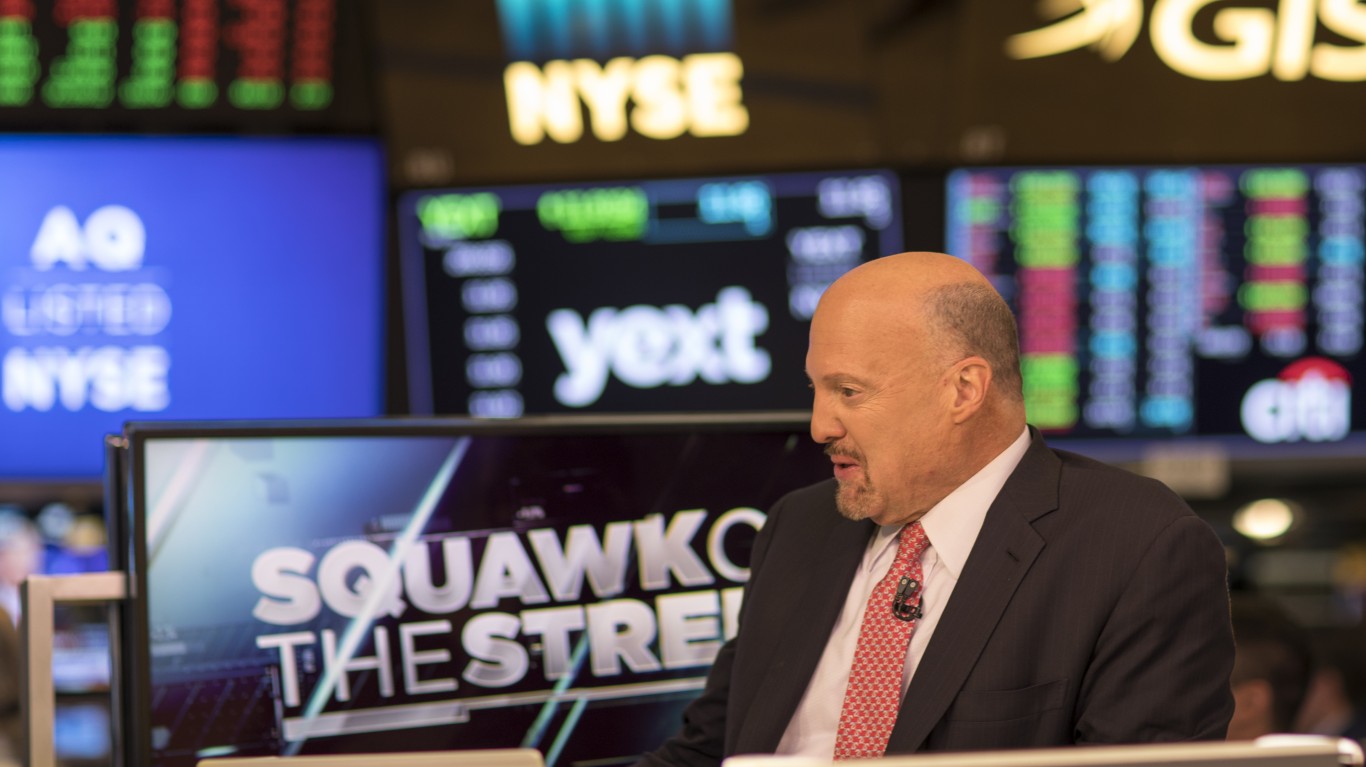
Jim Cramer called for a $500 billion buyback and named Nvidia the single best investment Jensen Huang can make. The math behind that argument is harder to argue with than you might expect.

My position in NVIDIA (NASDAQ:NVDA | NVDA Price Prediction) has grown after every earnings report for years, and I plan to keep going. This week Jim Cramer made a case that matches the math I keep doing at my kitchen table.
Why I Keep Coming Back to NVIDIA
NVIDIA sells the whole AI factory: GPUs, CPUs, networking and the CUDA software developers build on. Jensen Huang put it simply: “Now, compute is revenue.” If a company turns compute into revenue and owns the full stack, I want to own a growing share of it for my retirement.
Three Receipts Behind Every Purchase
First, growth keeps speeding up. Second-quarter fiscal 2027 revenue reached $96.22 billion, up 105.8% YoY, and Data Center revenue rose 117% to $89.02 billion. Management guided to $108.0 billion next quarter and expects fiscal 2028 revenue to grow approximately 70%, which it called “a supply-constrained outlook.”
Second, the profitability holds up. Operating margin is 60.38%, return on invested capital at 92.2%, and interest coverage at 503.4x. Non-GAAP EPS of $2.22 beat the $2.09 estimate, the 5th consecutive beat.
Third, shareholders get paid more every year. NVIDIA raised its quarterly dividend from $0.01 to $0.25 in May 2026 and returned about $26.0 billion in Q2 alone, with $99.0 billion of authorization left at quarter end.
Cramer’s Buyback Call Adds Up for Me
Cramer urged a $500 billion buyback, roughly 10% of shares outstanding, and called the stock “the single best investment Jensen Huang can make.” He pointed to Apple’s repurchase strategy. NVIDIA already returns 60% of year-to-date free cash flow, and it just added to its buyback in what The New York Times called the largest ever. At a P/E of about 46 against triple-digit revenue growth, I agree that the shares look cheap compared with how fast the business is growing.
Why My Money Skips AMD and Intel
AMD (NASDAQ:AMD) is performing well, but it trades near 229 times earnings with a non-GAAP gross margin of 56%, compared with NVIDIA’s 75.0%. Intel (NASDAQ:INTC) carries a negative P/E, pays no dividend, and its foundry lost $2.1 billion in one quarter. For retirement money, I’d rather own the more profitable leader.
Risk I Refuse to Ignore
Supply commitments rose to $279.0 billion, days sales outstanding increased to 60 days from 45 days, and guidance includes “no China data center compute revenue.” NVIDIA also expects AI labs it supports with its balance sheet to make up “roughly a quarter of our business next year.” If AI spending stalls, those commitments turn heavy fast.
I still buy because demand is running ahead of supply. Management said “NVIDIA Compute is fully utilized across every cloud we serve” and expects supply to remain a constraint at least through the end of fiscal year 28.
What Keeps My Buy Button Active
Vera Rubin brings about $40 billion per gigawatt of revenue opportunity, compared with $25 billion for Blackwell, and it should reach about 20% of data center revenue in Q3. The next checkpoint comes November 17. Until the numbers tell me otherwise, I’ll keep buying the company that sells the most important infrastructure of this decade.
Contact [email protected] for any questions or corrections.
Alex Sirois is a financial writer with experience spanning both retail and institutional investing. He has written for InvestorPlace and held roles at BNY Mellon and Bernstein, giving him a perspective that bridges Main Street portfolios and Wall Street analysis.
Alex holds an MBA from George Washington University and has built his career across multiple industries, including e-commerce, education, and translation — a breadth of experience that informs how he breaks down complex financial topics for everyday investors. His writing is conversational, actionable, and grounded in long-term, buy-and-hold investing principles.
At 247 Wall St., Alex focuses on delivering analysis that is both accessible and useful, with a clear emphasis on helping readers make more informed decisions with their money.