Wall Street Just Launched an ETF for Large Language Models. Here’s What’s Inside
Wall Street now has an ETF dedicated to large language model builders, but its biggest holding is a social media company, a third of the fund sits in Hong Kong, and the two most famous AI developers in the world…


The largest holding in the Global X LLM ETF (BATS:LLMA) is a social media company. The fund began trading on October 1, 2026. NVIDIA (NASDAQ:NVDA | NVDA Price Prediction) makes the chips that train almost every major model, yet it has a weight of just 5.42%.
Global X chose this ordering on purpose. The manager said the goal is to own the companies that build large language models, the AI systems behind chatbots and coding assistants, instead of spreading money across the wider AI supply chain (stated goal).
The fund closed its first session at $25.21. After one day of trading, it has no performance record, so the only things to judge are what it owns and why.
In short, you get concentrated exposure to model builders, but the two best-known developers are private and missing, about a third of the money sits in Hong Kong, and the fee is 0.75%.
Meta, SpaceX and Alphabet Hold Half the Fund
Meta Platforms (NASDAQ:META) leads at 20.35%. SpaceX (NASDAQ:SPCX) comes next at 17.41% and it owns xAI. SpaceX was founded as a private space and satellite company, and the fund holds it through a listed security. Alphabet (NASDAQ:GOOG, NASDAQ:GOOGL) is third at 15.64%.
Two Chinese model developers listed in Hong Kong also rank near the top: MiniMax at 11.48% and Z.AI at 9.65%. Next to them sits Alibaba (NYSE:BABA) at 11.40%. Alibaba is based in China and trades in New York as an American depositary receipt, a certificate that represents its foreign shares.
Microsoft (NASDAQ:MSFT) gets 3.65%, and Amazon (NASDAQ:AMZN) gets 2.36%. The ten largest positions make up 98.58% of the fund. In practice, that is a short list of stocks inside a fund structure.
Three Entry Tests Built This Lineup
A company is eligible if it meets any one of three tests. It can earn most of its revenue from its own model, rank in the top 20 on the leading public benchmark leaderboards, or direct most of its capital spending to frontier models.
Benchmark leaderboards are technical rankings that change often. That means a company can move in or out of the eligible list for reasons unrelated to its sales.
An anchor rule also lets the fund hold three positions at up to 20% each. That rule is why the top three holdings make up the fund.
China and Derivatives Add Real Risk
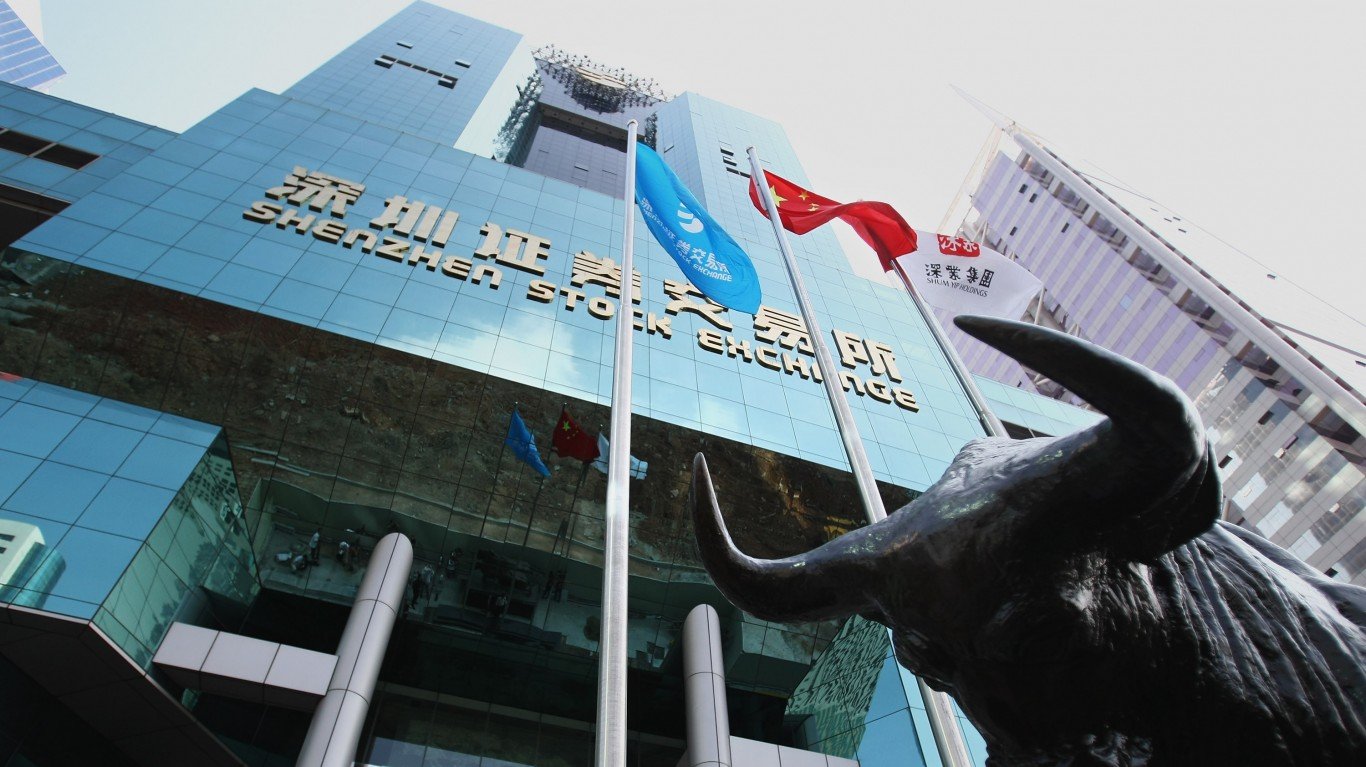
About a third of the fund sits in Chinese AI companies listed in Hong Kong. Those stocks face regulatory, delisting, and disclosure risks that U.S.-listed companies typically do not. Alibaba shares fell 40.67% over the past year.
The prospectus also allows swaps and other derivatives, which are contracts that track an asset without owning it (prospectus terms). As a result, some positions may be synthetic, and their value depends on the other party to the contract paying up.
OpenAI and Anthropic Are Absent
OpenAI and Anthropic are private, so neither is in the fund. Many buyers will assume otherwise from the name. Global X CEO Ryan O’Connor touched on this gap in the launch release dated October 1, 2026: “when it comes to emerging technologies, the universe of publicly-traded companies tends to be much smaller.”
Cheaper competition already exists. Harbor launched five AI Lab Ecosystem ETFs in August at 0.59%, and one of them is built around SpaceX’s AI business.
What LLMA Adds Beyond Funds You Already Own
LLMA’s case looks weak because its U.S. holdings are stocks that most retirement accounts already own through index funds, and the extra pieces the fee pays for are Chinese stocks and a SpaceX position that a cheaper fund also covers.
Amazon and Microsoft already give you indirect exposure to Anthropic. Their latest quarters included Anthropic investment gains of $53.4 billion and $3.20 billion.
Meta and Alphabet shares alone cover the core of this portfolio with no fund fee and no derivatives, which leaves the Chinese positions and the SpaceX stake as the main things LLMA adds. That assessment would likely change if OpenAI or Anthropic lists publicly, and LLMA adds it, because that would close the fund’s biggest gap.
Contact [email protected] for any questions or corrections.
Omor Ibne Ehsan is a writer at 24/7 Wall St. He is a self-taught investor with a focus on growth, cyclical, and dividend equities that have strong fundamentals, value, and long-term potential. He also has an interest in high-risk, high-reward investments such as penny stocks.