AI Is Burning Through More Money Than Any Technology Boom in History — Now Comes the Hard Part
Alphabet just posted a quarter where it spent more building AI than its entire business brought in as cash, and it is not alone. The bill for the biggest infrastructure bet in corporate history is coming due, and someone has…


A $44.92 Billion Quarter
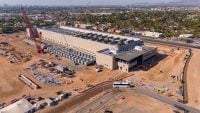
Alphabet (NASDAQ:GOOGL | GOOGL Price Prediction) spent $44.92 billion on capital expenditures in the second quarter of 2026, up 100.1% from a year earlier. The company reported the figure on July 22, 2026. It covers the three months ended June 30. Over that one quarter, Alphabet spent more than its full-year 2023 capital budget of $32.251 billion.

A Reuters analysis published yesterday morning gives that rate historical context. Never has so much money flowed so quickly into a new technology, and the spending has now passed the railroad, telecom, and internet booms. Alphabet’s quarter shows what that rate looks like on a single balance sheet.
What It Means for Alphabet
The business behind the spending is healthy. Revenue reached $119.80 billion, up 24.2% and ahead of the $116.91 billion consensus. Operating income rose 30.4% to $40.77 billion, with a 34% operating margin. Google Cloud revenue grew 82% to $24.77 billion. The company’s chief executive linked that growth to “demand for AI infrastructure“.
Cash flow is tighter: capital spending of $44.924 billion was larger than the quarter’s operating cash flow of $39.069 billion. It was also larger than the company’s operating income. As a result, free cash flow was negative $5.86 billion. One of the most reliable cash sources in corporate America spent more on its AI expansion than its operations brought in.
Reported earnings make the picture look better than it is. EPS of $9.11 beat the $3.04 estimate, but a $99.03 billion unrealized gain on equity securities drove most of that result. That gain is an accounting mark on investments. It does not pay for data centers.
Investors Still Reward Alphabet Despite Negative Free Cash Flow
Shares traded at $348.10 when the quarterly report was filed. They closed at $343.50 on October 2, 2026. Over a longer window, investors have been patient. The stock is up 40.18% over the past year and 9.96% year to date. It still trades below its 52-week high of $408.10.

Bear Case: Paying for the Buildout
Alphabet’s own cash flow no longer covers the spending, so the company is borrowing and raising money. It brought in about $70 billion through equity ($49.6 billion net) and debt ($20.3 billion). Long-term debt rose from $46.5 billion to $98.2 billion, and interest expense grew about 5x year over year. Financing cash flow was a positive $61.243 billion in the quarter, compared with an outflow of $5.832 billion a year earlier.
Shareholders are already feeling the trade-off. Alphabet suspended its stock buyback program in Q2 2026, after buying back $15.068 billion of stock in the first quarter. The $0.22 dividend remains in place. Still, capital that used to go back to owners now goes into concrete, chips, and power.

Timing is the larger risk: Reuters reports that U.S. hyperscalers and AI companies must find more than $4.2 trillion in new revenue within five years to fund the expansion. Bain & Company warned that “entirely new markets must emerge to close the funding gap.” Railroads and the internet took 10 to 50 years to deliver productivity gains. Debt, by contrast, comes with fixed repayment dates.
Bottom Line: Who Pays for the AI Buildout
For buy-and-hold investors, the central question is who makes enough to pay for the infrastructure behind the models. The same question applies to Microsoft (NASDAQ:MSFT), Meta Platforms (NASDAQ:META), Amazon (NASDAQ:AMZN), and Oracle (NYSE:ORCL). Meanwhile, chipmakers collect much of the money they spend, and the power, cooling, and networking suppliers behind the data centers get paid too (we rounded up seven of them in a free AI infrastructure report).
Alphabet’s products keep improving. It rolled out Gemini 4 Argon, its most advanced AI model, this week, and the Gemini app counts 950M monthly active users. Those are signs of demand, but they are not cash returns yet. Until free cash flow turns positive again and the buyback returns, the $44.92 billion quarter stands for a promise that Alphabet’s balance sheet is now financed with debt.
Contact [email protected] for any questions or corrections.
After two decades of patrolling the dark corners of suburbia as a police officer, Rich Duprey hung up his badge and gun to begin writing full time about stocks and investing. For the past 20 years, he’s been cruising the markets looking for companies to lock up as long-term holdings in a portfolio while writing extensively on the broad sectors of consumer goods, technology, and industrials. Because his experience isn’t from the typical financial analyst track, Rich is able to break down complex topics into understandable and useful action points for the average investor. His writings have appeared on The Motley Fool, InvestorPlace, Yahoo! Finance, Money Morning, and, of course, 24/7 Wall St. He has been featured in both U.S. and international publications, including MarketWatch, Financial Times, Forbes, Fast Company, and USA Today.