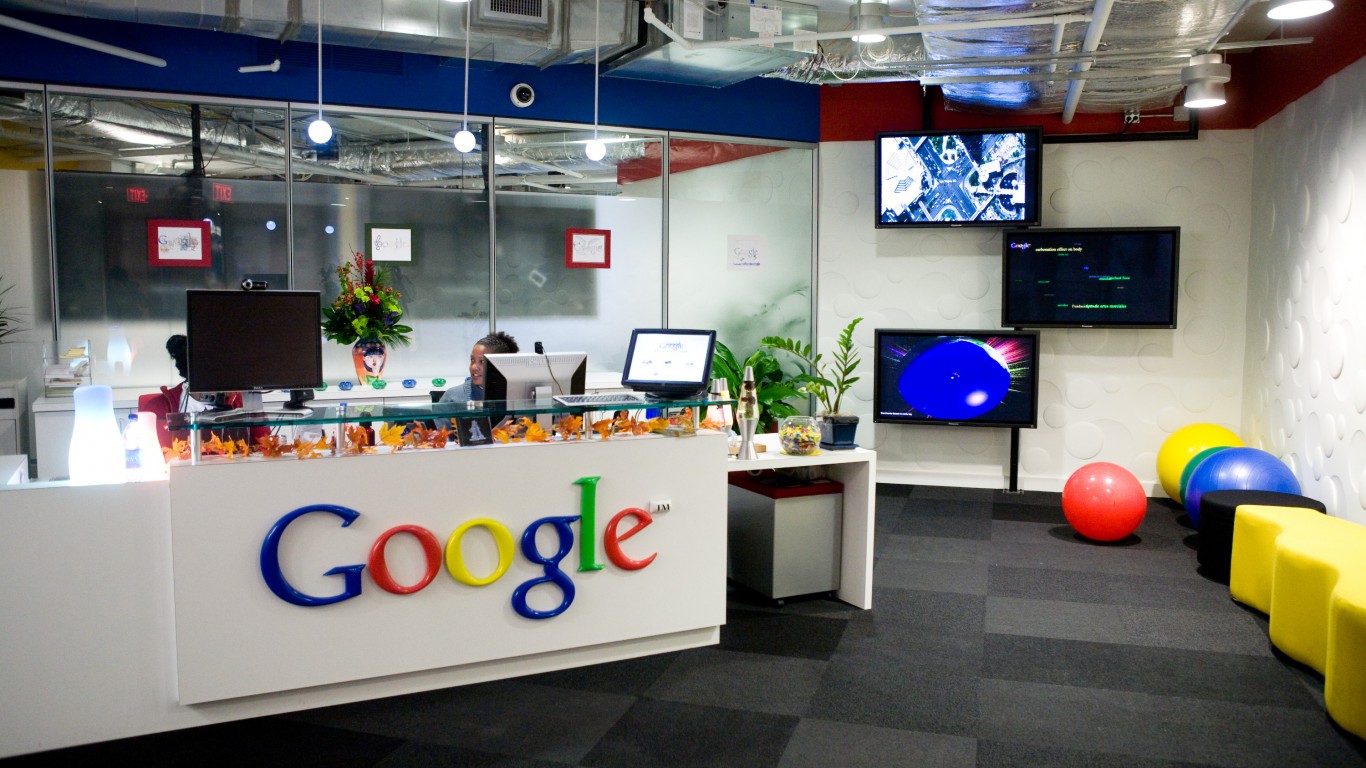
Alphabet’s AI Monetization Mix Stands Out Singularly, So I Keep Hitting Buy
Alphabet collects a check whether AI wins through cloud contracts, ad clicks, or paid subscriptions, and that structural advantage shapes every buy decision I make. The real question is whether the spending required to sustain it eventually breaks the thesis.

Over the past year, my Alphabet (NASDAQ:GOOGL | GOOGL Price Prediction) position has grown after every earnings report. Alphabet makes money from AI in two ways simultaneously: it sells AI directly through Google Cloud, and AI features lift its ad business by driving more Search queries. Other hyperscalers rely on either direct or indirect monetization. Alphabet runs both.
Two AI Revenue Engines Running at Once
In Q2 2026, Google Cloud revenue reached $24.77B, up 82%. Search and other brought in $63.27B, up 17%. YouTube ads added $11.06B, up 13%. Paid subscriptions reached 350 million in Q1, and the Gemini App has 950 million monthly active users. Sundar Pichai said “nearly 90% of the Fortune 100” use Gemini Enterprise.
That breadth shows up in the totals. Revenue of $119.80B grew 24.2%, which made it the 12th straight quarter of double-digit revenue growth. EPS has beaten estimates 11 consecutive times, and operating margin expanded to 34%.
Quality at a Price I Can Keep Paying
Alphabet trades at a trailing P/E of 15. It makes a 35.70% return on equity and a 29.60% return on invested capital. The balance sheet backs that up: debt/equity of 0.143, interest coverage of 175.5x, and $55.911 billion in cash. Management raised the quarterly dividend 5% to $0.22. The yield is only 0.50%, so I read the dividend mainly as a sign of capital discipline.
Why My Money Skips Microsoft and Meta
The closest cloud and AI peer is Microsoft (NASDAQ:MSFT), and Azure grew 43% last quarter. But Microsoft trades at a P/E of 29, compared with Alphabet’s 15. Its interest coverage of 51x also stands well below Alphabet’s.
The most focused exposure to AI improving ads comes from Meta Platforms (NASDAQ:META), and that is exactly what concerns me. Meta relies overwhelmingly on advertising revenue. Its Q2 EPS missed estimates by 14.42%, and operating margin shrank to 31%, compared with 43% a year ago. Free cash flow fell to $784 million. At a P/E of 27, I would pay more for a business with one engine.
Risk That Keeps Me Disciplined
Capex is the risk. Alphabet spent $44.92B in Q2, up 100.1%, which pushed free cash flow to -$5.86B. Guidance for 2026 capex is $175B-$185B. Long-term debt rose from $46.5B to $98.2B, and management suspended buybacks. The low P/E also looks better than it is, because Q2 net income included a $99.03B unrealized equity gain. Kyle Grieve put it plainly on The Investor’s Podcast: that gain was “zero actual dollars coming into the business.”
Those concerns are real to me. My thesis still holds because the operating business keeps getting stronger. Operating cash flow rose 40.8% to $39.07B, and Cloud backlog topped $460B in Q1. Some of that backlog ties back to Anthropic, which Alphabet also funds, and I keep an eye on that circular flow. Even so, customers have signed contracts for much of this spending.
Why Alphabet’s AI Momentum Keeps Building
Google just introduced Gemini 4 Argon. Gemini models now process 22 billion API tokens per minute, up from 7B tokens/min in Q3 2025. Every one of those tokens can makes Alphabet money through a cloud bill, a subscription, or a better-targeted ad. The company gets paid however AI wins, and I plan to keep holding more of it. The same expansion driving those tokens is raising a whole tier of suppliers behind the scenes, and we covered seven of them, from power to cooling, in a free report you can grab here.
Contact [email protected] for any questions or corrections.
Alex Sirois is a financial writer with experience spanning both retail and institutional investing. He has written for InvestorPlace and held roles at BNY Mellon and Bernstein, giving him a perspective that bridges Main Street portfolios and Wall Street analysis.
Alex holds an MBA from George Washington University and has built his career across multiple industries, including e-commerce, education, and translation — a breadth of experience that informs how he breaks down complex financial topics for everyday investors. His writing is conversational, actionable, and grounded in long-term, buy-and-hold investing principles.
At 247 Wall St., Alex focuses on delivering analysis that is both accessible and useful, with a clear emphasis on helping readers make more informed decisions with their money.