I’m Loading Up on Taiwan Semiconductor Ahead of Oct. 15 Earnings
Every time I rebalance my portfolio, one stock keeps winning the argument against NVIDIA and Intel combined. With October 15 earnings approaching, here is why I am loading up now instead of waiting for a safer entry point.


I added to my Taiwan Semiconductor Manufacturing (NYSE:TSM | TSM Price Prediction) position again this week, and I expect to add more before the company reports before the market opens on October 15. Each time I rebalance, I land on the same name. Almost every AI chip I read about gets made in TSMC’s fabs, and I want to own those fabs.
Why I Keep Coming Back to the Buy Button
TSMC makes the chips that the rest of the industry designs. Management stated: “The fundamental thing is semiconductor chips, and most of them in TSMC.” High-performance computing made up 66% of second-quarter revenue and rose 20% quarter over quarter. Owning the picks and shovels for a decade-long expansion means I don’t need to guess which AI company comes out on top.
Three Reasons I Keep Adding
Growth is still speeding up. Second-quarter revenue reached $40.20 billion, up 36.0% from a year earlier. August revenue rose 53.3% year over year. Management now expects full-year growth of slightly above 40% in U.S. dollars, well ahead of its long-term target of a growth rate approaching 25%.
Margins show real pricing power. Gross margin hit 67.7%, up 9.1 percentage points from a year ago. EPS of $4.31 beat the $3.89 consensus. The company held 110 billion US dollars in cash and marketable securities at the end of the quarter.
Earnings estimates keep rising. At $472.87, the stock trades at about 28 times the 2026 consensus EPS of $16.9339. On 2027 estimates of $21.9251, it trades at about 22 times. Over the past 30 days, analysts raised their 2026 estimates 9 times and cut them 0 times. The dividend: NT$7.00, payable Oct 8, up from NT$6.00.
Why My Money Goes Here Instead of NVIDIA or Intel
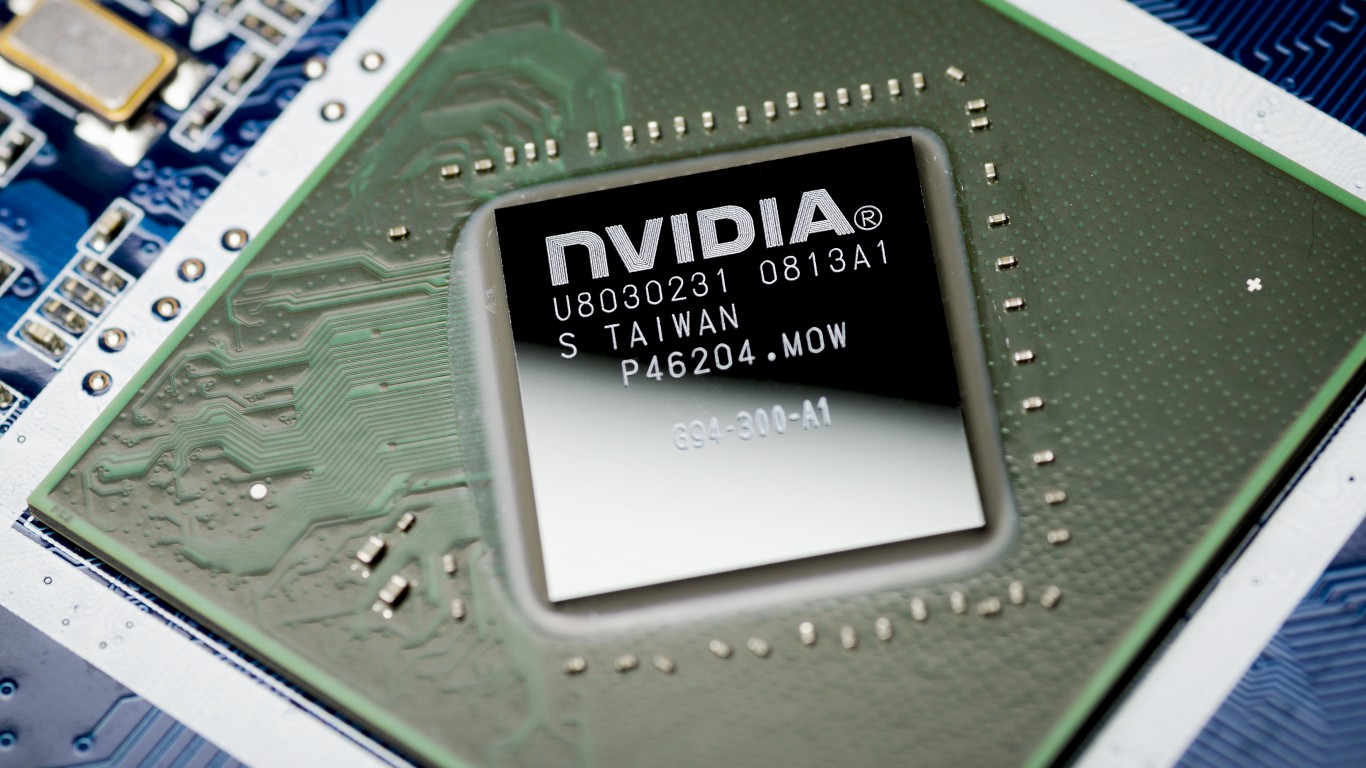
The stock NVIDIA (NASDAQ:NVDA) trades at 47 times trailing earnings. Its filings name reliance on third parties (TSMC) for manufacturing as a risk. The supplier NVIDIA depends on offers a lower multiple and better value.
Intel (NASDAQ:INTC) is the other foundry option. Intel Foundry brought in $5.765 billion last quarter and still posted a $2.1 billion quarterly loss. Intel’s trailing gross margin sits near 34.8%. TSMC makes about double that margin on its revenue.
Risks That Could Hurt This Position
Taiwan is the primary risk. European auditors describe cross-strait tensions as “a source of persistent insecurity for the sector.” Margins will decline as the 2nm ramp cuts gross margin by about 3 to 4 percentage points. A handful of large AI customers also drive a big share of demand.
None of this has changed my thesis. TSMC has committed $265 billion to Arizona and is building fabs in Japan and Germany. Even with the 2nm drag, third-quarter margin guidance of 65%–67% sits well above the 56%+ long-term target. I also expect volatility around earnings. After TSMC’s last two earnings beats, the stock still fell an average of 3.61% the next day. I own it for the long run, so moves like that don’t change my plans.
What Keeps My Buy Button Active
TSMC raised its 2026 capital budget to US$60 billion to US$64 billion. Its A14 node begins volume production in 2028. Management expects strong demand from 2026 through 2029 and 2030. On Oct. 15, I’ll compare results with the $4.4614 EPS consensus and listen for any change in that outlook. Unless something changes, I’ll keep adding to the company that makes the AI industry’s chips.
Contact [email protected] for any questions or corrections.
Alex Sirois is a financial writer with experience spanning both retail and institutional investing. He has written for InvestorPlace and held roles at BNY Mellon and Bernstein, giving him a perspective that bridges Main Street portfolios and Wall Street analysis.
Alex holds an MBA from George Washington University and has built his career across multiple industries, including e-commerce, education, and translation — a breadth of experience that informs how he breaks down complex financial topics for everyday investors. His writing is conversational, actionable, and grounded in long-term, buy-and-hold investing principles.
At 247 Wall St., Alex focuses on delivering analysis that is both accessible and useful, with a clear emphasis on helping readers make more informed decisions with their money.