49% Gains Haven’t Stopped Wall Street From Calling Energy Stocks ‘Behind’
A prominent fund manager went on live television to call Chevron and ExxonMobil cheap laggards, but the actual performance data from the past year tells a very different story about who is really falling behind.


On CNBC on Friday, Oct. 2, Michael Cuggino, president of Permanent Portfolio Family of Funds, said energy stocks “have not kept up with the broader market even as we speak.” He used that point to recommend Chevron (NYSE:CVX | CVX Price Prediction) and ExxonMobil (NYSE:XOM) as cheap total-return plays. The performance numbers point the other way.
Oil Majors Have Outrun the Index by a Wide Margin
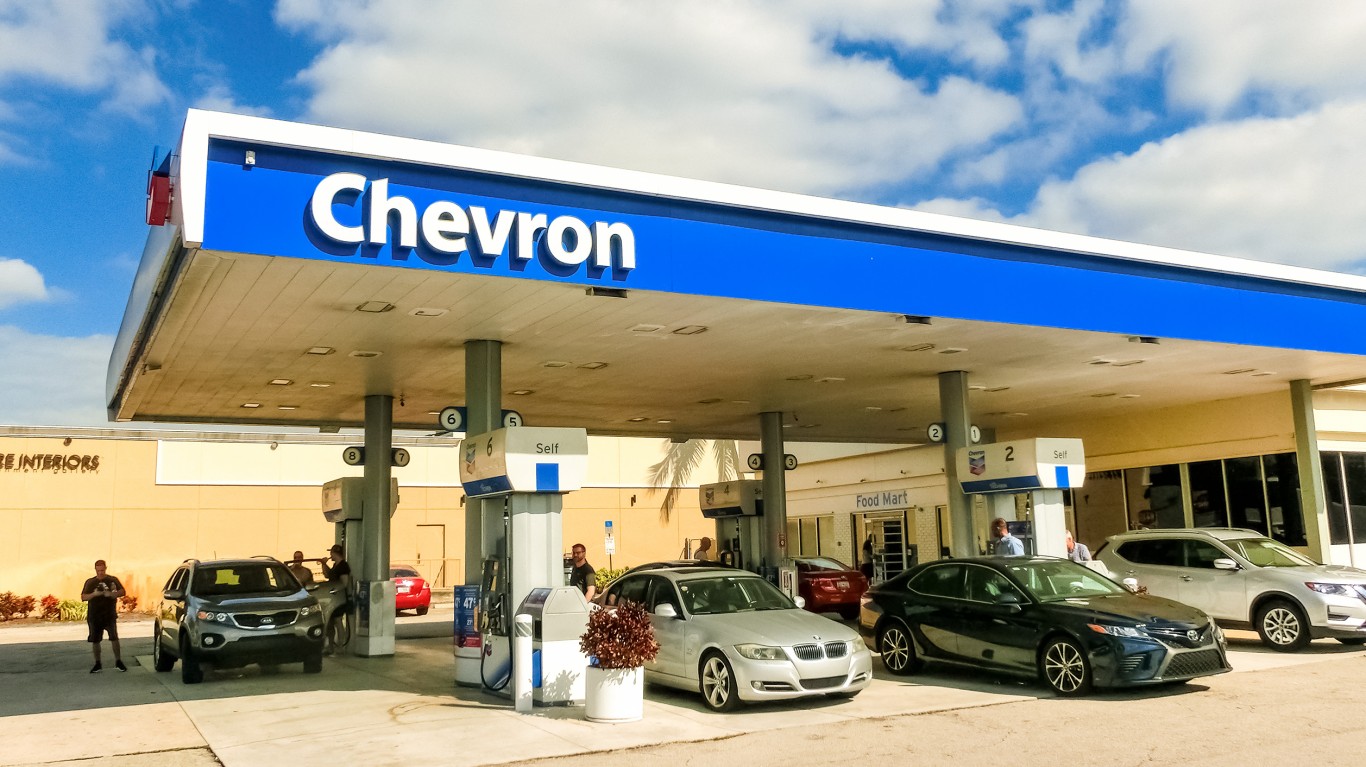
As of Friday’s close on Oct. 2, Exxon is up more than 34% over the past year at $164.39. Chevron is up nearly 33% at $207.20. Over the same period, the S&P 500 gained less than 13%. Chevron also set a 52-week high of $214.06 on Sept. 11. Over the last month, the benchmark index edged up 0.75%, while Chevron lost 2.16% and Exxon gained 0.15%.

Cuggino’s Valuation Case Holds Up, With One Adjustment
Cuggino’s argument is about price. He said both stocks trade at about 13 times next year’s earnings, with dividend yields of 3.5% and 2.5%. He compared that with an S&P 500 offering a 4.5% earnings yield. Checked against consensus 2027 EPS of $14.1367 for Chevron and $11.0760 for Exxon, both stocks trade closer to 15x. Their current yields are 3.42% and 2.53%. That is a little more expensive than the on-air figure, but still a discount to the market.
Others share his view. On Sept. 8, Jim Cramer called Chevron the portfolio version of a kicker: an excellent 3.44% yield that usually doesn’t move with the rest of the market.

Rising Earnings Estimates Explain the Rally
Chevron’s second quarter brought adjusted EPS of $6.06, revenue up 51.4% to $67.20B, and free cash flow of $18.1 billion. Brent averaged $104 per barrel in the quarter. CEO Mike Wirth said: “Costs always matter. They always will.”
Analysts have been raising their numbers. The 2027 consensus for Chevron was $12.6254 90 days ago. Over the past 30 days, 10 analysts revised up and 3 revised down. Exxon CEO Darren Woods described a quarter with “more than $14 billion of earnings, more than $17 billion of free cash flow, and a more than $7 billion reduction in net debt.”

Microsoft Is Buying Chevron’s Power for AI
Chevron signed a 20-year take-or-pay power purchase agreement with Microsoft (NASDAQ:MSFT). The deal covers 2.67 gigawatts of capacity for a West Texas data center complex, and Chevron expects “mid-teens returns.” Wirth said the company is ready “to help power American AI dominance.” The companies building AI depend on energy majors to grow, and this deal gives Chevron a long-dated source of committed revenue.
A Slide in Crude Would Undercut the Pitch
WTI peaked at $102.13 in May and fallen to $83.9 by August. In its May outlook, the EIA forecast Brent averaging $79.39 in 2027. If prices follow that path, estimates shrink and today’s 15x multiple looks less cheap. Wall Street is also split: Chevron has 20 Buy ratings or Strong Buy ratings, while Exxon has 15 Hold ratings.

The stocks have already outpaced the market on returns. The case for owning them now rests on valuation, income and earnings revisions. Watch the third-quarter reports, where consensus calls for $4.7322 per share at Chevron and $3.6501 at Exxon.
Contact [email protected] for any questions or corrections.
Joel South covers large-cap stocks, dividend investing, and major market trends, with a focus on earnings analysis, valuation, and turning complex data into actionable insights for investors.
He brings more than 15 years of experience as an investor and financial journalist, including 12 years at The Motley Fool, where he served as an investment analyst, Bureau Chief, and later led the Fool.com investing news desk. He has also co-hosted an investing podcast and appeared across TV and radio discussing market trends.