Investment Wisdom Always Says Buy Assets, So Don’t Ignore That Wisdom As It Relates To This Hyperscaler
Amazon is pouring hundreds of billions into data centers before most of that spending shows up as profit, and the case for owning it now depends on understanding why that gap is a feature rather than a warning sign.


I’ve added Amazon (NASDAQ:AMZN | AMZN Price Prediction) to my portfolio all year. The latest earnings report supports my thesis that productive assets create value before they generate cash. Amazon is building those assets now, ahead of the returns.
Why Amazon’s Buildout Matters Now
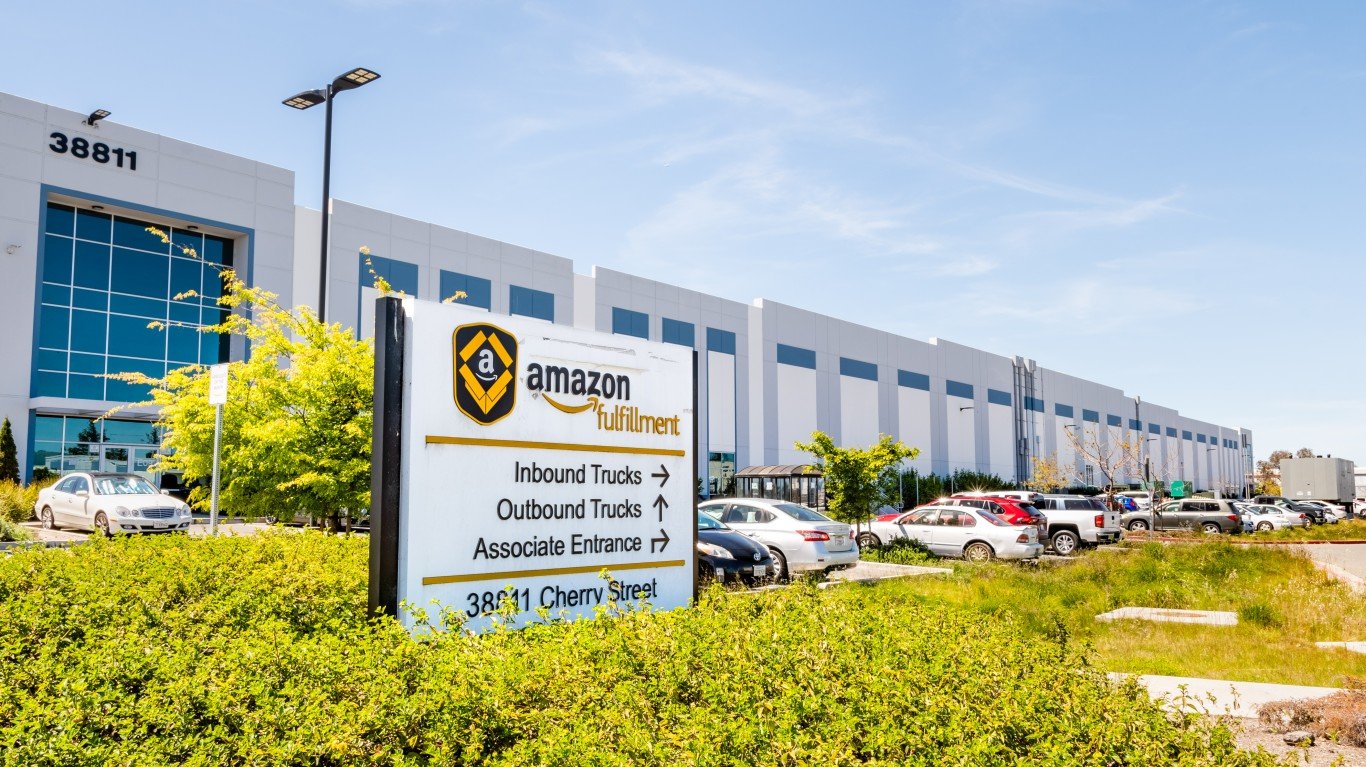
Amazon is investing money into data centers, chips and servers that management expects to earn for decades. Data centers monetize for 30-plus years. Servers break even in “a little less than three years”. Most AI capacity gets contracted for at least five-year terms. I own a landlord whose buildings sign better tenants with every server generation.
Three Receipts Behind My Conviction
AWS is accelerating. Revenue reached $42.23B in Q2, up 37%, its fastest growth in 18 quarters, with a 39.4% operating margin. The backlog stands at $496 billion and is growing at triple digits.
Much of the new capacity has already been claimed by customers. Management expects to double power capacity by end of 2027 versus 2025, with “largely reserved” 2027 capacity. OpenAI committed to about 2 GW of Trainium capacity starting in 2027, and Anthropic plans to secure up to 5 GW.
The core business funds the expansion. Operating cash flow rose 39.59% to $45.39B. Return on equity is 22.29%, debt-to-equity is 0.37 and interest coverage is 35x.
How Amazon Stacks Up Against Microsoft and Alphabet
Microsoft (NASDAQ:MSFT) saw Azure grow 43%, but trades at 8.69 times book value versus Amazon at 6.60. Microsoft’s cash fell 30.78% while Amazon’s rose 35.45% to $78.21B. For an asset-buying thesis, the lower price per dollar of book value matters.
Alphabet (NASDAQ:GOOGL) has a P/E of 15, but Q2 net income included a $99.03 billion equity gain and $49.6 billion in new equity raised with buybacks suspended. Amazon’s ad business grew 26%, outpacing Google Search at 17% and YouTube ads at 13%.
Risk That Could Hurt This Position
Free cash flow is weak. Trailing twelve-month free cash flow fell to -$7.6B, yielding just 0.28%. The stock trades at 352x free cash flow. Long-term debt rose to $119.1B from $65.6B. Anthropic gains of $53.4B in Q2 and $16.8B in Q1 inflate the P/E of 35. If AI demand cools before buildings fill, I own expensive, half-empty real estate.
My thesis holds because spending tracks signed demand. Management said it buys servers ahead of deployment once customer demand is visible. 85% of global IT spend is still on-premises, so most cloud migration lies ahead.
What Investors Should Track Next
CEO Andy Jassy said AWS could “very possibly be a trillion dollar annual revenue business for us in time with very appealing accompanying free cash flow and return on invested capital.” Q3 operating income guidance of $22.5B-$26.5B compares with $17.4B a year earlier. Management expects today’s spending to support future free cash flow.
The AI data-center expansion Jassy is funding runs on power, cooling, and networking supplied by a handful of companies most investors overlook; we featured seven such companies in our free report you can grab here: 7 Stocks Powering the AI Boom (That Aren’t Chipmakers).
Amazon is laying the foundation for future cash flow, and investors can track whether reserved capacity turns into revenue as new buildings come online.
Contact [email protected] for any questions or corrections.
Alex Sirois is a financial writer with experience spanning both retail and institutional investing. He has written for InvestorPlace and held roles at BNY Mellon and Bernstein, giving him a perspective that bridges Main Street portfolios and Wall Street analysis.
Alex holds an MBA from George Washington University and has built his career across multiple industries, including e-commerce, education, and translation — a breadth of experience that informs how he breaks down complex financial topics for everyday investors. His writing is conversational, actionable, and grounded in long-term, buy-and-hold investing principles.
At 247 Wall St., Alex focuses on delivering analysis that is both accessible and useful, with a clear emphasis on helping readers make more informed decisions with their money.