A $1,000 Bet on Microsoft a Decade Ago Crushed the Market by Over 3x
A single Microsoft investment a decade ago left the S&P 500 in the dust, but the reasons behind those gains reveal something surprising about what actually drove the returns and whether the next decade could come close.

This post may contain links from our sponsors and affiliates, and Flywheel Publishing may receive compensation for actions taken through them.

Ten years ago, buying Microsoft (NASDAQ:MSFT | MSFT Price Prediction) looked like a safe, slightly sleepy call on Windows and Office. However, it would become one of the best large-cap holdings of the decade. And almost none of that gain came from the dividend.

From Software Licenses to Cloud Rent
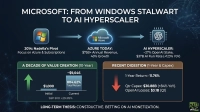
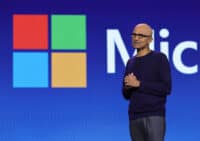
CEO Satya Nadella spent the decade moving Microsoft away from one-time licenses and toward recurring subscriptions and Azure cloud capacity. Office became Microsoft 365, so customers paid every month instead of once per upgrade cycle. Deals for LinkedIn (2016), GitHub (2018) and Activision Blizzard (2023) strengthened its hold on corporate IT departments and developers.
Then AI arrived, and the OpenAI partnership made Azure a default home for enterprise AI work. In fiscal 2026, Azure exceeded $100 billion in annual revenue for the first time. Microsoft 365 Copilot passed 30 million paid seats. Commercial remaining performance obligations (signed revenue not yet booked) reached $678 billion, up 84%.

Your $1,000 Became $10,384, and the Index Trailed Far Behind
1-Year Return
- Initial Investment: $1,000
- Current Value: $1,038.70
- Total Return: 3.87%
- S&P 500 (same period): $1,167.50 (16.75%)
5-Year Return
- Initial Investment: $1,000
- Current Value: $1,894.70
- Total Return: 89.47%
- Annualized Return: 13.63%
- S&P 500 (same period): $1,796.40 (79.64%)
10-Year Return
- Initial Investment: $1,000
- Current Value: $10,383.60
- Total Return: 938.36%
- Annualized Return: 26.37%
- S&P 500 (same period): $3,633.10 (263.31%)
Microsoft’s returns use dividend-adjusted prices. The S&P 500 figures track SPY’s price change. With a yield near 0.68%, income was a rounding error. The quarterly payout rose every year, from $0.36 in 2016 to $0.98. That steady growth matters more than the yield, but price gains did nearly all the work.
Timing made a big difference. The 10-year holder beat the index easily, the 5-year holder beat it narrowly, and the 1-year holder fell behind. Over the past year the stock has traded between $348.54 and $549.20, as investors considered fiscal 2026 capex of $115.95 billion (+79.62%) against free cash flow that fell 6.46%.
What Could Make or Break the Next Decade for Microsoft
The bull case depends on Azure turning its capacity shortage into revenue. Management is guiding for roughly 45% constant-currency Azure growth, and CFO Amy Hood said “demand exceeds available supply.” At about 25 times forward earnings, that growth looks fairly priced. The expansion also lifts a wider circle of suppliers (we analyzed seven of the power, cooling, and networking names behind the AI data-center push in a free report).
The bear case centers on AI spending running ahead of cash flow. Expected capital expenditures of roughly $175 billion only pay off if demand holds. Add rising OpenAI investment losses, regulatory scrutiny and a shrinking PC business, and a disappointment at about 29 times trailing earnings could hurt.

Today’s setup looks very different from 2016. Back then, investors underrated the cloud shift. Today, AI is the consensus story, and the company is worth about $3.96 trillion. The setup supports steady compounding, while another tenfold decade looks far harder to repeat from this starting point.
Contact [email protected] for any questions or corrections.
Chris Lange is a financial and geopolitical writer with more than a decade of experience covering a myriad of topics. He has published thousands of articles for 24/7 Wall St., with past coverage focused heavily on stocks, IPOs, healthcare, defense, global affairs, and technology.
His work has been quoted, or referenced by a number of outlets including Business Insider, USA Today, Yahoo Finance, MSN, The Motley Fool, and many other publications. A graduate of Southwestern University, he studied business with a focus on investments and has previous experience in banking and startups.
When not reading or writing the news, he is following his passion for Lacrosse, playing chess, or building solar projects with his dad.