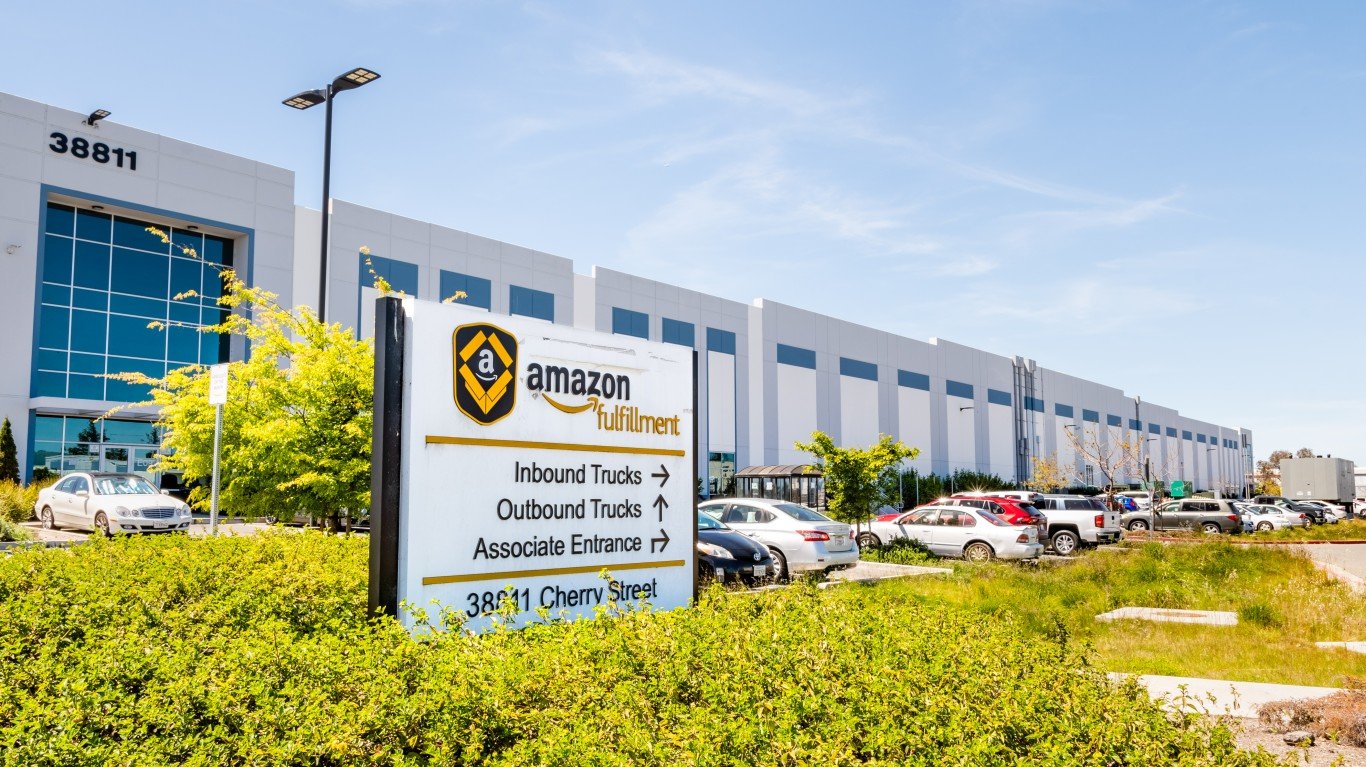
Amazon Just Showed Its Cards And Pushed In All Its Chips
Amazon just committed roughly $200 billion to AI infrastructure, custom chips, and satellites, and one investor keeps hitting the buy button every time the stock dips. Here is the math behind that conviction and the real risk hiding inside the…

This post may contain links from our sponsors and affiliates, and Flywheel Publishing may receive compensation for actions taken through them.

My Amazon (NASDAQ:AMZN | AMZN Price Prediction) position has grown again and again this year, and the July earnings report made my next purchase feel automatic. Amazon laid out its plan in plain numbers: about $200B in capital expenditures in 2026 for AI infrastructure, custom chips, robotics and satellites. The company making that investment is worth owning.
What Keeps Pulling Me Back to the Buy Button
Amazon runs three profit drivers that each grow on their own: AWS, advertising and retail, and it then puts every spare dollar back into making those drivers faster. The stock pays no dividend. I accept that, because the capital compounds inside the business, and that compounding is what builds wealth over a retirement-length holding period.
Three Receipts Behind My Conviction
First, AWS keeps speeding up even as it gets bigger. Revenue reached $42.23B, up 37% in Q2, its fastest growth in 18 quarters, at a 39.4% operating margin. The backlog sits at $496 billion, and management says most of the 2027 capacity is already reserved. Andy Jassy now believes AWS could “very possibly be a trillion dollar annual revenue business for us in time.”
Second, the custom silicon is working. Amazon’s chips business passed a $25 billion annualized run rate while growing at triple-digit rates, and Anthropic and OpenAI made multi-year, multi-gigawatt Trainium commitments. Graviton runs at 98% of Amazon’s top 1,000 EC2 customers. That is why the Financial Times report that Amazon may shift NVIDIA (NASDAQ:NVDA) hardware, about $8 billion of Nvidia chips, off its books makes me optimistic. The report raised questions about circular financing. It also suggests Amazon’s own chips (ASICs, or custom-built processors) fit its workloads better.
Third, the company keeps delivering, and its balance sheet can handle the spending. Amazon beat earnings estimates 11 times from Q3 2023 through Q2 2026, with 0 misses. Debt-to-equity sits at 0.37, interest coverage at 35.17x and ROE at 22.29%.
Why My Money Goes Here Instead of Microsoft
The obvious alternative is Microsoft (NASDAQ:MSFT), and Azure grew 43% last quarter. I respect that. Even so, Microsoft is valued at 8.8 times book value, while Amazon goes for 6.60. Microsoft’s More Personal Computing segment also shrank 4% in its latest quarter. Every Amazon segment grew in Q2, from Physical Stores at 4% to Advertising at 26% and AWS at 37%.
Risk That Keeps Me Disciplined
Free cash flow turned negative, at -$7.6B TTM. Capex hit $54.21B in a single quarter, and total debt rose to $119.1B. Reported profits also overstate the core business. Q2 GAAP EPS of $5.75 included a $53.4B Anthropic gain, and on a comparable basis EPS came in at about $1.88. Those data centers turn into expensive buildings if AI demand stalls.
I keep holding because management showed me the math behind the spending. Servers take a little less than three years to break even and last five to six years, and the bulk of AI capacity is signed for at least five-year terms. Data centers last 30-plus years. Operating cash flow rose 39.59% to $45.39B in Q2. All of that capex also has to be powered, cooled, and wired by somebody, which is why we pulled together seven suppliers behind the expansion in a free report here.
Why the Buy Button Stays Active
Amazon guided Q3 operating income to $22.5B to $26.5B, compared with $17.4B a year earlier. The stock is priced at 35 times earnings and has returned 498.98% over ten years. Amazon has told shareholders exactly where every dollar is going, and I plan to keep putting mine right next to it.
Contact [email protected] for any questions or corrections.
Alex Sirois is a financial writer with experience spanning both retail and institutional investing. He has written for InvestorPlace and held roles at BNY Mellon and Bernstein, giving him a perspective that bridges Main Street portfolios and Wall Street analysis.
Alex holds an MBA from George Washington University and has built his career across multiple industries, including e-commerce, education, and translation — a breadth of experience that informs how he breaks down complex financial topics for everyday investors. His writing is conversational, actionable, and grounded in long-term, buy-and-hold investing principles.
At 247 Wall St., Alex focuses on delivering analysis that is both accessible and useful, with a clear emphasis on helping readers make more informed decisions with their money.