3 Space Stocks Worth Owning This October
Defense budgets are swelling, Golden Dome is reshaping orbital strategy, and direct-to-device satellites are connecting billions of phones without towers. Three space stocks sit at very different points on the risk spectrum, and only one of them belongs in a…


Space investing in October 2026 calls for discipline. Rising defense budgets, the Golden Dome missile defense initiative and growing demand for direct-to-device satellite connectivity are raising the whole sector. The three names below carry very different risk levels. The ranking is based on five measures: revenue growth, backlog visibility, execution against estimates, strategic advantages and financial strength.
#3: AST SpaceMobile Offers the Biggest Upside With the Biggest Risk
AST SpaceMobile (NASDAQ:ASTS) builds BlueBird satellites. These are huge antenna arrays in low Earth orbit that connect directly to ordinary smartphones. Its customers are mobile carriers: the company counts 60+ MNO partners covering more than 3 billion subscribers, plus over $125 million in U.S. government awards.
Execution is the weak spot. Q2 2026 revenue of $31.52 million missed the $34.4 million consensus. The 77-cent loss per share included a $125.9 million loss on involuntary conversion tied to BB7 launch incident. Q1 revenue of $14.73 million fell well short of the $36.58M estimate. Shares are down 19.54% year to date.
Bull case: 13 BlueBird spacecraft in orbit with a goal of about 45 satellites in orbit by early 2027. Contracted backlog is roughly $1.3 billion. Pro forma liquidity is above $3.7 billion, and management confirmed full-year revenue guidance of $150 million to $200 million. Japan’s J-LEO selection, worth up to $1B, is preliminary and needs government approvals.
Risk: AST is pre-commercial and losing money. It remains highly speculative.
#2: Rocket Lab Is Space’s Fastest-Growing Pure Play
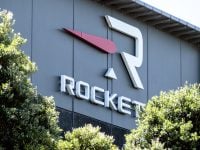
Rocket Lab (NASDAQ:RKLB | RKLB Price Prediction) launches small satellites on its Electron rocket and flies hypersonic test missions on HASTE. It also builds spacecraft and parts such as solar panels and laser terminals, and revenue comes mainly from the Space Force, the Space Development Agency, NASA and commercial satellite networks.
Q2 2026 revenue rose 62% YoY to $234.07 million, ahead of estimates. Non-GAAP gross margin expanded to 41.5% from 36.9%. Backlog hit a record $2.36 billion, up 137% YoY. Signed contracts include a $397 million Flatellite award.
Bull case: The award is for the Space Force’s SB-AMTI program, and contracts include a $266 million deal for up to 18 suborbital missions. Q3 guidance calls for revenue of $250 million to $265 million.
Risk: GAAP EPS of -8-cent missed the -0.07-cent estimate, partly due to $8.58 million in acquisition costs. Rocket Lab raised $1.53 billion by selling shares in H1, reducing existing holders. Its planned purchase of Iridium Communications (NASDAQ:IRDM) has been announced but not closed. The biggest swing factor is Neutron, its new medium-lift reusable rocket. CEO Peter Beck said “the window for an end-of-year launch is narrowing”. Until Neutron launches successfully, Rocket Lab remains speculative and unprofitable.
#1: Lockheed Martin Pairs Space Exposure With Defense-Prime Strength
Lockheed Martin (NYSE:LMT) reports Space as one of its four segments. That unit builds the Orion spacecraft, the Next Generation Interceptor, Fleet Ballistic Missiles and classified national security systems. Its main customers are the Pentagon, the Missile Defense Agency and NASA.
Q2 2026 EPS of $7.94 beat the $7.20 consensus, and revenue of $20.06 billion rose 10.5% YoY. Backlog reached a record $230.42 billion after $65 billion in new orders, including a signed $35B multi-year THAAD missile defense contract. Lockheed raised full-year guidance to EPS of $29.95 to $30.65 and free cash flow of $7 billion to $7.2 billion. The stock trades at about 17x guided earnings and pays a dividend.
Bull case: Space is the slower part of the business. Segment sales grew 6% and profits grew 2%. The profit outlook was cut because the Vulcan launch failure reduced earnings from ULA, Lockheed’s launch joint venture. Management expects Space growth to pick up to high single digits in the second half, and the Space Force chose Lockheed to build Golden Dome space-based interceptor prototypes.
Risk: F-35 deliveries fell to 19 from 50, and F-16 charges caused Lockheed’s Q1 EPS miss.
Why Lockheed Martin Ranks First
Lockheed scores highest because it combines a $230 billion backlog, positive free cash flow, raised guidance and reasonable valuation. Rocket Lab leads on growth and execution but needs Neutron to fly, and AST has the most technology upside and the weakest record of removing estimates. The two speculative names carry far more risk than an established defense prime. Next: Neutron’s delivery to the launch pad. AST’s beta service rollout and whether Lockheed’s Space growth picks up in the second half as promised.
Contact [email protected] for any questions or corrections.
Joel South covers large-cap stocks, dividend investing, and major market trends, with a focus on earnings analysis, valuation, and turning complex data into actionable insights for investors.
He brings more than 15 years of experience as an investor and financial journalist, including 12 years at The Motley Fool, where he served as an investment analyst, Bureau Chief, and later led the Fool.com investing news desk. He has also co-hosted an investing podcast and appeared across TV and radio discussing market trends.