SpaceX Just Got Permission to Compete With AT&T and Verizon From Orbit
The FCC just handed SpaceX a path to reach your phone without asking AT&T or Verizon for permission, and the carriers are already scrambling to respond before the first satellite even launches.

This post may contain links from our sponsors and affiliates, and Flywheel Publishing may receive compensation for actions taken through them.

For years, a satellite company needed your phone carrier’s airwaves to reach your phone, but SpaceX (NASDAQ:SPCX | SPCX Price Prediction) can now reach phones using spectrum it owns.
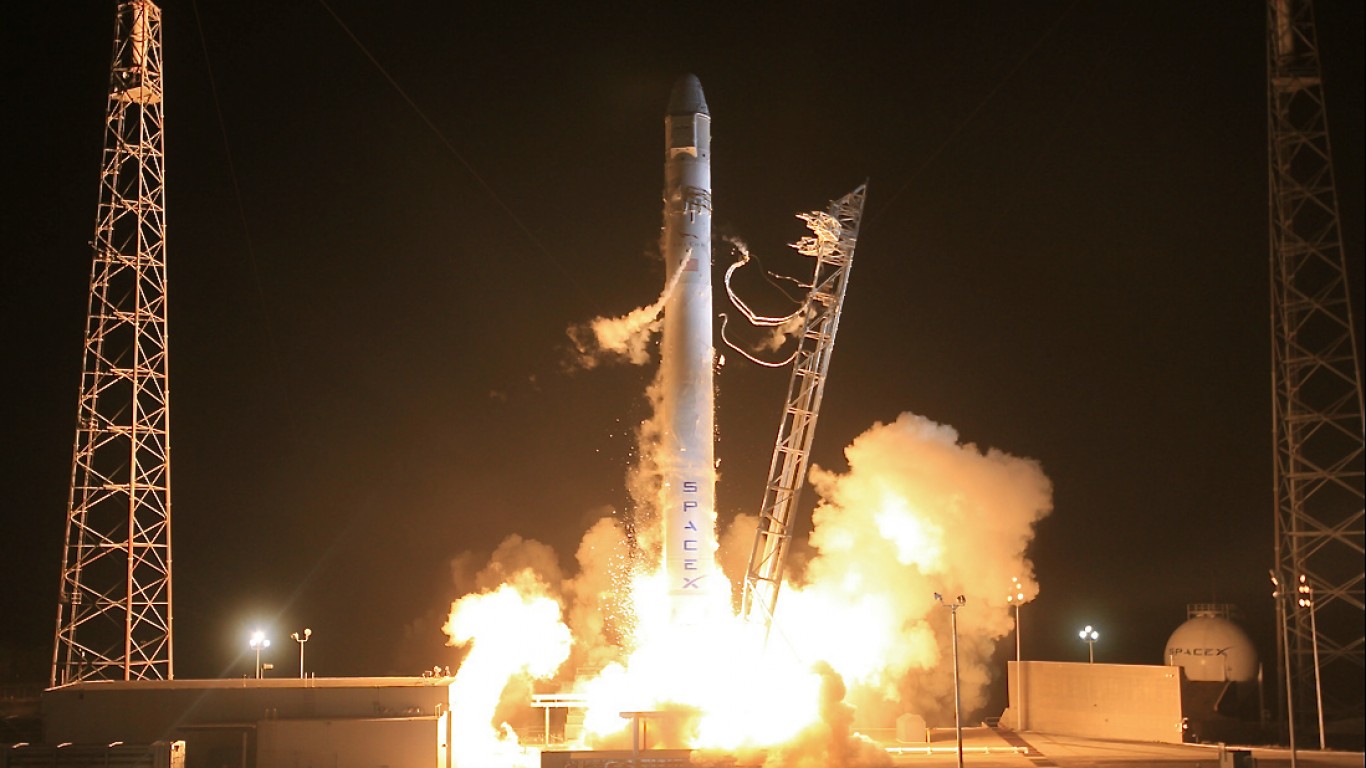
This week, the Federal Communications Commission authorized SpaceX to build a 15,000-satellite constellation at 326 to 335 kilometers, linking directly to ordinary phones. The order was reported Oct. 7, 2026. It came from an FCC bureau rather than the full commission, so it can still be reviewed.
AST SpaceMobile (NASDAQ:ASTS) fell 3.91% to $60.65, and Verizon (NYSE:VZ) slipped 0.48% to $45.76. AT&T (NYSE:T) rose 0.18% to $24.48, while T-Mobile US (NASDAQ:TMUS) gained 1.04% to $167.65.
SpaceX fell 2.51% to $167.60, but that decline followed a separate report on a $40 billion chip-financing plan rather than the approval.
Waiver Removes the Carrier as Gatekeeper
Satellite-to-phone rules assumed the satellite operator would lease spectrum from a carrier, making the carrier a gatekeeper. SpaceX now owns about 65 MHz of spectrum, bought from EchoStar (NASDAQ:SATS) in two deals totaling about $19.6 billion. The Federal Communications Commission waived the leasing rule, writing that “Requiring SpaceX to enter into a leasing arrangement with itself would be an unnecessary regulatory burden.”
The Federal Communications Commission said the grant promotes “competition in the provision of retail wireless services to American consumers.”
SpaceX President Gwynne Shotwell said the acquired spectrum “has terrestrial components, so we definitely intend to build out terrestrial.” Shares of AST SpaceMobile and Verizon fell.
Authorization Today, Service Years Away
SpaceX has a license and spectrum, but the constellation has no satellites in orbit yet, and the service has no price or subscribers. Launches begin in late 2027. The acquired bands can’t be used commercially until the EchoStar deal’s later stage closes, which is expected by Nov 30, 2027. Half the constellation must be in orbit by Oct 7, 2032, and all of it by Oct 7, 2035.
SpaceX claims the network “will deliver 5G speeds of up to 150Mbps per user,” far faster than its current direct-to-cell satellites. But satellite beams share capacity across wide areas, so per-user speed under real load is unproven.
AT&T and Verizon face the most exposure over time but least right now, as their AST SpaceMobile deals depend on a network not yet built.
T-Mobile is SpaceX’s current direct-to-cell partner and future competitor. The waiver removes the leverage that partnership provided.
AST SpaceMobile’s case rests on being the carrier-friendly alternative. A well-funded operator that needs no carrier partner weakens that case directly, which explains why AST fell hardest.
Carriers Answer With a Joint Venture
AT&T, Verizon and T-Mobile established a satellite-to-phone joint venture on Oct 2, 2026, which suggests they expected this, although a joint venture still needs satellites from another company.
The FCC votes on Oct. 29, 2026, on auctioning 25 MHz of spectrum for direct-to-device service. FCC Chairman Brendan Carr framed the goal as “leveraging this cutting-edge tech to end cell phone dead zones.”
What the Approval Means for SpaceX Investors
This order extends a business that already works, although the payoff is likely years away. Starlink subscribers doubled to 12.0 million, and SpaceX holds $93.52 billion in cash, which reduces its need for carrier help.
SpaceX holds a stronger position in direct-to-device than AST SpaceMobile, which has 13 spacecraft in orbit and a model dependent on carriers, just as a rival stops needing them.


If the Oct 29 vote advances an auction that the carriers’ venture can win, SpaceX’s lead narrows, and if launches haven’t begun by the end of 2027, this approval will likely remain a license without a working network.
Contact [email protected] for any questions or corrections.
Omor Ibne Ehsan is a writer at 24/7 Wall St. He is a self-taught investor with a focus on growth, cyclical, and dividend equities that have strong fundamentals, value, and long-term potential. He also has an interest in high-risk, high-reward investments such as penny stocks.