AST SpaceMobile Is Soaring After State Dept. Endorses LEO Satellite Cooperation with Japan
Washington just put AST SpaceMobile's name in a bilateral tech deal with Japan, sending shares surging while rivals barely moved. The question now is whether a billion-dollar satellite award and superpower backing can overcome the company's persistent cash burn.


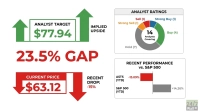
AST SpaceMobile (NASDAQ:ASTS) gained 8.38% to $63.34 in Tuesday trading. The jump came after Washington publicly backed the company’s satellite partnership with Japan’s Rakuten. Before the move, the stock had fallen 11.62% between September 8 and October 5, and it is still down 12.79% year to date.
Washington Backs the Rakuten Partnership by Name
The White House science chief Michael Kratsios met Japanese minister Toshiharu Furukawa in Kyoto on October 4, 2026. The joint statement on the U.S.-Japan Technology Prosperity Deal issued after that meeting named AST SpaceMobile directly:
“Both sides welcomed Japan’s Rakuten Group and the U.S.-based AST SpaceMobile cooperation for the development and deployment of Low Earth Orbit (LEO) satellite infrastructure.”
The two governments also committed to Indo-Pacific connectivity work “through the use of government financing and assistance that mobilizes the private sector.”
Japan’s J-LEO Award Could Pay for Half of Its Satellites
Japan’s communications ministry has initially selected the Rakuten joint venture for its J-LEO initiative, a deal worth up to approximately $1 billion. On the August call, President Scott Wisniewski framed the award as part of a wider trend:
“We see the J-LEO project as a real proof point for how countries, large countries, are thinking about their own infrastructure. This is infrastructure they can control and get access to.”
Management said the Japanese-flagged satellites represent “roughly half of the investment on those satellites” in capital that is “non-dilutive and non-debt.” Asked whether other countries might follow, management said: “I don’t know why a G20 country wouldn’t want this kind of capability given the price.”
That outside funding matters because the company is still burning cash. Q2 revenue came in at $31.52 million, missing expectations of $34.40 million. EPS of -$0.77 also missed the -$0.29 consensus. Pro forma liquidity tops $3.70 billion, and the company confirmed its 2026 revenue guidance of $150 million to $200 million.

Globalstar and Iridium Have Already Rallied This Year
The two closest peers have far outperformed AST SpaceMobile in 2026. Globalstar (NASDAQ:GSAT) is up 36.65% year to date. Iridium Communications (NASDAQ:IRDM | IRDM Price Prediction) has rose 185.59%. On Tuesday, though, Globalstar dropped 0.16% and Iridium added 1.2%, which points to a rally specific to AST SpaceMobile.
Valuation shows how much growth investors are already expecting. AST SpaceMobile trades at 197 times trailing sales, compared with 39 for Globalstar.
Morgan Stanley’s SpaceX Call Put Space Stocks in Play
Morgan Stanley (NYSE:MS) analyst Adam Jonas repeated his Outperform rating on SpaceX (NASDAQ:SPCX) with a $300 price target. He said that investors have only a few weeks to act before the next Starship test flight. SpaceX itself rose just 2%, while AST SpaceMobile posted the largest gain in the sector, 24/7 Wall St. reported.
Approvals and Satellite Launches Will Decide What Comes Next
The J-LEO award still needs government approvals and final agreements. The company is aiming for about 45 satellites in orbit by early 2027, up from 13 today, and plans beta service later this year. CEO Abel Avellan said:
“Our growing commercial and government programs, expansive spectrum portfolio, and fortified balance sheet provide us with the flexibility to capture opportunities across an expanding total addressable market.”
Contact [email protected] for any questions or corrections.
After two decades of patrolling the dark corners of suburbia as a police officer, Rich Duprey hung up his badge and gun to begin writing full time about stocks and investing. For the past 20 years, he’s been cruising the markets looking for companies to lock up as long-term holdings in a portfolio while writing extensively on the broad sectors of consumer goods, technology, and industrials. Because his experience isn’t from the typical financial analyst track, Rich is able to break down complex topics into understandable and useful action points for the average investor. His writings have appeared on The Motley Fool, InvestorPlace, Yahoo! Finance, Money Morning, and, of course, 24/7 Wall St. He has been featured in both U.S. and international publications, including MarketWatch, Financial Times, Forbes, Fast Company, and USA Today.