Jim Cramer Just Made the Case for the Dividend Stocks You Are Bored Of
Jim Cramer built his reputation chasing momentum, so when AI stocks cratered and he credited a stock he openly hates for saving his portfolio, it raised a question worth sitting with: what exactly do you owe the boring names you…

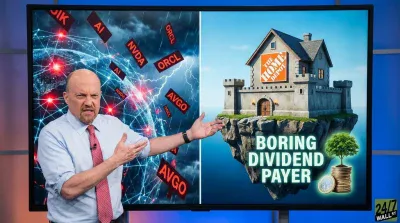
Jim Cramer is best known for trading momentum, so the stock he picked to protect his portfolio on Thursday stood out. As artificial intelligence stocks fell after a Financial Times report on OpenAI’s revenue, the Mad Money host pointed to a dividend payer he openly dislikes having.
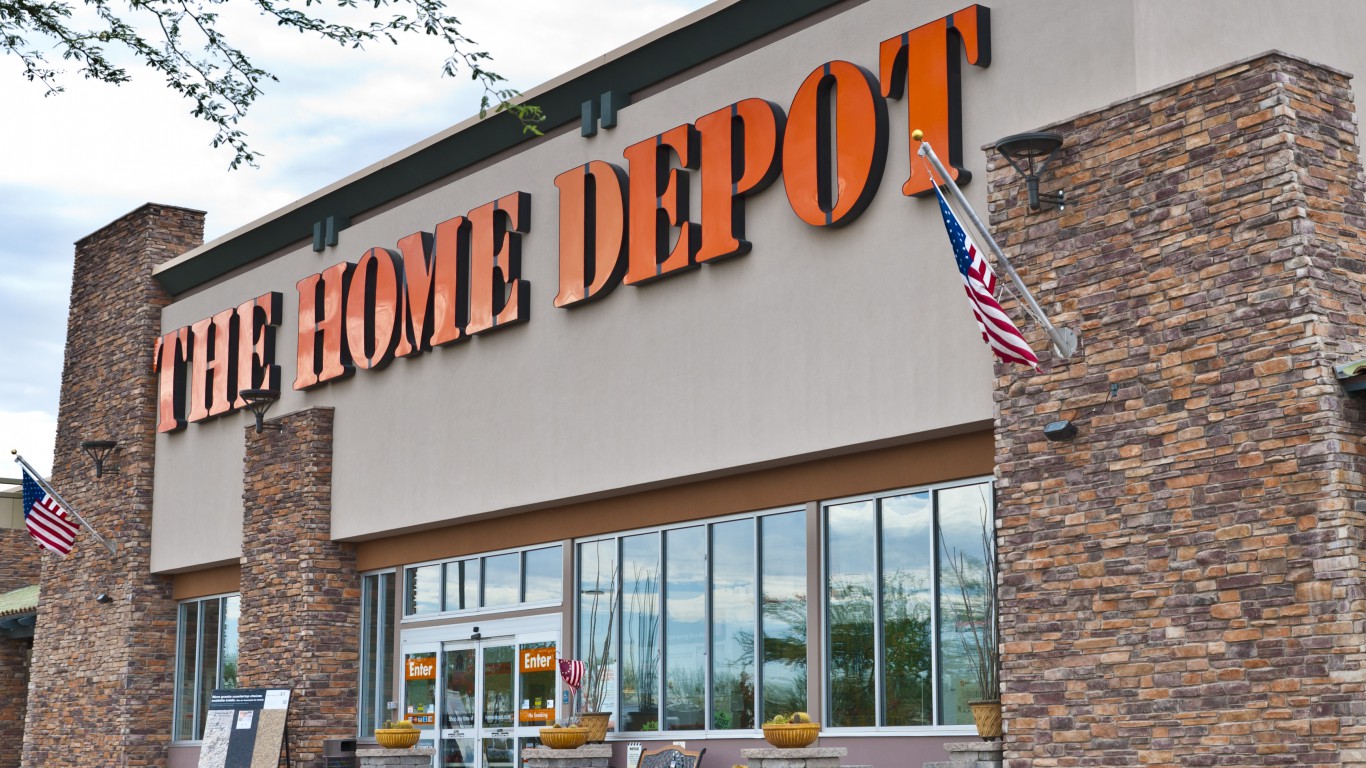
“Do you know how much I’ve hated owning Home Depot? The answer is about as much as I loved it today. Because it’s keeping me in the game on days like this one,” Jim Cramer said on Mad Money on October 8, 2026. He added that diversification keeps you in the game.
AI Selloff Sent Money Toward Forgotten Names
Oracle (NYSE:ORCL | ORCL Price Prediction) and Broadcom (NASDAQ:AVGO) led the decline. Beaten-down stocks outside the AI trade rallied as Treasury yields eased. Home Depot (NYSE:HD) was among them. CNBC reveals that Cramer’s Charitable Trust having shares of Broadcom and Home Depot.
A boring dividend stock does its job by holding up when a crowded trade unwinds, so an investor concentrated in AI does not get shaken out entirely.
Why Home Depot Has Been So Hard to Own
Cramer’s frustration is supported by the chart. Shares traded at $291.90 midday Friday, down 13.31% year to date and 21.77% over the past year. Over five years, the stock is down 0.87%.
Housing is the anchor. On the August earnings call, CFO Richard McPhail said housing turnover “has never been lower as a percentage of the housing stock” and there is “just no sign of an inflection point at this moment.” The 10-year Treasury yield stood at 5.28% on October 7, keeping mortgage rates high. The company announced interim management plans on August 12 while its CEO takes temporary medical leave.
What You Get for Putting Up With Boring
The business keeps growing anyway. Second-quarter revenue reached $47.86 billion, up 5.71% year over year, and adjusted EPS of $4.92 beat the $4.73 consensus, according to the company’s results filed with the SEC. Comparable sales rose 1.7%, online comps grew 11%, and management confirmed full-year guidance. McPhail said “we’re confident we’re taking share.”

The company paid about $2.3 billion in dividends during the quarter, supported by $12.65 billion of free cash flow in fiscal 2025. The quarterly dividend is $2.33 per share, or $9.32 annualized, for a yield near 3.10%. Home Depot called the February declaration its 156th consecutive quarterly cash dividend.
The quarterly payout sat at $0.225 in both 2008 and 2009, frozen during the last housing collapse but never cut. It has since rose to $2.33. Over ten years, the stock is up 192.84% before dividends.
Where the Boring Thesis Gets Tested
A 10-year Treasury at 5.28% pays more than Home Depot’s dividend, so the stock must earn its place through payout growth and resilience. This year’s raise was only 1.3%, and management guides fiscal 2026 diluted EPS to flat to +4.0%. Leverage runs high, with debt-to-equity near 5.10 and net debt to EBITDA around 2.65.
The valuation trades at about 21 times trailing earnings and 20 times forward estimates. Wall Street is split, with 4 Strong Buy, 17 Buy and 15 Hold ratings. The average price target is $378.34.

What to Watch Before the Next Dividend Decision
Cramer’s point is about portfolio construction. A stock that lags during an AI rally can keep a portfolio standing when that rally breaks. For Home Depot, track comparable sales in the third-quarter report, any change in housing turnover as yields move, updates on the CEO’s leave, and the size of the next dividend raise. If the payout keeps growing through “frozen housing conditions,” the boring case gets stronger.
Contact [email protected] for any questions or corrections.
Chris Lange is a financial and geopolitical writer with more than a decade of experience covering a myriad of topics. He has published thousands of articles for 24/7 Wall St., with past coverage focused heavily on stocks, IPOs, healthcare, defense, global affairs, and technology.
His work has been quoted, or referenced by a number of outlets including Business Insider, USA Today, Yahoo Finance, MSN, The Motley Fool, and many other publications. A graduate of Southwestern University, he studied business with a focus on investments and has previous experience in banking and startups.
When not reading or writing the news, he is following his passion for Lacrosse, playing chess, or building solar projects with his dad.