T-Mobile Rebounds 3% After Record Drop on Starlink Spectrum Move; SpaceX Ticks Up, Verizon Edges Higher
Starlink's spectrum grab sent T-Mobile to its worst single-day crash since going public, and the partial rebound raises a harder question about whether satellite competition is already baked into carrier valuations or just getting started.

T-Mobile (NASDAQ:TMUS | TMUS Price Prediction) stock is up 3% to $152.65 in afternoon trading, recovering part of the worst one-day loss in its history as a public company. Meanwhile, Verizon (NYSE:VZ) stock is up 2% to $42.43, tracking T-Mobile shares higher at a slower pace. AT&T (NYSE:T) stock is up 0.8% to $22.36 as well, representing the smallest gain among the three carriers.
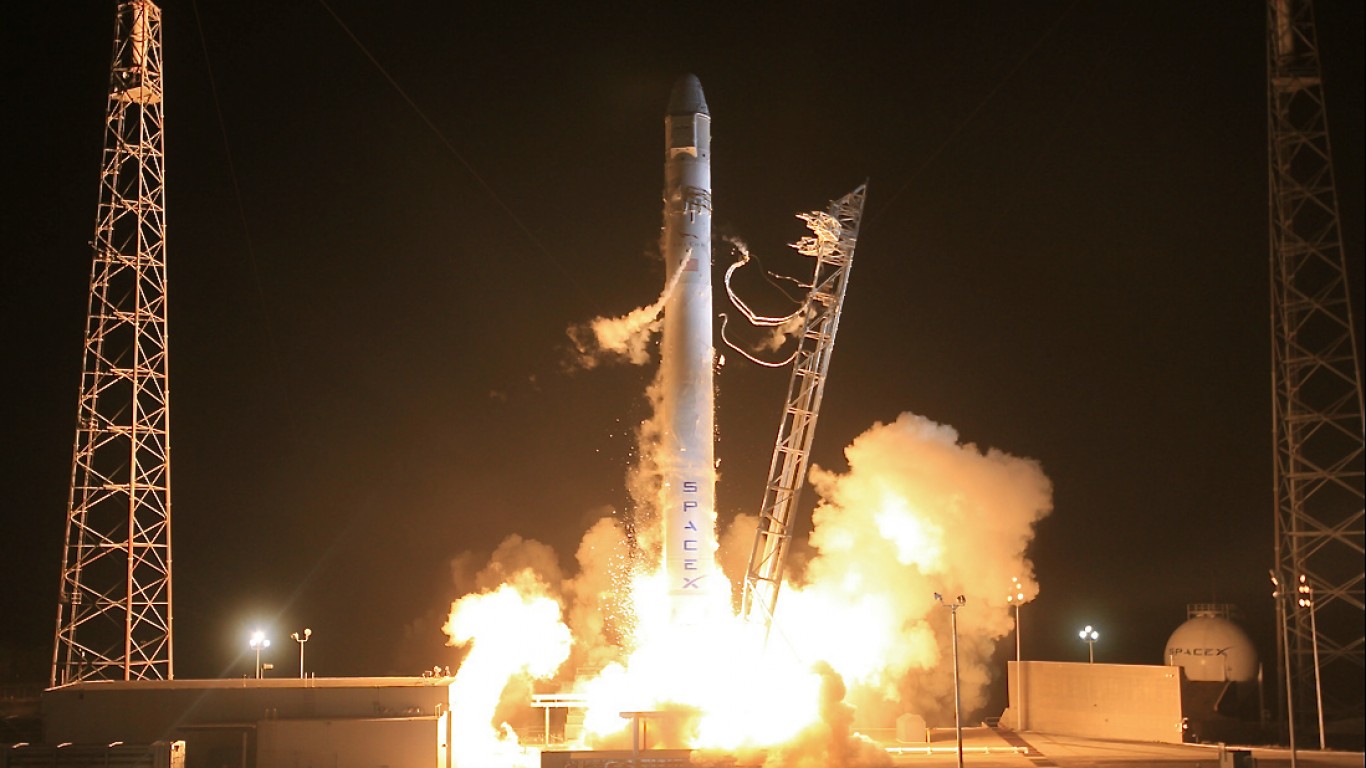
For contrast, the SPDR S&P 500 ETF Trust (NYSEARCA:SPY) is down 0.1% to $777.88. Notably, SpaceX (NASDAQ:SPCX) stock, whose Starlink unit set off the carrier selloff, is up 0.7% to $163.73.

Starlink’s Spectrum Push Sparked a Record Selloff
On October 9, Starlink said it’s adding up to 14 megahertz of paired spectrum in the 800 MHz band. SpaceX founder Elon Musk said the move was the last critical piece of the spectrum puzzle needed for SpaceX to provide complete phone coverage in America. T-Mobile shares fell more than 13% that Friday, Stocktwits reported, the largest single-session decline since the company went public in 2013, as the other large carriers closed lower.
The shared recovery points to a review of Friday’s selling, since the spectrum plan itself is unchanged. That gain recovers only a fraction of Friday’s damage.
Towers Versus Satellites in the Wireless Race
Verizon, AT&T and T-Mobile own licensed spectrum along with the towers and equipment that put it to work, and in rural markets, coverage is the main reason customers choose one carrier over another. That model depends on heavy, ongoing investment in physical infrastructure, which is the barrier a satellite network would try to bypass.
SpaceX reaches phones from orbit through Starlink Direct to Cell, which connects existing 4G Long-Term Evolution (LTE) handsets in places without ground coverage. Any spectrum SpaceX acquires would feed a network with no towers behind it, a far smaller physical presence than the carriers maintain.
T-Mobile stock is down 23% so far this year, so the satellite worry hit shares that were already under pressure. This earlier weakness makes it harder to isolate how much of the current discount stems from satellite risk alone.
Overreaction or Early Warning for Carriers?
For T-Mobile, the bearish case is easy to see. A satellite operator holding its own spectrum could compete for subscribers in rural areas, where coverage drives the choice of carrier. That threat doesn’t need to arrive soon to compress the multiple now, since share prices tend to discount long-dated risks early.
On the other hand, the bullish case holds that a decline of Friday’s size, tied to a capability still in development, already prices in a competitor that hasn’t launched a consumer plan. On that view, the burden of proof sits with SpaceX, which still has to show it can turn spectrum into a priced, marketed phone service.

What to Watch Next
The key question for T-Mobile is whether SpaceX files for the regulatory approvals a consumer wireless service would require. A filing like that would convert a capability on paper into a process with a regulatory timeline, giving the carriers a clearer sense of when competition could reach their customers.
At the end of the day, investors should keep their T-Mobile share positions measured until SpaceX’s regulatory path comes into focus, since Friday showed how quickly one headline can reset sector valuations.
Contact [email protected] for any questions or corrections.
David Moadel is financial writer specializing in stocks, ETFs, options, precious metals, and Bitcoin. David has written well over 1,000 articles for leading online publications, helping investors understand markets, income strategies, and risk.His work has appeared in The Motley Fool, InvestorPlace, U.S. News & World Report, TipRanks, ValueWalk, Benzinga, Market Realist, TalkMarkets, Finmasters, 24/7 Wall St., and others.With a master’s degree in education, David has taught at the elementary, high school, and college levels. That teaching background shapes his writing style: clear, educational, and practical. David has also built a loyal social-media audience by providing trustworthy financial content on YouTube, X/Twitter, and StockTwits.