Verizon’s Had A Difficult 6 Months: This Wall Street Research Firm Says It Will Provide Roughly 50% Returns From Here
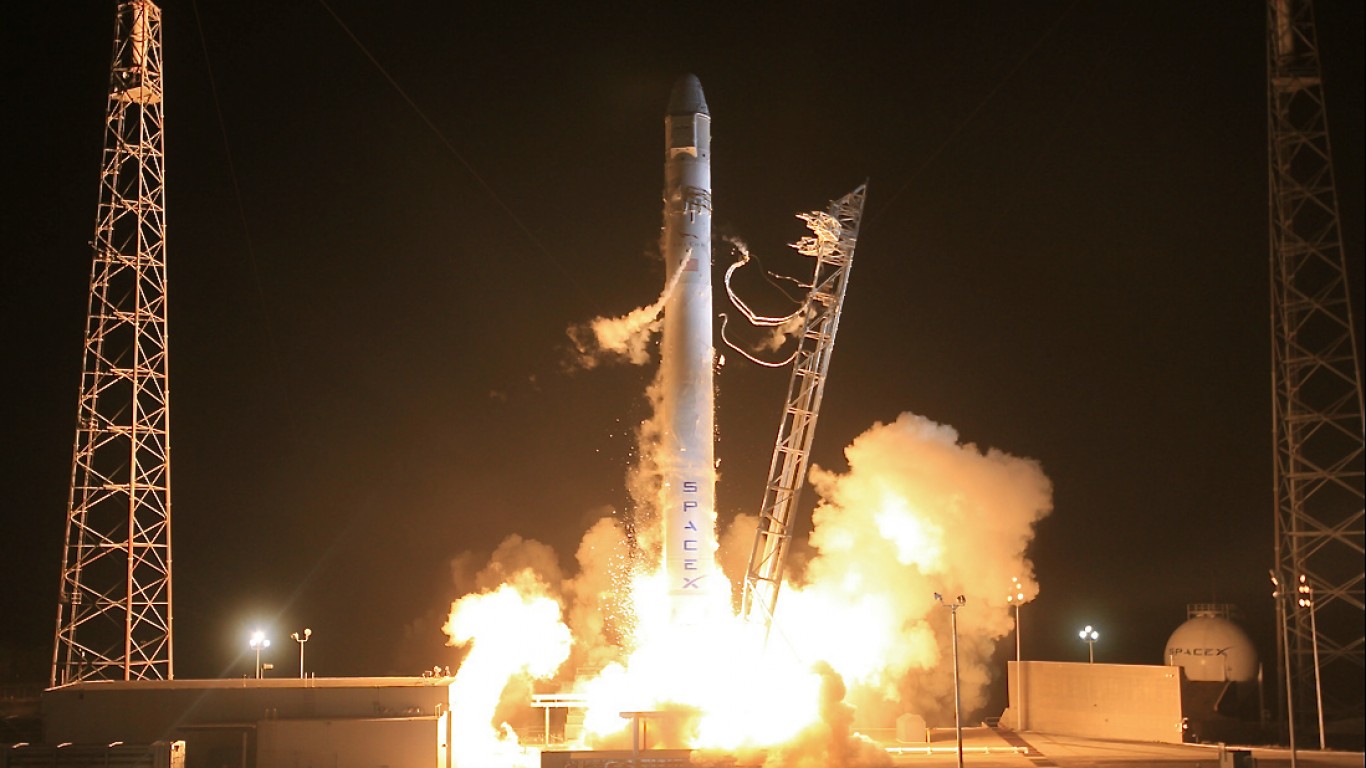
SpaceX just handed Verizon its worst single-day drop since 2002, yet one Wall Street firm sees the selloff as an opportunity that could reward patient investors far more than the broader market consensus suggests.

Verizon Communications (NYSE:VZ | VZ Price Prediction) is priced at $41.65. Wall Street’s average price target is $51.12, which places the stock about 22.7% below where analysts think it should be.
Verizon runs one of the country’s largest wireless networks. After buying Frontier, it also has a fiber business with 10.9 million fiber connections. Wall Street has been watching because CEO Dan Schulman’s turnaround is finally delivering subscriber growth.
Arete Research is the most bullish firm on the stock. It rates Verizon a Buy with a $62.00 target, the Street high. That target means 48.9% upside.
SpaceX Hits a Turnaround Story in Mid-Stride
Starlink’s Carrier Ambitions Sparked Verizon’s Worst Day Since 2002
The main reason for the drop is SpaceX’s plan to turn Starlink into a major U.S. mobile carrier. Verizon fell 8.75% in the latest session, its worst day since 2002. The stock is down 14.84% over the past month and 5.18% over six months. Most of the damage came in a few days.
The whole sector took the hit. AT&T (NYSE:T) dropped 9.85% and T-Mobile US (NASDAQ:TMUS) dropped 13.27% in the same session, while the S&P 500 rose 0.6%. Verizon’s own results were mixed. Adjusted EPS of $1.30 beat the $1.27 estimate. But ARPA fell 1.4% and fixed wireless net additions fell 30.6%.
Arete’s $62 Target Depends on Cash Flow and Churn
Arete cut its target from $71.00 but kept its Buy rating. Its case has three parts: winning broadband share through fixed wireless, rising free cash flow as spending declines, and pricing power backed by low churn.
The cash flow numbers support the bulls. Free cash flow reached $6.426 billion last quarter, up 27.12%. Full-year guidance now calls for $21,940-$22,140 million. Verizon added 184,000 postpaid phone customers, compared with a loss of 9,000 a year earlier. Churn improved to 0.92%. Management raised EPS guidance to $4.99-$5.04 and expects service revenue growth of about 3.0% in Q3 and 4.0% in Q4. Those quarterly reports are the next tests. Schulman put it this way: “We are no longer predominantly reliant on expensive promotions to drive our growth.”
Arete’s broadband part leans on fixed wireless, the same segment where additions are slowing. Starlink also goes after rural and home internet customers. The wider Street is more cautious. Verizon has 3 Strong Buy ratings, 8 Buy ratings, 15 Hold ratings and no Sells.
All Three Carriers Fell, and T-Mobile Shows the Widest Gap
The peer group sold off together. Verizon fell alongside its rivals.
AT&T trades at $22.17. It is down 10.71% over the past month. Its $28.80 average target means 29.9% upside. Ratings tip bullish: 16 Buy-side ratings, 9 Holds and 1 Sell. Verizon does not offer as much consensus upside.
T-Mobile trades at $148.58. It is down 25.22% this year. Its $241.24 target means 62.4% upside, with 23 Buy-side ratings and 5 Holds.
T-Mobile has the largest potential upside in the group. Verizon’s consensus gap is the lowest of the three, and only Arete’s outlier target brings it near 50%. Price targets are estimates and can be wrong for any of these stocks.
Verizon Gains This Year but Lags the S&P 500
At $41.65, Verizon sits 22.7% below the $51.12 average target set by 26 analysts. The stock is up 9.23% this year. The S&P 500 is up 14.17% over the same period.
The stock trades at about 9x forward earnings and yields 6.12%.
Verizon’s Bull Case Comes With a Starlink Risk Attached
Optimism builds if churn keeps falling, service revenue growth reaches about 4% by year-end, and free cash flow lands within guidance while leverage moves toward the 2.0 to 2.25 times target. The bear case gains weight if Starlink pushes down rural wireless and home internet pricing and forces Verizon back into expensive promotions while carrying $136.5 billion in unsecured debt.
On balance, the data tip positive. The consensus gap of 22.7% looks more realistic than Arete’s 48.9%. A single-digit earnings multiple and a 6% yield pay investors while the satellite threat plays out.
Contact [email protected] for any questions or corrections.
Alex Sirois is a financial writer with experience spanning both retail and institutional investing. He has written for InvestorPlace and held roles at BNY Mellon and Bernstein, giving him a perspective that bridges Main Street portfolios and Wall Street analysis.
Alex holds an MBA from George Washington University and has built his career across multiple industries, including e-commerce, education, and translation — a breadth of experience that informs how he breaks down complex financial topics for everyday investors. His writing is conversational, actionable, and grounded in long-term, buy-and-hold investing principles.
At 247 Wall St., Alex focuses on delivering analysis that is both accessible and useful, with a clear emphasis on helping readers make more informed decisions with their money.