This Overlooked AI Stock Turned $1,000 Into $18,924 and Crushed the Market
A company that builds the machines behind every AI chip quietly turned patient investors into big winners, but the path there included years of frustration, export penalties, and a stock that barely moved while the market celebrated elsewhere.


How a Chip Toolmaker Became an AI Bottleneck
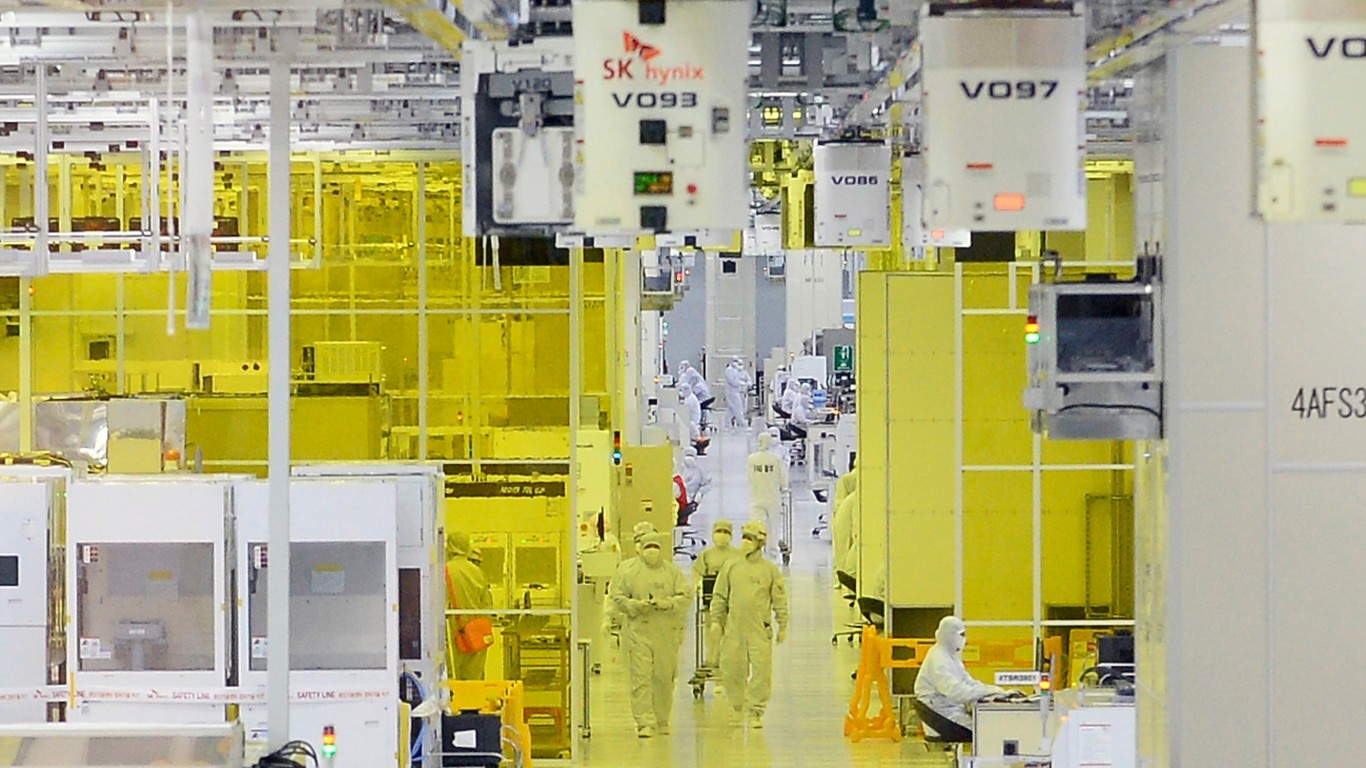
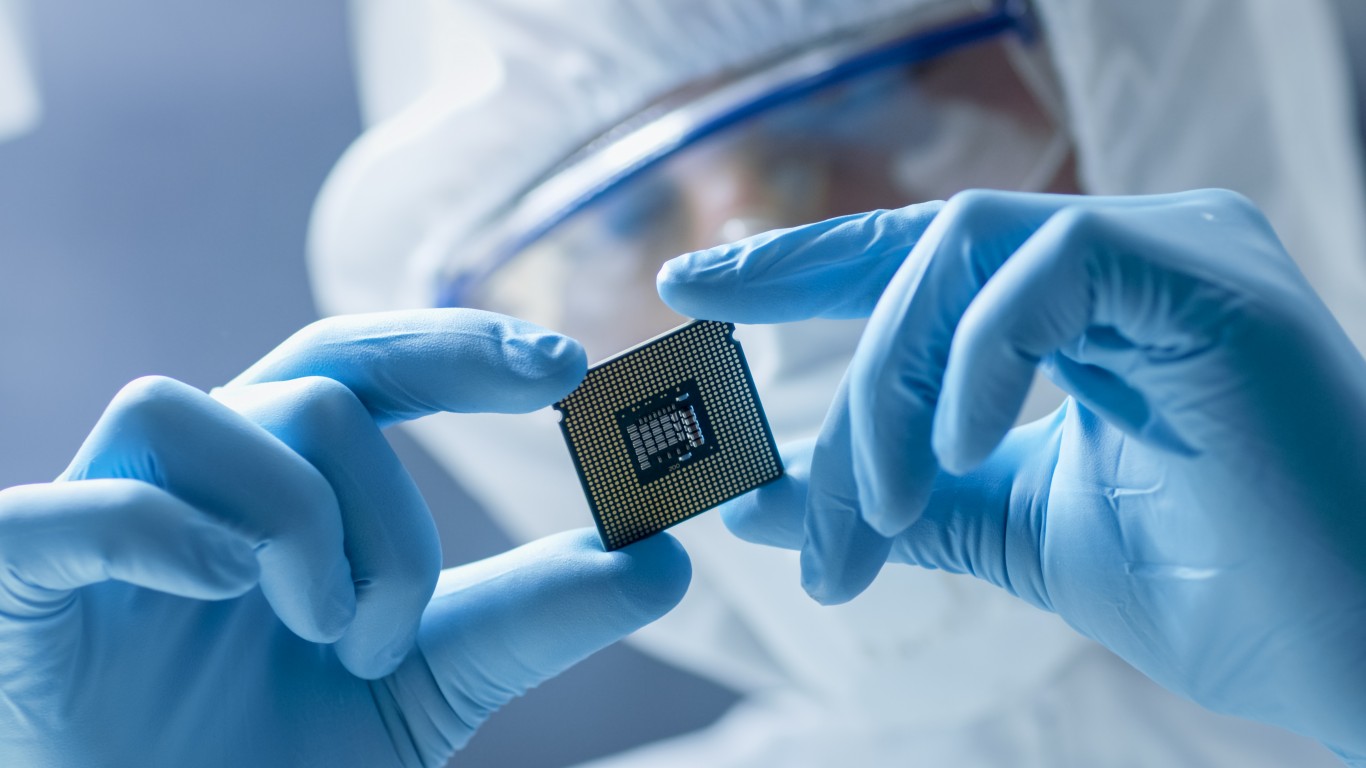
Applied Materials (NASDAQ:AMAT | AMAT Price Prediction) builds the machines that make the chips. Picture a chip as a microscopic city built in layers. Deposition tools lay down films of material only atoms thick. Etch tools carve circuit patterns into those films. Inspection tools check the work. Memory makers and leading-edge foundries all need this equipment before a single chip ships.

Over the past decade, Applied rode one wave after another: smartphone silicon, then the cloud data center expansion, and now AI infrastructure. The ride had rough periods. Equipment spending moves in cycles, and the stock traded at $123 in October 2021 and only $208.77 four years later. Export controls also cut China’s share of revenue to 28% from 35%, and the company paid a $253M settlement with the Commerce Department’s Bureau of Industry and Security (BIS) in fiscal Q1 2026.
Then AI demand exceeded chip supply. Fiscal Q3 2026 revenue hit a record $9.1 billion, up 25% year over year. DRAM revenue, including high-bandwidth memory packaging, grew 52%. Management guided fiscal Q4 to $10.25 billion, up 51%.

Your $1,000 Grew to Nearly $19,000
1-Year Return
- Initial Investment: $1,000
- Current Value: $2,287.10
- Total Return: 128.71%
- S&P 500 (same period): $1,191.80 (19.18%)
5-Year Return
- Initial Investment: $1,000
- Current Value: $3,882.10
- Total Return: 288.21%
- Annualized Return: 31.16%
- S&P 500 (same period): $1,788.40 (78.84%)
10-Year Return
- Initial Investment: $1,000
- Current Value: $18,924.60
- Total Return: 1,792.46%
- Annualized Return: 34.18%
- S&P 500 (same period): $3,651.90 (265.19%)
Applied beat the S&P 500 at every horizon, but timing shaped the experience. A 2021 buyer sat through four years of modest progress before the AI re-rating delivered most of the gain in a single year. Volatility remains part of the deal: the stock fell 11.95% over the past week, and its 52-week range runs from $202.28 to $738.88. Meanwhile, the quarterly dividend rose from $0.10 in 2016 to $0.53.
Why Long-Term Holders Have the Edge on AI Chip Demand
Optimism around Applied Materials depends on AI keeping fabs running at full capacity. Customers are already sharing eight-quarter rolling forecasts, with some conversations extending to 2030. Margins have expanded for 13 consecutive quarters, and the forward P/E of 23 looks reasonable for that growth.

Bears worry about how exposed the stock is to a downturn. China still accounts for 26% of Semiconductor Systems plus services revenue, export rules keep tightening, and the trailing P/E of 43 leaves little margin if chipmakers pause spending.

The long-term record favors patience. This decade shows that owning a picks-and-shovels supplier through a full cycle paid off far better than trying to time it. The investors who earned the 10-year return were the ones who held through the slow years. Equipment is only one slice of the AI expansion, though; we covered seven other suppliers supporting the data centers, from power to cooling, in a free report you can grab here.
Contact [email protected] for any questions or corrections.
Chris Lange is a financial and geopolitical writer with more than a decade of experience covering a myriad of topics. He has published thousands of articles for 24/7 Wall St., with past coverage focused heavily on stocks, IPOs, healthcare, defense, global affairs, and technology.
His work has been quoted, or referenced by a number of outlets including Business Insider, USA Today, Yahoo Finance, MSN, The Motley Fool, and many other publications. A graduate of Southwestern University, he studied business with a focus on investments and has previous experience in banking and startups.
When not reading or writing the news, he is following his passion for Lacrosse, playing chess, or building solar projects with his dad.