3 Restaurant Stocks That Turn Burgers, Pizza and Pasta Into Dividend Income
McDonald's, Darden, and Yum! Brands all convert daily foot traffic into shareholder income, but only one of them kept raising its dividend when dining rooms went dark and customers disappeared.


Restaurants sell something people buy every day, and three of the industry’s biggest operators turn that regular foot traffic into a growing dividend. McDonald’s (NYSE:MCD | MCD Price Prediction), Darden Restaurants (NYSE:DRI), and Yum! Brands (NYSE:YUM) all paid last year’s dividends out of free cash flow, and McDonald’s just raised its quarterly payout to $1.93. Below, each one is graded on what matters most to an income investor: how well the dividend is covered, how much debt sits behind it, how the business held up when customers cut back, and what could go wrong.
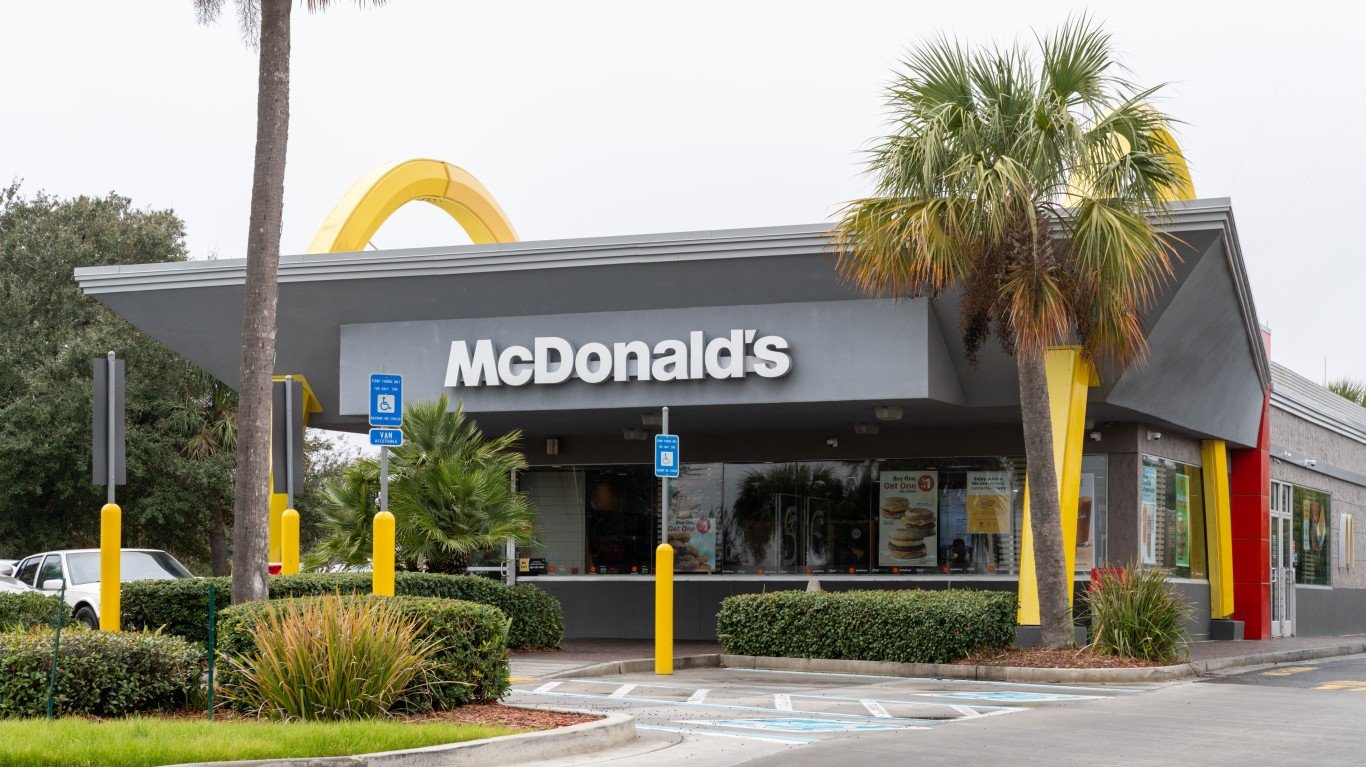
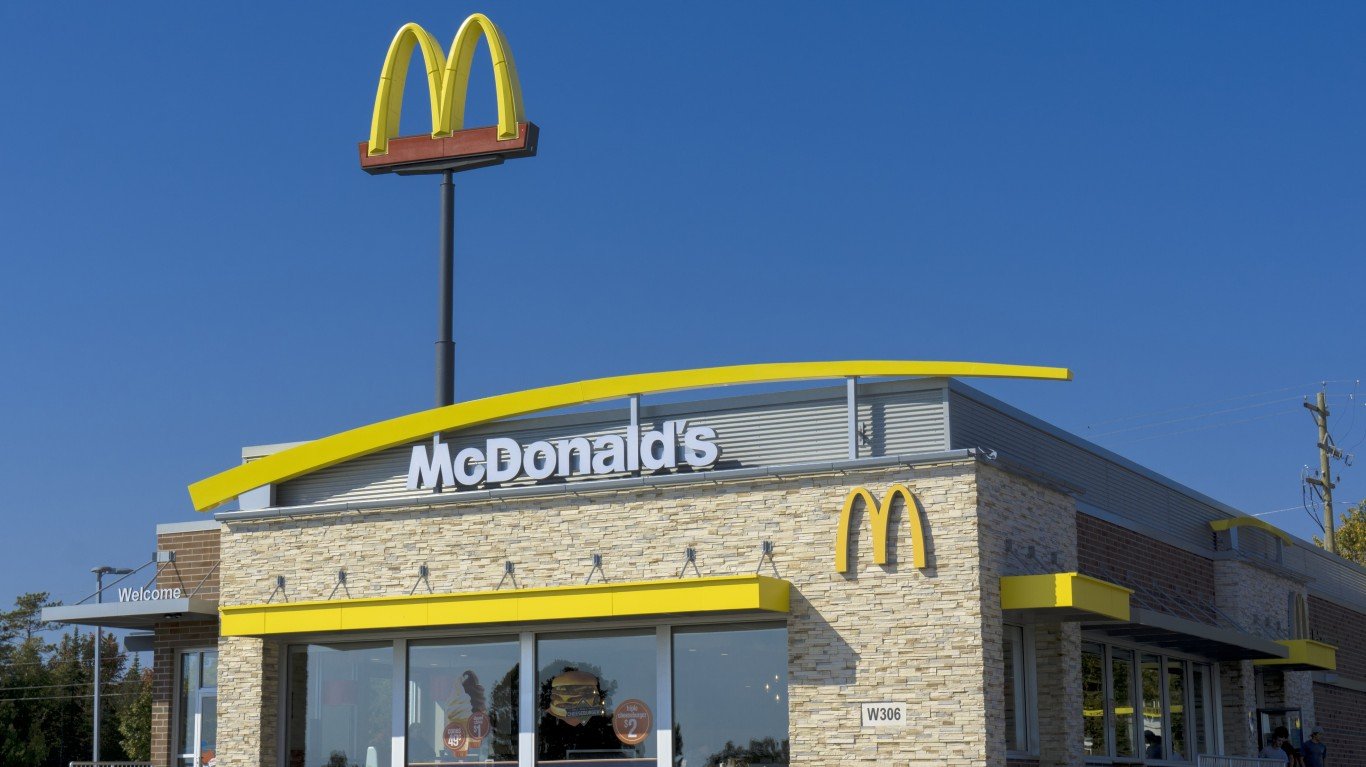
McDonald’s: A Franchise Machine That Rose Through a Pandemic
McDonald’s yields 3.18% on a forward basis at a recent price of $242.62. The quarterly dividend now stands at $1.93, up from $1.86.
Why the franchise model matters for your income: About 95% of its 46,028 restaurants are owned by independent franchisees. McDonald’s mostly collects rent and royalties based on a percentage of sales. Franchisees pay for the beef, the fryer oil, and the payroll, so food and wage inflation hit them first. That is why McDonald’s runs an operating margin near 46.1%, a level almost no restaurant operator can match.
Dividend safety: In fiscal 2025, operating cash flow came to $10.551 billion against capital spending of $3.365 billion. That left about $7.186 billion in free cash flow to cover $5.115 billion in dividends. The payout used roughly 71% of free cash flow and about 60% of net income. Interest coverage is 7.83x. Shareholders’ equity is negative because McDonald’s has spent years buying back stock, so lenders and investors judge its debt by cash flow instead.
When customers pulled back: In 2020, operating cash flow fell to $6.265 billion, and the second quarter actually came in negative at -$213.1 million. McDonald’s still paid every dividend. The full-year payout used about 81% of free cash flow, and the quarterly rate rose from $1.25 to $1.29 late in the year. Spending was softer more recently too: global comparable sales grew just 1.3% in the second quarter. Even so, adjusted EPS of $3.38 came in ahead of the $3.32 estimate.
Track record: Dividend data shows a higher payment rate each year from 2009 through the current year, climbing from $0.50 per quarter to $1.93.
Bull case: Shares are down 19.06% year-to-date and trade at about 20 times earnings, which has pushed the yield higher. Management expects about 2,600 new restaurants this year and is aiming for 50,000 units by 2028. Each new location adds another royalty stream.
Risk: Debt is the one to monitor. Net debt is 3.70x EBITDA, with interest expense expected to rise 4-6% this year because of higher rates. That cash goes to lenders instead of toward future raises.
Darden Restaurants: Biggest Payout Growth, With a Scar to Remember
Darden yields 3.01% at a recent price of $215.41. Its quarterly dividend of $1.62 reflects an 8.0% raise from the prior $1.50.
Why the operating model matters: Darden operates its 2,218 restaurants itself, including Olive Garden, LongHorn Steakhouse, and The Capital Grille. It keeps all restaurant profit, but it also pays for every server, steak, and lease. Sales swings and costs hit its cash flow directly, with no franchisee to absorb them.
Dividend safety: In fiscal 2026, operating cash flow was $1.853 billion, and capital spending was $734 million, which produced about $1.119 billion in free cash flow. Dividends of $693 million used roughly 62% of that and about 57% of net income. Looking ahead, the forward annual dividend of $6.48 is about 58% of the low end of management’s fiscal 2027 EPS guidance of $11.10 to $11.35. Darden is also the only company in this group with positive shareholders’ equity, at $2.068 billion.
When customers pulled back: The pandemic hit Darden hard. Fiscal 2020 ended with a net loss of $49.2 million, and the quarterly dividend dropped from $0.88 to $0.30. The recovery was quick. By 2021, the payout was back up to $1.10, and it has risen each year since, through $1.21, $1.31, $1.40, and $1.50 to today’s rate.
Bull case: Every brand reported positive same-restaurant sales last quarter, led by LongHorn at 6.2%, and revenue rose 5.1%. Management confirmed its full-year outlook and still has $1.3 billion left on its buyback authorization. The stock is up 20.77% year to date, which tells you investors trust the earnings story.
Risk: The 2020 cut is a real data point. Because Darden runs its own restaurants, a deep drop in dining out hits its cash flow directly. In a severe recession, this dividend is the most likely of the three to shrink.
Yum! Brands: Lowest Payout Ratio and a Taco Bell Engine
Yum yields 2.01% at a recent price of $149.24. It pays $0.75 per share per quarter, up from $0.71 last year.
Why the franchise model matters: Yum franchises or operates more than 64,000 restaurants in 157 countries and territories. Most of its revenue comes from franchise and property fees. That means its cash flow depends on system-wide sales more than on the margin of any one store, and the geographic spread keeps a slump in one market from taking down the whole business.
Dividend safety: Fiscal 2025 operating cash flow of $2.01 billion minus capital spending of $371 million left about $1.639 billion in free cash flow. Dividends of $789 million used only about 48% of that, the most room in this group, and about 51% of net income. Operating cash flow covered capital spending in each of the last six reported quarters.
When customers pulled back, Yum kept raising. The quarterly rate went from $0.42 in 2019 to $0.47 in 2020 and $0.50 in 2021. The data shows a higher annual rate every year from 2017 through the current year.
Bull case: Taco Bell same-store sales rose 7% last quarter, and the brand’s operating profit increased 19% to $311 million. KFC grew its unit count 7%. After the planned sale of Pizza Hut, Yum will be more focused on KFC, Taco Bell, and Habit Burger & Grill—management’s long-term target calls for at least 8% core operating profit growth, supporting further raises.
Risk: Selling Pizza Hut removes a source of franchise fees, so the smaller company will have to cover the dividend. At the same time, total liabilities of $15.789 billion exceed total assets of $8.682 billion. If the remaining brands grow more slowly than planned, raises could get smaller.
Which Restaurant Dividend Fits Your Income Plan
All three paid their dividends from free cash flow last year, and all three are raising them. McDonald’s offers the highest yield and kept raising through 2020, which gives it the strongest dividend record in this group. Yum has the most room in its payout and a growth story built around Taco Bell. Darden gives you the quickest recent raises, with the clear warning that a company that runs its own restaurants cut its dividend the last time customers stayed home.
Contact [email protected] for any questions or corrections.
Chris Lange is a financial and geopolitical writer with more than a decade of experience covering a myriad of topics. He has published thousands of articles for 24/7 Wall St., with past coverage focused heavily on stocks, IPOs, healthcare, defense, global affairs, and technology.
His work has been quoted, or referenced by a number of outlets including Business Insider, USA Today, Yahoo Finance, MSN, The Motley Fool, and many other publications. A graduate of Southwestern University, he studied business with a focus on investments and has previous experience in banking and startups.
When not reading or writing the news, he is following his passion for Lacrosse, playing chess, or building solar projects with his dad.