SpaceX’s AI Business Is Now Bigger Than Starlink
SpaceX's AI division just overtook Starlink in revenue, but the profits tell a very different story about which business actually keeps the lights on.

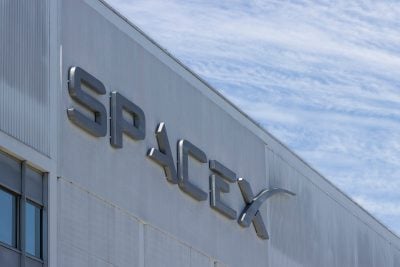
SpaceX (NASDAQ:SPCX | SPCX Price Prediction) reported third-quarter 2026 results after the close on October 20, 2026. For the first time, its Super Intelligence (SI) division, the AI unit, brought in more revenue than Connectivity, which is mostly Starlink. SI booked $7.560 billion in revenue, compared with $5.248 billion for Connectivity.
The stock closed the regular session at $147.79, down 0.11%, before the report. It then traded at $159.70 after hours as of 7:59 p.m. ET, up 8.06%. That is an after-hours quote, so the October 21 session will set the real price.
These results contain a tension. The AI business grows fastest and spends the most cash, while Starlink still makes most of the profit. Through October 20, shares fell. They were down 8.18% from their first trading close on June 12, 2026, which leaves a $2.01 trillion company that has yet to show that its AI spending will pay off.
Part of This Revenue Flip Was Bought
Total revenue rose 161% to $14.575 billion. Net income came in at $4.404 billion, compared with a net loss of $1.054 billion a year earlier. Operating income was $2.791 billion, after an operating loss of $143 million in the second quarter.
SI revenue grew 830% from $813 million. Some of that growth was bought, because Cursor, acquired on August 14, 2026, at an implied equity value of $60 billion, added $608 million.
Chief financial officer Bret Johnsen said SI solutions and infrastructure revenue grew 192% sequentially even without Cursor. Johnsen said SI revenue was “up $5 billion quarter-over-quarter and $6.7 billion year-over-year, primarily powered by the ramp of our cloud services agreements.”
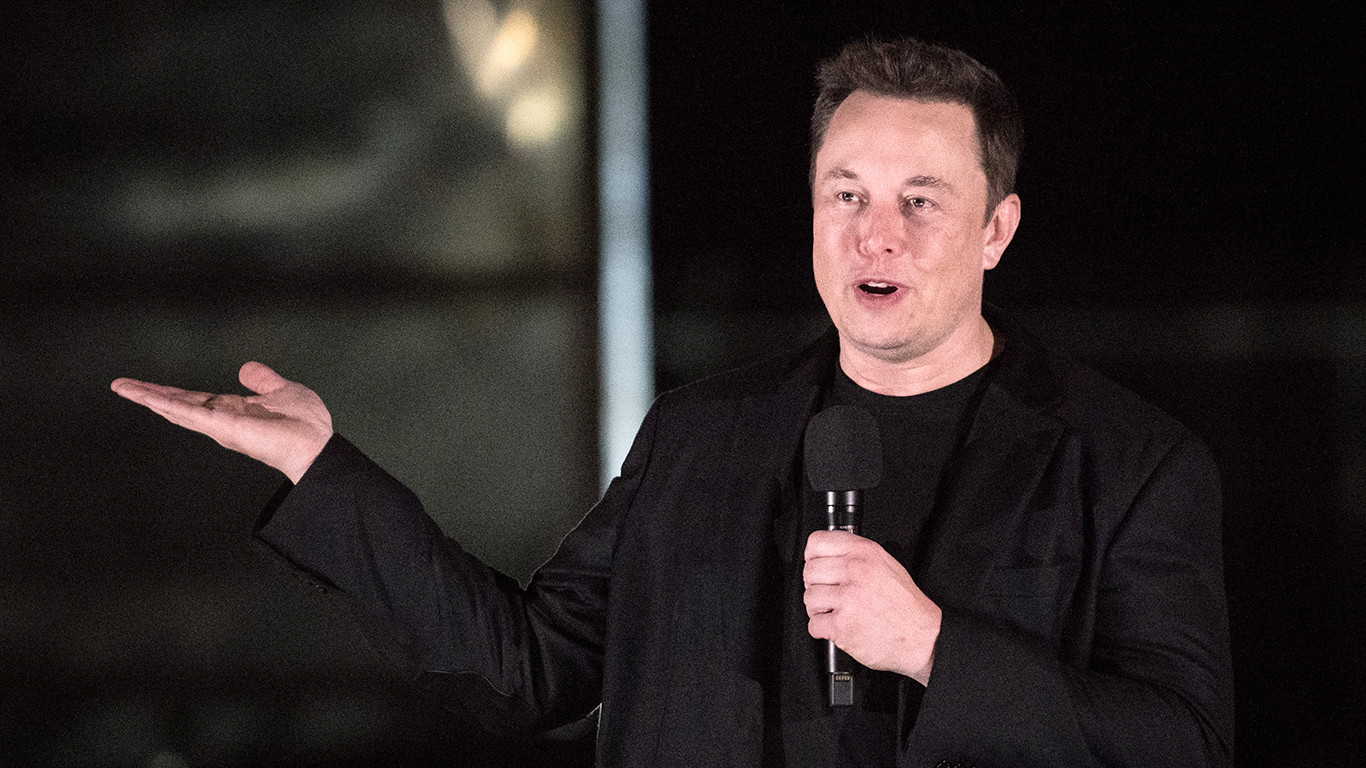
SpaceX disclosed only “cloud services agreements.” Customer names such as Anthropic and Alphabet (NASDAQ:GOOG, NASDAQ:GOOGL) unit Google come from press reports, and the company did not disclose contract terms. On the call, Elon Musk said SpaceX rents compute at “effectively the spot market rate” instead of signing long-term deals.
Starlink Still Supplies Most of the Profit
Connectivity operating income rose 99% to $2.367 billion. SI makes $431 million after recording $1.2 billion of share-based compensation tied to Cursor.
SI does lead on Adjusted EBITDA, $4.953 billion to $3.499 billion. That measure excludes non-cash stock awards and depreciation on new compute, both of which are real costs.
Starlink ended the quarter with 13.6 million consumer subscribers. It added 1.6 million, which missed expectations, while monthly revenue per user (ARPU) was $69.
AI Build Costs Money Now and Pays Back Later
SI accounted for $16.444 billion of total capital spending of $19.593 billion. Johnsen guided fourth-quarter capex to between $35 billion and $40 billion. He said, “At current pricing, new compute deployments are generating a payback of less than a year.”
Total compute reached 1.7 GW, up from 0.6 GW a year earlier. Johnsen cited a $63 billion backlog, about $42 billion of it due within a year, and repeated a $100 billion year-end ARR (annual recurring revenue) goal.
Musk also projected $500 billion to $1 trillion in ARR by the end of 2027. He separately said Tesla (NASDAQ:TSLA) and SpaceX have formed special committees to discuss a merger.
What Could Change the Outlook for SpaceX Stock

My view is cautious. The spending happens now. The return Johnsen described depends on spot pricing holding up, since SpaceX chose not to lock in long-term contracts.
Starlink is the part of SpaceX with proven profits, but you cannot buy it on its own. At $2.01 trillion, you are paying mostly for an AI build that makes $431 million in operating income.

The cautious view fails if first-quarter 2027 revenue lands inside the guided $33 to $37 billion range and SI operating income rises well above the third-quarter level.
Contact [email protected] for any questions or corrections.
Omor Ibne Ehsan is a writer at 24/7 Wall St. He is a self-taught investor with a focus on growth, cyclical, and dividend equities that have strong fundamentals, value, and long-term potential. He also has an interest in high-risk, high-reward investments such as penny stocks.