Tesla Was Expected to Burn $5 Billion. It Made $1.5 Billion Instead
Wall Street had Tesla pegged for a brutal quarter, and the earnings report delivered both a stunning surprise and a troubling signal at the same time. Which one investors should actually care about changes the entire picture.

This post may contain links from our sponsors and affiliates, and Flywheel Publishing may receive compensation for actions taken through them.
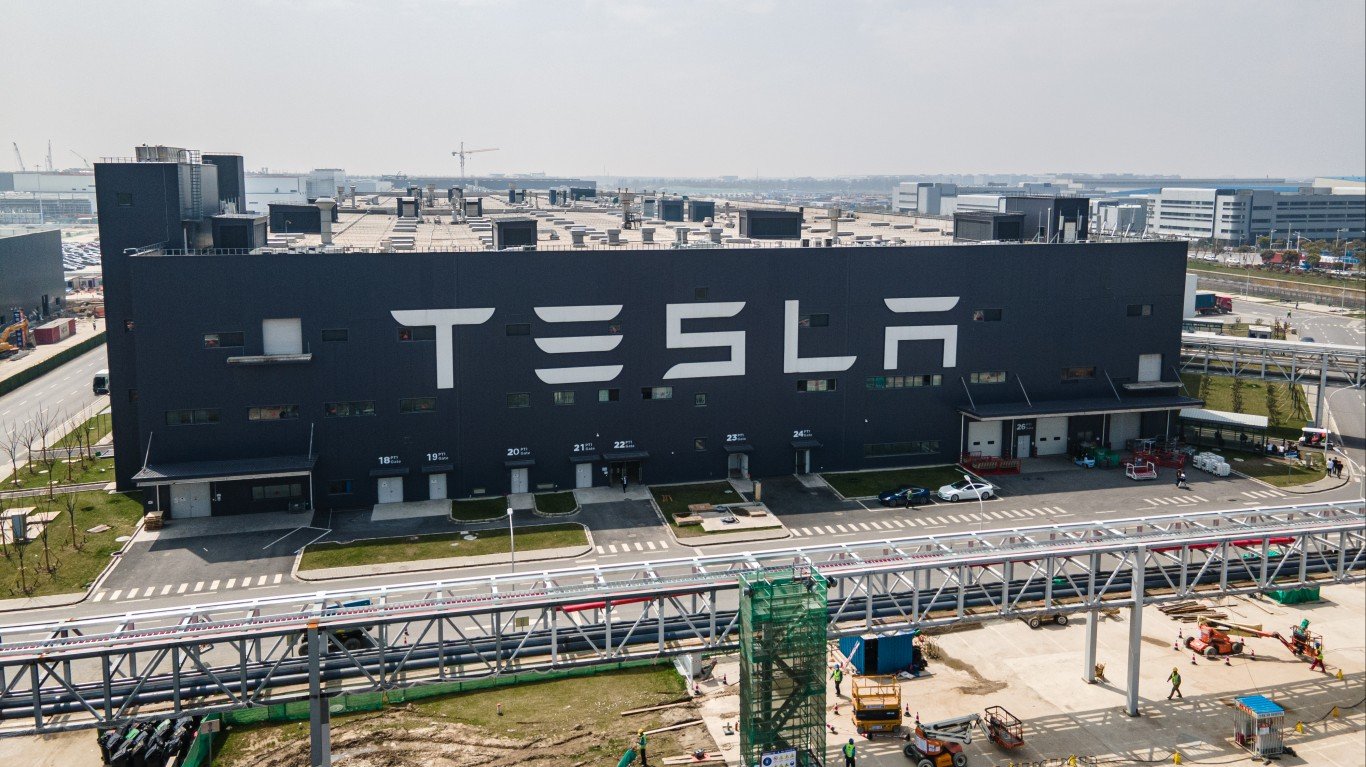
Wall Street expected Tesla (NASDAQ:TSLA | TSLA Price Prediction) to burn nearly $5 billion in its third quarter. Instead, Tesla generated $1.53 billion in free cash flow, which is the cash left after paying for factories and equipment. The results came out after the close on October 21, 2026, against a consensus free cash flow estimate of -$4.92 billion.
The surprise came from spending less, while earnings fell. Operating income dropped about 56% from a year earlier. Shares rose 3.41% in the regular session to close at $386.47, then fell to $373.65 after hours as of 7:59 PM ET, down 3.32%.
Shareholders now have to consider whether a bigger cash pile makes up for a shrinking core profit at a $1.53 trillion market value.

Lower spending drove the FCF surprise. Operating cash flow was $6,263 million, almost the same as the $6,238 million a year earlier. The gap came from capital expenditures of $4,732 million, well below the expected $7.96 billion.
Spending still rose from $2,248 million in Q3 2025, so free cash flow fell about 62% from $3,990 million. In Q2 2026, capex of $5.79 billion drove free cash flow down to -$1.09 billion.
Tesla Cut Its Capex Guidance by Pushing Spending Into 2027
On the call, CFO Vaibhav Taneja said, “We are revising our CapEx guidance to be approximately $20 billion for the current year.” The prior guidance was more than $25 billion, and the company announced the change on the call rather than in the shareholder letter.
Capex through September amounted to $13.01 billion, which leaves about $7 billion for Q4. CEO Elon Musk noted capex “will start to become more meaningful next year,” and management pointed to spending in the tens of billions in 2028.
Taneja added that Tesla does not plan any draws this calendar year on newly secured borrowing capacity of up to $30 billion. The cut moves spending later without removing it, because a bill driven into 2027 still has to be paid.
A $45 Billion Cushion Gives Tesla Room to Wait
Cash, cash equivalents and short-term investments rose to $45.447 billion from $41.647 billion. That lets Tesla pay for heavy research and factory building while margins stay thin, without selling new shares.
The balance protects the company’s finances. It does nothing to raise the return Tesla earns on what it spends.
Profits are still shrinking, even though Tesla did not post a loss.
Revenue of $28.046 billion fell about 0.2% and landed inside an estimate range of $27.92 billion to $28.13 billion. Non-GAAP EPS of $0.48 beat estimates of $0.44 to $0.45 but came in below the year-earlier $0.50.
GAAP EPS fell to $0.22 from $0.39. Net income dropped to $787 million, including a $288 million unrealized Bitcoin (CRYPTO:BTC) gain and a $142 million unrealized loss on the SpaceX stake.
Operating margin was 2.6%. That is up from 1.4% in Q2 but down from 5.8% a year earlier. R&D rose 69% to $2.76 billion, while regulatory credit revenue fell to $113 million from $417 million.

What TSLA Investors Need to Watch Before the Q4 Report
The cash buffer is real, but it is paying for a business whose operating income fell to $718 million from $1,624 million, and capex is set to rise again.
At a P/E ratio of 402x, the share price assumes projects that are still burning cash will succeed. The after-hours drop suggests investors looked past the free cash flow figure.

Investors who want growth with less risk linked to the valuation may want to research broad index funds that hold Tesla among many profitable companies.
Check the Q4 report. If Tesla spends about $7 billion and operating margin rises above 2.6%, this conservative view is wrong. A slide toward the 52-week low of $297.38 would confirm it. Shares are already down 14.06% year-to-date and well below the 52-week high of $498.83.
Contact [email protected] for any questions or corrections.
Omor Ibne Ehsan is a writer at 24/7 Wall St. He is a self-taught investor with a focus on growth, cyclical, and dividend equities that have strong fundamentals, value, and long-term potential. He also has an interest in high-risk, high-reward investments such as penny stocks.