Fastenal vs. Grainger vs. MSC Industrial: Which Dividend Wins for Retirement?
Fastenal, Grainger, and MSC Industrial all profit from the same factory supply chain, but the dividend each pays comes with a very different tradeoff between yield, safety, and growth potential.

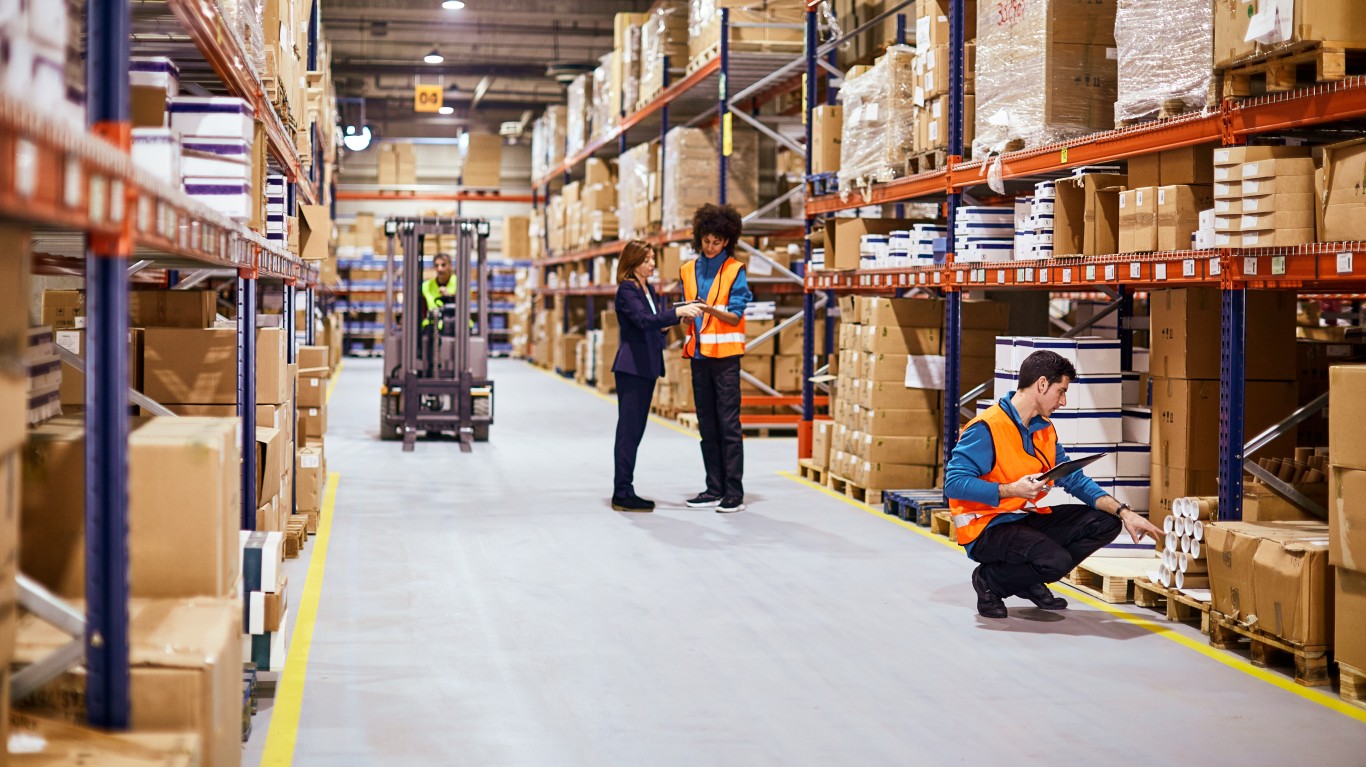
Factories and job sites buy cutting tools, fasteners, gloves, and safety glasses every week, regardless of the economy. Three distributors handle much of that resupply: Fastenal (NASDAQ:FAST | FAST Price Prediction), W.W. Grainger (NYSE:GWW) and MSC Industrial Direct (NYSE:MSM). Because customers must keep reordering, cash flow is steady, and that cash pays the dividends. The record shows it. Grainger’s dividend history shows a higher quarterly payout in every calendar year from 1999 through 2026. The three run similar businesses but offer different deals for income investors: one is a fast dividend grower with a small yield, one sits in the middle, and one pays the most but has the least room to spare.
Fastenal: A Near 2% Yield Backed by Record Operating Profit
Fastenal pays a quarterly dividend of $0.26 per share. The next one goes ex-dividend on October 28, 2026, and gets paid on November 25, 2026. At the annualized rate of $1.04 and a recent price of $52.80, the forward yield is about 1.97%.
Dividend safety: Over the last 12 months, Fastenal paid $0.96 per share in dividends and earned $1.24 per share, so the payout ratio is about 77%. Cash flow tells the same story. Third-quarter free cash flow was about $350 million, and dividends cost $298 million, which means dividends took about 85% of free cash flow. Operating cash flow was 105% of net income. The balance sheet is conservative: $1.3452B of total liabilities against $4.1492B of shareholders’ equity. Fastenal’s dividend record goes back to February 1999. The quarterly rate rose from $0.22 in October 2025 to $0.24 in January 2026, then to $0.26 in July 2026, so shareholders got two raises in less than a year.
Bull case: Fastenal is winning business from large contract customers. Contract sales grew 18.8% and now make up 76.5% of revenue. Operating margin widened 90 bps to 21.5%, and return on invested capital reached 32.5%. The chief executive called the quarter’s jump in operating income “the largest year-over-year increase in a single quarter in Fastenal’s history.” Those gains are what pay for future dividend raises.
Risk: With about three quarters of earnings already going out as dividends, Fastenal has little room left to raise the payout faster than profits grow. Management also said the boost from price increases is fading as the company laps earlier pricing actions. Future dividend growth will depend on sales volume.
Grainger: Dividend Raises Every Year Since 1999, With a Low Payout Ratio
Grainger pays $2.49 per quarter. Its annualized dividend of $9.96 against a share price of $1,360.08 works out to a forward yield of about 0.73%, the lowest of the three.
Dividend safety: This is the strongest dividend in the group. Trailing dividends of $9.27 per share compare with trailing EPS of $39.21, a payout ratio of roughly 24%. Even at the low end of Grainger’s raised adjusted EPS guidance of $45.50, the current dividend uses only about 22% of earnings. Free cash flow was $569M in the first quarter and $333M in the second, while first-quarter dividends cost $108M. Management expects full-year operating cash flow of $2.25B to $2.4B. Shareholders’ equity stood at $4.513B against $9.618B in total assets. The payment history shows a higher quarterly rate in every calendar year from 1999 onward. The latest step was from $2.26 to $2.49, a 10% increase the company disclosed.
Bull case: Grainger keeps raising its own targets. Second-quarter diluted EPS of $12.01 came in ahead of the $11.30 estimate, gross margin widened to 39.5%, and management raised full-year net sales guidance to $19.4B to $19.7B. The chief executive said the demand backdrop has “turned from negative for several years to clearly positive.” Buybacks of $975M to $1.05B planned for the year reduce the share count, which makes each future raise cheaper to fund.
Risk: The starting yield is small. Shares rose 41.66% over the past year and trade at about 25x forward earnings, so income buyers pay a premium today and must rely on years of raises for their payout to grow into something meaningful.
MSC Industrial Direct: The Highest Yield of the Three After a Sharp Pullback
MSC pays $0.89 per quarter, with the next payment due November 25, 2026. The annualized rate of $3.56 against a price of $114.23 gives a forward yield of about 3.12%. One reason the yield is this high: shares fell 12.6% over the past week, including the company’s fiscal fourth-quarter report.
Dividend safety: Trailing dividends of $3.48 compare with fiscal 2026 adjusted EPS of $4.69, a payout ratio of about 74%. Full-year free cash flow was $225.2M. MSC returned about $208 million to shareholders, including $13.967M of buybacks, which puts dividends at roughly 86% of free cash flow. Net debt is about $412 million, or roughly one times EBITDA. The regular quarterly dividend has risen from $0.75 to $0.79, $0.83, $0.85, $0.87, and $0.89, one raise each fall. Special payouts of $5.75 and $3.50 in 2020 show the board has handed back extra cash before.
Bull case: The business is recovering. Core customer growth of about 10% was the company’s “strongest in more than three years,” adjusted operating margin reached 10.9%, and adjusted EPS of $1.45 came in ahead of the $1.41 estimate. Management guided first-quarter average daily sales growth to +9.5% to +10.5% and is working toward its goal of returning to mid-teens operating margins. If margins expand, the payout ratio comes down.
Risk: There is little spare cash. A $42 million impairment tied to the abandoned Digital Core systems program cut GAAP EPS to $0.85 for the quarter. Management also expects free cash flow to equal only 80% to 90% of net income in fiscal 2027, so the dividend is covered with only a modest cushion.
Three Ways to Collect From the Same Supply Chain
All three companies earn money the same way: from factories and contractors that keep reordering parts, tools, and safety gear, and all three pay dividends from that steady cash. Grainger is the dividend compounder: it has raised its dividend every year since 1999, and its payout ratio is under 25%. Fastenal sits in the middle, with a yield near 2% and a dividend that has been rising alongside record operating profit. MSC pays the most of the three, but its dividend has the smallest margin for error. For investors who want to stack this kind of resupply-economics name next to companies with even longer streaks, we ranked ten of the market’s longest-tenured dividend raisers by valuation in a free report you can grab here.
Contact [email protected] for any questions or corrections.
Chris Lange is a financial and geopolitical writer with more than a decade of experience covering a myriad of topics. He has published thousands of articles for 24/7 Wall St., with past coverage focused heavily on stocks, IPOs, healthcare, defense, global affairs, and technology.
His work has been quoted, or referenced by a number of outlets including Business Insider, USA Today, Yahoo Finance, MSN, The Motley Fool, and many other publications. A graduate of Southwestern University, he studied business with a focus on investments and has previous experience in banking and startups.
When not reading or writing the news, he is following his passion for Lacrosse, playing chess, or building solar projects with his dad.