Badly Crippled GM Moves To Nasdaq
General Motors is betting a stock exchange switch will recast it as a tech-forward automaker, but the company faces shrinking relevance in two of the world's biggest car markets and a tariff shield that politicians could pull away overnight.

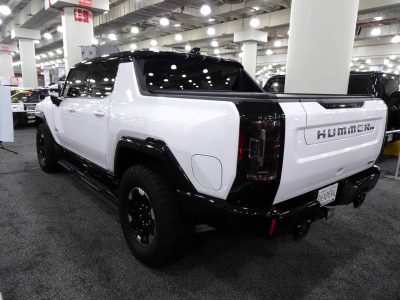
Changing where its stock trades won’t help GM (NYSE: GM | GM Price Prediction), given its troubled market share in the US and nowhere to go in China and the EU, the world’s other large car markets. One theory is that joining the Nasdaq-100 will boost demand for GM’s shares. That doesn’t change any of GM’s problems. Another theory is that the move will position America’s largest car company as a tech company. That won’t work either.
As with almost all companies publicly traded for years, the stock price tells the story. So far this year, GM’s stock is down 1% while the S&P 500 is up 13%. Over the last five years, GM’s stock is up 48% while the S&P 500 is up 68%. For context: GM’s market cap is $69 billion. Tesla’s market cap is $1.5 trillion. No matter what Elon Musk says, Tesla (NASDAQ: TSLA) is still another car company.
GM’s statement about the move did not make much sense. Its CFO said, “GM’s customer-focused, technology-driven strategy is creating value for our stockholders, making Nasdaq a natural home for our listing as we grow.” All that means is that GM is trying to do what every other large manufacturer in the world is doing. It simply means that it wants its cars to operate more like PCs and smartphones than traditional cars.
The European Automobile Manufacturers’ Association (ACEA) data shows that GM has failed to get a foothold in the EU and UK. VW, Stellantis (NYSE: STLA), and Renault still dominate those markets. The fastest-growing car companies in the region are Chinese EV giant BYD and Tesla.
GM’s picture is worse in China. The only large manufacturers based outside China that do relatively well are VW and Toyota.
GM’s problems in the US are not as deep as in Europe or China, but its prospects are still troubled. It holds an 18.3% market share. Toyota (NYSE: TM) is close behind at 17.3%, followed by Ford at 13.9%. South Korea’s Hyundai-Kia does unusually well at 12.4%.
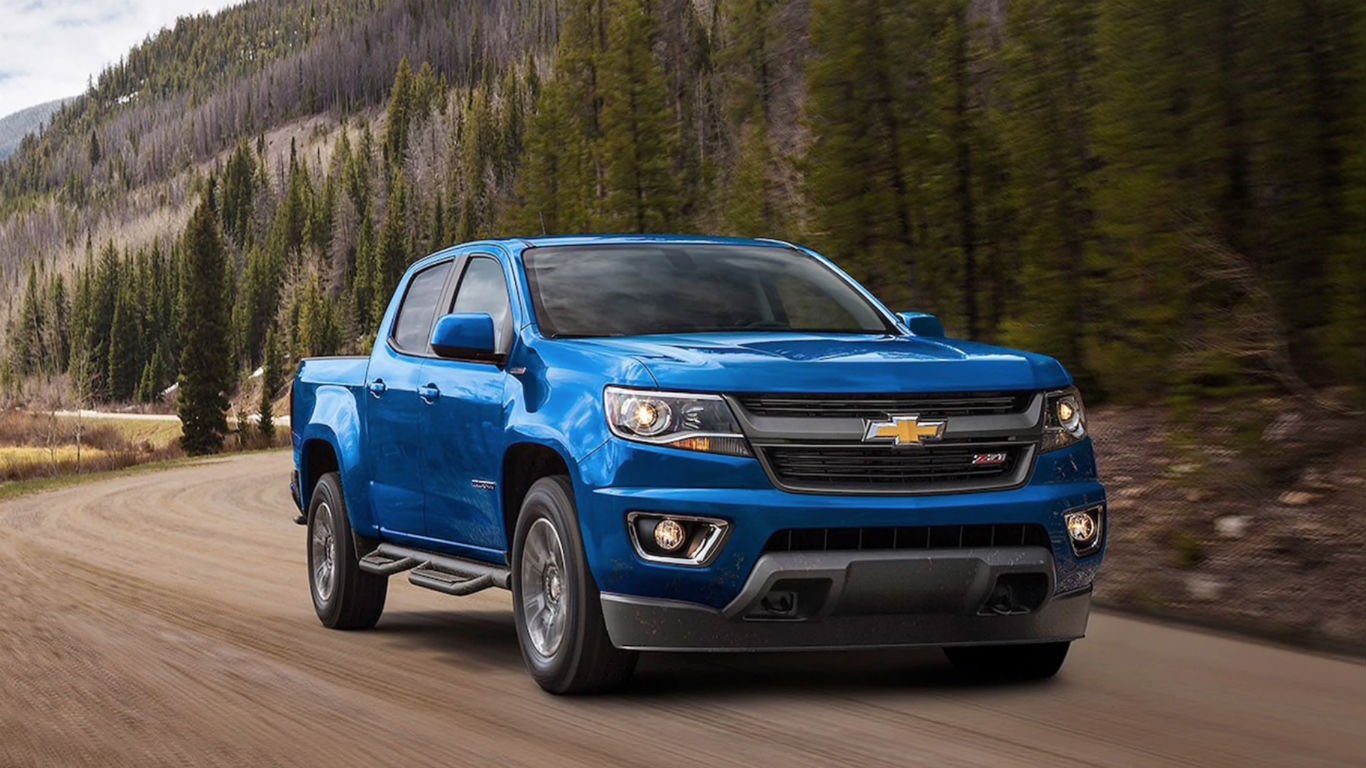
For all the talk about a “software” future, GM is still almost totally a gas-powered car manufacturer. Its best-selling vehicles are the Chevrolet Silverado, GMC Sierra, Chevrolet Equinox, Chevrolet Traverse, and Chevrolet Trax. GM’s success rides on two hulking full-sized pickups. It makes a point of highlighting this each quarter.
GM’s latest pitch to investors is that its “software-defined era” is driven by a large investment in a digital future. Its press releases about the subject could be almost interchangeable with similar statements from the world’s other legacy manufacturers.
Finally, GM’s current position is protected by a tariff wall built to keep Chinese EVs out of the market. Its US position is defended as much by this as by its own products. That tariff has been put in place by US politicians. They can make it disappear just as quickly as it was created. GM and Ford (NYSE:F) can’t compete against that on an equal footing.
Contact [email protected] for any questions or corrections.
Douglas A. McIntyre is the co-founder, chief executive officer and editor in chief of 24/7 Wall St. and 24/7 Tempo. He has held these jobs since 2006.
McIntyre has written thousands of articles for 24/7 Wall St. He is an expert on corporate finance, the automotive industry, media companies and international finance. He has edited articles on national demographics, sports, personal income and travel.
His work has been quoted or mentioned in The New York Times, The Wall Street Journal, Los Angeles Times, The Washington Post, NBC News, Time, The New Yorker, HuffPost USA Today, Business Insider, Yahoo, AOL, MarketWatch, The Atlantic, Bloomberg, New York Post, Chicago Tribune, Forbes, The Guardian and many other major publications. McIntyre has been a guest on CNBC, the BBC and television and radio stations across the country.
A magna cum laude graduate of Harvard College, McIntyre also was president of The Harvard Advocate. Founded in 1866, the Advocate is the oldest college publication in the United States.
TheStreet.com, Comps.com and Edgar Online are some of the public companies for which McIntyre served on the board of directors. He was a Vicinity Corporation board member when the company was sold to Microsoft in 2002. He served on the audit committees of some of these companies.
McIntyre has been the CEO of FutureSource, a provider of trading terminals and news to commodities and futures traders. He was president of Switchboard, the online phone directory company. He served as chairman and CEO of On2 Technologies, the video compression company that provided video compression software for Adobe’s Flash. Google bought On2 in 2009.