Boeing Has a Record $745 Billion Backlog and Can’t Build the Planes Fast Enough
Boeing just posted the biggest order book in its history on the same day the stock cratered to a new 52-week low. The reason why reveals a cash flow problem that has investors questioning whether the recovery timeline holds together…

On October 27, 2026, Boeing (NYSE:BA | BA Price Prediction) reported the largest order book in its history. On the same day, the stock had its worst session since June 2020.
BA stock closed at $168.18, down from $188.31. During the session, they hit a new 52-week low of $167.41 on more than four times normal volume. It was the lowest close since April 22, 2025, and it left Boeing with a market value of $132.89 billion.
Boeing has more orders than it can fill, but it keeps taking longer to build the jets, and each delay pushes cash further out. The stock is down 22.54% year to date and 24.58% over one year.
A Record Order Book Years Deep
Total backlog reached a record $745.4 billion. The commercial portion, worth $611.8 billion, covers over 6,300 airplanes.
The defense backlog also set a record at $100.5 billion. That figure leaves out the U.S. Navy F/A-XX fighter because the contract award is still pending.
In the quarter Boeing logged 300 net commercial orders, including from Turkish Airlines, Ethiopian Airlines and Lufthansa. It delivered 161 jets: 124 737s, 22 787s and 10 767s. At that pace, the commercial backlog would take many years to clear.
737 MAX Ramp Slips Into 2027
CEO Kelly Ortberg said “it is taking us longer than we had expected to demonstrate performance at Rate 47.” Boeing had planned to reach 47 jets a month by summer 2026.
Boeing’s CFO said 737 deliveries will “come in shy of the 500 delivery target.” Boeing did not formally cut guidance in its release, but it expects to fall short of its target for the jet.
Ortberg added that “our financial plan will target Rate 52 in the back half of 2027,” with wings and fuselages as the pacing items.
Widebody Delays Compound the Problem
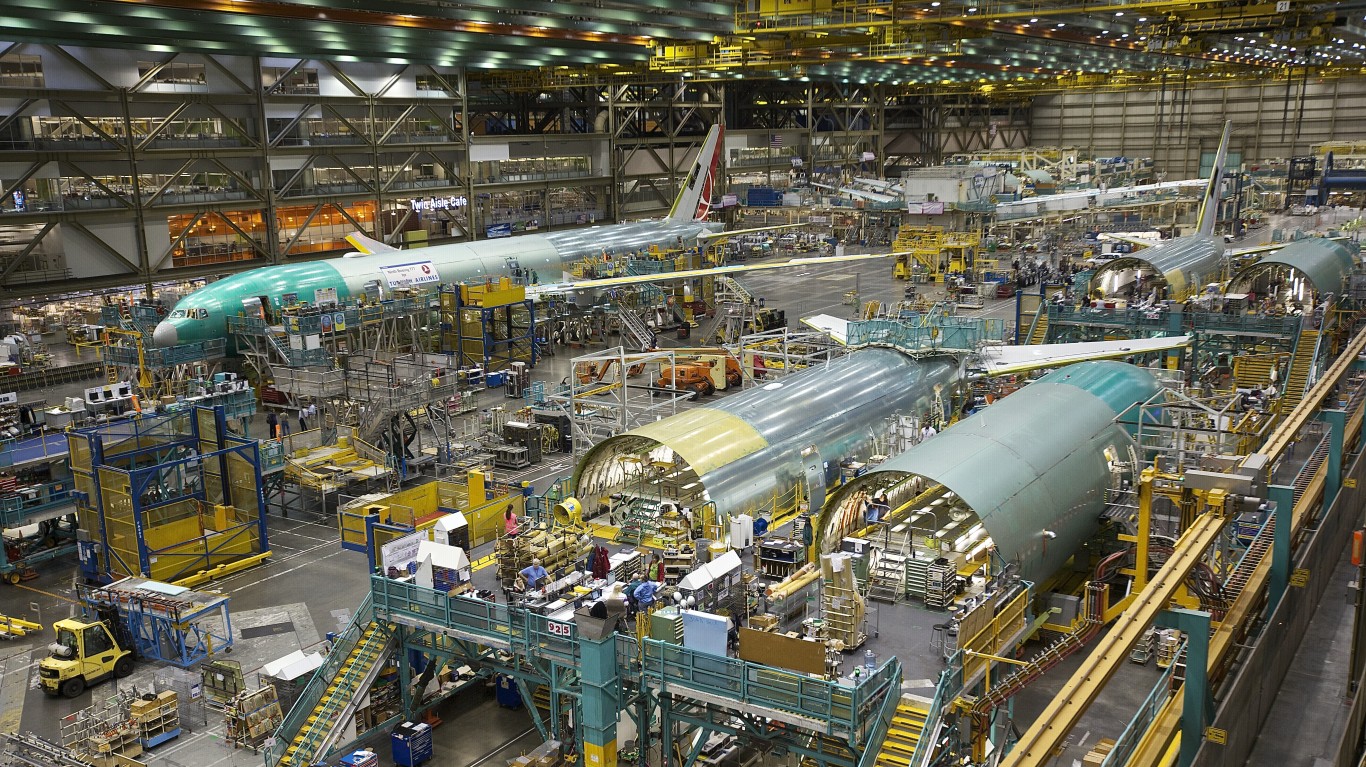
The 787 is holding at 8 a month. Ortberg still expects “to start the transition to 10 per month yet this year,” with engines “the pacing item for Rate 10.” However, the CFO said deliveries will land “closer to the lower end” of the 90-to-100 range.
The 777X still needs approval for “the balance of the flight test program, including ETOPS testing,” which certifies twin-engine jets for long flights over water. Boeing’s targets assume certification by mid-2027, and it still plans first delivery for 2027.
A supplier of wing components also delayed the 777 Freighter and 767 tanker lines. Those costs will “be treated as abnormal cost and period expense over the next few quarters.”
Cost Overruns Hit the Third-Quarter Results
Revenue was $24.2 billion. The GAAP net loss was $116 million, or $0.26 a share. The core loss of $0.34 per share missed the expected $0.201.
Commercial Airplanes lost $697 million on $10.7 billion of revenue, an operating margin of -6.5%. Analysts had expected a loss of about $360.8 million. JPMorgan’s Seth Seifman wrote that sales “were in line, but margin came in [about] 280 bps light due to cost growth.”
Defense revenue rose 15% to $7.9 billion. Free cash flow was $464 million even after Justice Department settlement payments. Boeing ended the quarter with $20.7 billion of cash and securities against $45.9 billion of debt.


What Boeing’s Delayed Cash Path Means for Investors
Ortberg said “the range of outcomes is narrowing.” He laid out free cash flow of about $2 billion in 2026 and about $6 billion in 2028, followed by “the $10 billion target in 2029.” He called the new timeline “more of a one-year shift to the right.”
The market sold the stock as though the path itself were in doubt. The cause was a slower timeline, because the demand behind the backlog has not changed.
Defense adds support, and Ortberg called it “a little bit of a sleeper here.”
Boeing’s October delivery numbers are due in November 2026. If 737 deliveries match the third-quarter pace, the stall is behind the company. If they fall, the slip is getting worse, and the recovery case weakens.
Contact [email protected] for any questions or corrections.
Omor Ibne Ehsan is a writer at 24/7 Wall St. He is a self-taught investor with a focus on growth, cyclical, and dividend equities that have strong fundamentals, value, and long-term potential. He also has an interest in high-risk, high-reward investments such as penny stocks.