AI Has Made Flash Memory 5 Times More Expensive, and Apple Can’t Bully Its Memory Suppliers Anymore
AI hyperscalers have quietly flipped the power dynamic in flash memory, and Apple now faces a cost surge with no contract protection heading into a pivotal earnings call under a brand-new CEO.

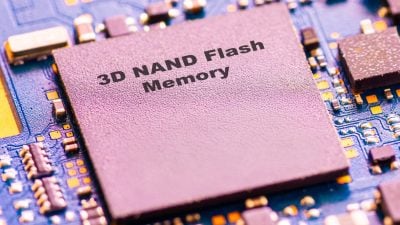
Doubling the storage on an iPhone 17 Pro from its 256GB base costs you $200, and The Wall Street Journal reports that the flash memory behind that upgrade now costs Apple $66, up from $15.
Rolfe Winkler’s report, published the evening of October 28, 2026, says AI hyperscaler demand has quintupled flash prices and moved bargaining power from Apple (NASDAQ:AAPL | AAPL Price Prediction) to its suppliers. The report’s summary said: “The iPhone maker for years bullied flash-storage makers into steep discounts.”
Apple closed October 28 at $343.83, down 0.94%, for a $5.02 trillion market value, then rose 0.53% after hours. SanDisk (NASDAQ:SNDK) gained 7.66% to $1,404.77, and Western Digital (NASDAQ:WDC) rose 4.08%, but both gains came before the story ran.

Both stocks slipped after hours. Kioxia, which trades only in Tokyo, was the one supplier to move after the report, rising 5.30% to ¥15,100 by 2:26 p.m. JST on October 29.
Hyperscalers Outbid Apple for Flash Memory
The Wall Street Journal reports that two years ago, Apple bought twice as much NAND (the flash chips that store data) as the four biggest cloud buyers combined. The WSJ says those four now buy more than double Apple’s volume, and three of them also signed long-term contracts that guarantee suppliers such as Kioxia high prices even if the market later falls.
SanDisk’s version of these contracts covers eight customers, with terms of up to five years and at least $93.9 billion in expected revenue at floor prices. For everyone else, management said, “the rest of the portfolio floats.” TechInsights says NAND prices rose fivefold in a year, and it predicts Apple will spend about $25 billion on NAND this year, up from about $6 billion in 2025.
Storage Upgrades Were Apple’s Richest Margin
The Wall Street Journal estimates Apple earned more than $10 billion in gross profit from storage upgrades at margins of about 85%. Bernstein estimates the NAND industry lost $19 billion at the operating level in 2023, the same year Apple made $14 billion on upgrades. TechInsights data shows NAND fell from $68 per gigabyte in 2005 to 5 cents by 2023 and has since risen more than 550% to over 30 cents, so the cost gap that funded that profit is closing.
The Wall Street Journal reports that Apple has raised iPhone prices by an average of 13%. Its fiscal third-quarter gross margin also got a one-time lift of about 2 percentage points from tariff refunds.
Samsung Electronics has already absorbed higher memory costs. Samsung Electronics said its mobile division posted a third-quarter operating loss of 0.6 trillion won, blaming rising memory costs.
What the Report Leaves Open
Apple has not disclosed supplier contract terms, so no one outside the company knows how much of a discount it still gets. It reports fiscal fourth-quarter results on November 2.
In June 2026, Tim Cook, then CEO, called the shortage a “hundred-year flood” and ruled out building memory factories. SK hynix said on October 28 that it expects demand to exceed supply through 2030.
The suppliers carry risk as well. SanDisk is down 17.99% over the past month, and its consumer revenue fell 32% sequentially as higher prices cut into demand.


Apple’s Margin Test Arrives on November 2
Apple’s valuation leaves little room for this cost pressure. At about 45 times earnings, the stock is priced for steady margins while a major component cost keeps rising and no contract protects Apple from it. Any response, from another price increase to multiyear deals at today’s high rates, would cost Apple some margin or some demand.
SanDisk sits on the other side of this trend. It trades at about 18 times earnings and has a contracted revenue floor, although a slowdown in AI spending would weigh heavily on its revenue.
On November 2, John Ternus holds his first earnings call as CEO since replacing Cook on September 1. The margin concern eases if his gross margin guidance holds up without help from tariff refunds and he reveals a long-term memory supply deal.

Contact [email protected] for any questions or corrections.
Omor Ibne Ehsan is a writer at 24/7 Wall St. He is a self-taught investor with a focus on growth, cyclical, and dividend equities that have strong fundamentals, value, and long-term potential. He also has an interest in high-risk, high-reward investments such as penny stocks.