Vertiv Shed 30% Over 6 Months: This Analyst Says 75% Gains to Come With Others Arguing Similarly
Vertiv's stock has cratered more than 30% since spring even as its latest quarter shattered expectations and left analysts racing to raise their targets. Whether the selloff is a rare buying window or a warning sign worth heeding depends on…

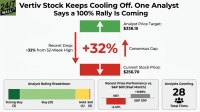
Vertiv (NYSE:VRT | VRT Price Prediction) is priced at $224.29, and the average analyst price target is $339.07. That leaves an implied gap of 51.17%.
Vertiv sells the power, thermal management and lifecycle services that keep data centers running. That makes it one of the most direct ways to own AI infrastructure spending. The company joined the S&P 500 and earned its first investment-grade ratings in March 2026. The gap stands out because the business is speeding up while the stock price falls.
A Revenue Miss Started a 32% Slide That a Record Quarter Hasn’t Reversed
The damage started with the second-quarter report. Sales of $3.27 billion came in below consensus, and the stock fell 17.26% in one session. Management later said supply-chain delays pushed 100 to 150 million in revenue into the third quarter. The selling ran into September, and several law firms announced investigations linked to that quarter. Those allegations remain unproven.
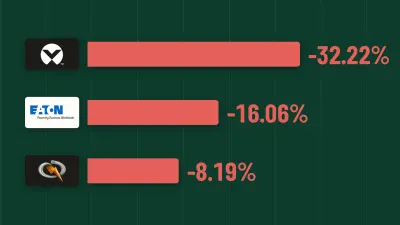
Next came pressure across the sector. AI infrastructure stocks fell after hot inflation data lifted rate-hike bets and raised concerns about financing the build-out. RBC, Mizuho and Morgan Stanley all reduced their targets while keeping positive ratings. GLJ Research started coverage at Sell with a $188 target. Over six months, Vertiv lost 32.22%. The stock has fallen more than 30%, and a beta of 2.048 helps explain why the moves run so hard in both directions.
Orders Above 100% Keep 26 of 30 Analysts Bullish
The third quarter is the core of the bull case. Adjusted EPS of $2.21 beat the $1.82 consensus. Revenue rose 61.2% to $4.31B, and organic orders grew more than 100%. Management raised full-year adjusted EPS guidance to $7.10–$7.20. Executive Chairman Dave Cote said “Orders are strong no matter how you look at them, with or without neoclouds.”
The average 2027 EPS estimate has risen to 9.6804 from 9.0637 90 days earlier. The main group’s ratings include of 3 Strong Buy, 23 Buy, 4 Hold and no Sell ratings. The latest move after the earnings report was an increase. Bernstein raised its target to $376.00 from $368. Evercore ISI and Piper Sandler are at $375.00.
Loop Capital holds the highest target on the Street at $400.00, which means 78.34% upside. Loop sees Vertiv’s liquid cooling and power architecture as a key enabler for high-density GPU deployments. Loop had been at $500.00 before reducing its target.
Two catalysts matter most from here. Native 800-volt DC systems should start producing revenue during 2027, and management says backlog converts over 12, 18 months. One warning sign: Vertiv will stop reporting orders data. That makes the bullish story harder to check going forward.
Eaton and Quanta Pulled Back Too, but Vertiv Has the Most Upside
The selloff hit the whole group in the most recent month. Vertiv just has the most room between its price and its target.
Eaton (NYSE:ETN) fell 16.06% over the past month. Trading at $366.11 versus a $485.47 target, it offers 32.6% upside. Its ratings include 5 Strong Buy, 18 Buy, 4 Hold and 1 Strong Sell. That upside is smaller than Vertiv’s.
Quanta Services (NYSE:PWR) is down 8.19% over the month. Trading at $621.10 versus a $765.87 target, it offers 23.31% upside. It has 25 Buy-or-better ratings, 5 Holds and 1 Strong Sell.
Targets are estimates for every stock in the group. Still, Vertiv’s implied upside is the largest of the three by a wide margin.
Down Hard Since Spring, Yet Still Far Ahead of the S&P 500
Vertiv trades at $224.29. The average target from 30 analysts is $339.07, means 51.17% upside. The shares are down 11.06% over the past month, even after a one-week bounce of 12.27%.
So far this year, Vertiv is up 38.54%, compared with 10.3% for the S&P 500. The stock trades at a forward P/E of about 25. Its 52-week high is $379.76.
Vertiv Still Has to Show the Q2 Miss Was a One-Off
The bull case strengthens if the supply-chain solutions hold and the new capacity turns backlog into revenue on time. That would keep earnings revisions moving up. The bear case gains weight if quality problems, rate pressure or delays in power and permitting slow down hyperscaler projects (we highlighted seven of the suppliers behind the data-center expansion, from power to cooling, in a free report you can grab here). If so, the falling valuation multiple would turn out to be the right call.
On valuation, a forward P/E of about 25 for a company growing EPS 69–71% already prices in a lot of doubt. The fourth-quarter earnings report is the next test.
Contact [email protected] for any questions or corrections.
Alex Sirois is a financial writer with experience spanning both retail and institutional investing. He has written for InvestorPlace and held roles at BNY Mellon and Bernstein, giving him a perspective that bridges Main Street portfolios and Wall Street analysis.
Alex holds an MBA from George Washington University and has built his career across multiple industries, including e-commerce, education, and translation — a breadth of experience that informs how he breaks down complex financial topics for everyday investors. His writing is conversational, actionable, and grounded in long-term, buy-and-hold investing principles.
At 247 Wall St., Alex focuses on delivering analysis that is both accessible and useful, with a clear emphasis on helping readers make more informed decisions with their money.