Reinvesting Dividends Turned $1,000 in Procter & Gamble Into $4,656 Over 20 Years, and Most People Never Notice
The price chart you check for Procter & Gamble hides a big part of the story. One brokerage setting, a financial crisis nobody planned, and a stock that trails the S&P 500 reveal what two decades of patience really built.

This post may contain links from our sponsors and affiliates, and Flywheel Publishing may receive compensation for actions taken through them.
Imagine putting $1,000 into Procter & Gamble (NYSE:PG | PG Price Prediction) at the Nov. 30, 2006 close of $62.79, and using every dividend to buy more shares. Today, that stake is worth $4,656, but most holders never see that number because the price chart they check leaves dividends out completely.

Toothpaste and Diapers Funded 70 Straight Raises
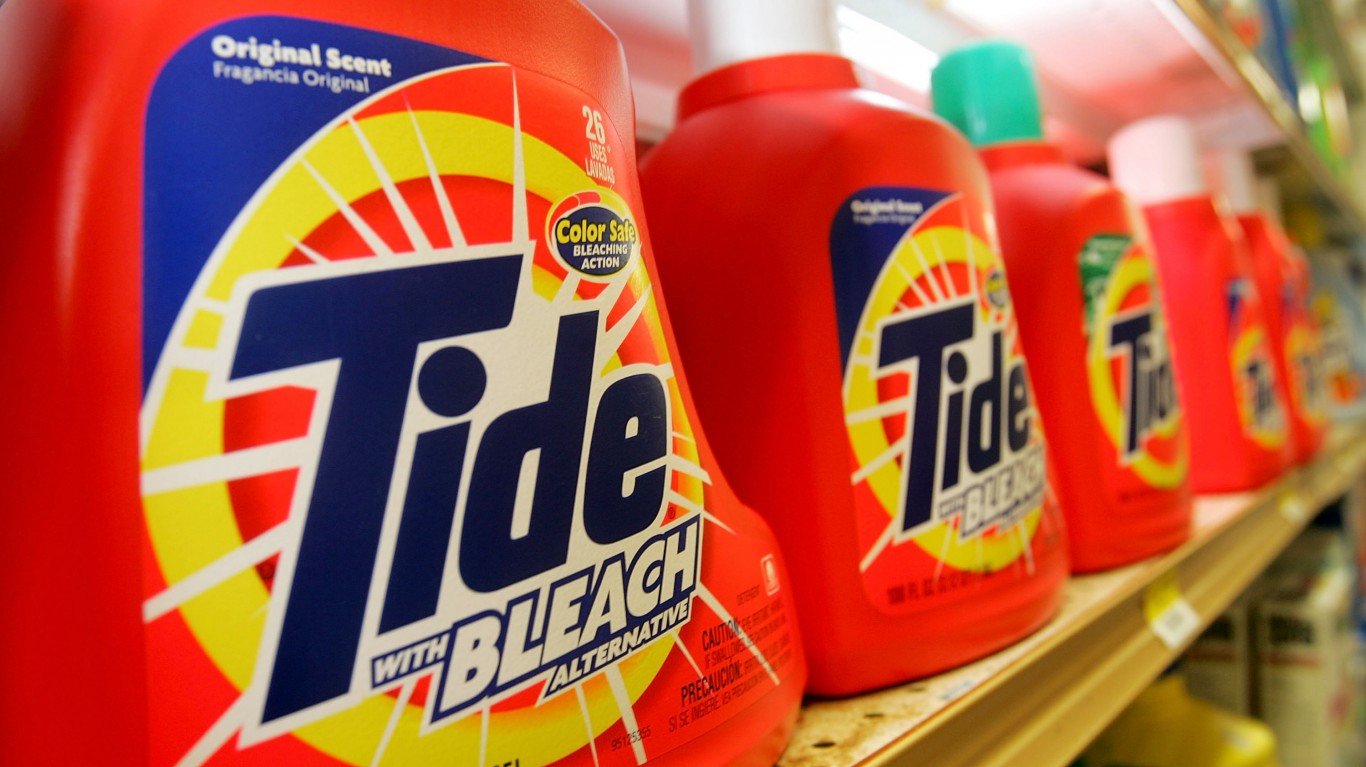
The reality here is that P&G sells things people buy again in good times and bad: Tide, Pampers, Gillette, Crest, Charmin. That steady demand supports a dividend now in its 70th consecutive year of increases, putting it in rare company (we ranked ten Dividend Kings by valuation in a free report if you want to see where P&G stacks up). The quarterly payout went from $0.31 in 2006 to $1.0885 now.
The company keeps changing, too. A restructuring announced in June 2025 cut brands and costs. The Thorne acquisition, which closed October 1, 2026, adds health and wellness products. Last quarter, core EPS of $2.00 beat the $1.89 estimate.
Reinvesting Turned a $2,634 Chart Into $4,656
- Initial investment: $1,000
- Shares alone, no reinvesting: $2,634
- Cash dividends collected: $889
- Shares plus cash dividends: $3,524
- Dividends reinvested: $4,656
Here are shorter windows, using P&G’s dividend-adjusted price against the S&P 500, tracked by the SPDR S&P 500 ETF Trust (NYSEARCA:SPY):
- 1 year: $1,164.50 (16.45%) vs. $1,096.90 (9.69%)
- 5 years: $1,288.40 (28.84%, 5.20% annualized) vs. $1,569.40 (56.94%)
- 10 years: $2,481.90 (148.19%, 9.52% annualized) vs. $3,434.20 (243.42%)

Reinvesting works because each dividend buys shares that then pay their own dividends. The financial crisis helped, though nobody planned it. P&G closed 2007 at $73.42, and March 2009 at $47.09, so dividends paid during the slump bought more shares for every dollar. The index outperformed over five and 10 years, which supports P&G’s case for stability. Its beta is just 0.361.
One Brokerage Setting Makes the Difference
A dividend reinvestment plan (DRIP) automatically uses each cash dividend to buy more shares, including fractional shares. Most brokerages offer it as a simple setting, either for one holding or the whole account.
Our earlier piece on reinvesting dividends covers the mechanics. In a regular taxable account, dividends count as gross income in the year they’re paid, even when they go straight into the stock. Dividends reinvested inside an IRA generally aren’t taxed each year, although withdrawals from a traditional IRA are usually taxable.
Rising Income Appeal Comes With Real Valuation Risk
P&G suits investors who want rising income to compound quietly for decades. The forward yield is about 2.63%, and management plans over $10 billion in dividends in fiscal 2027. Growth-focused investors have less to work with here.
The stock trades at about 25 times trailing earnings, while fiscal 2027 core EPS guidance of $6.89 to $7.11 already factors in a ~$1.4B after-tax commodity cost pressure. If input costs keep climbing, that multiple offers little room for disappointment.
The income case rests on steady payouts and leaving reinvestment switched on. Nothing promises the next 20 years will look like the last 20. But P&G’s history shows how much of a difference reinvesting dividends can make. Over two decades, that simple decision turned $3,524 in shares and accumulated cash dividends into $4,656, without the investor adding another dollar.
Contact [email protected] for any questions or corrections.
David Beren has been a Flywheel Publishing contributor since 2022. Writing for 24/7 Wall St. since 2023, David loves to write about topics of all shapes and sizes. As a technology expert, David focuses heavily on consumer electronics brands, automobiles, and general technology. He has previously written for LifeWire, formerly About.com. As a part-time freelance writer, David’s “day job” has been working on and leading social media for multiple Fortune 100 brands. David loves the flexibility of this field and its ability to reach customers exactly where they like to spend their time. Additionally, David previously published his own blog, TmoNews.com, which reached 3 million readers in its first year. In addition to freelance and social media work, David loves to spend time with his family and children and relive the glory days of video game consoles by playing any retro game console he can get his hands on.