Wall Street Models Lag Structural Reality, Prompting Me To Add an ‘Overvalued’ Apple

This post may contain links from our sponsors and affiliates, and Flywheel Publishing may receive compensation for actions taken through them.
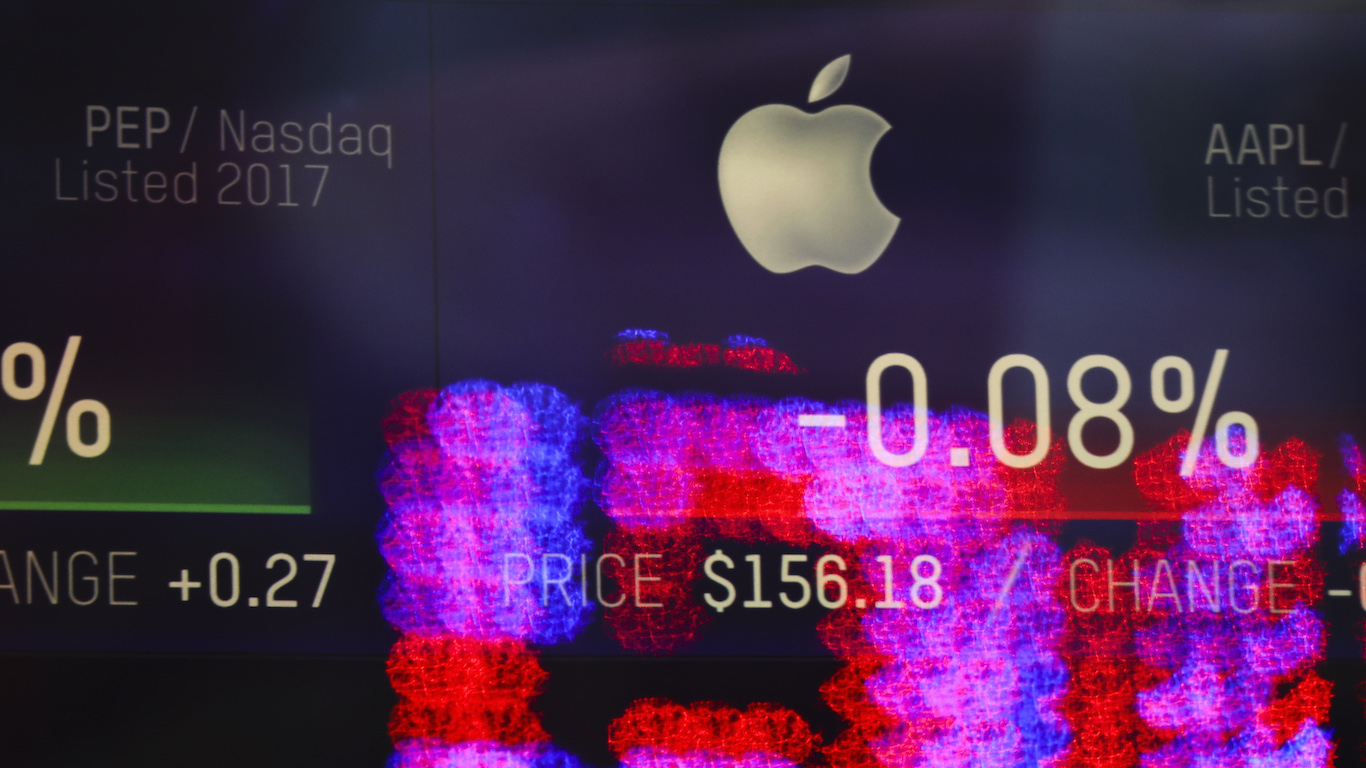
I keep buying Apple (NASDAQ:AAPL | AAPL Price Prediction), and every earnings report hands me another reason to do it again. The stock trades at $355.63, up 31.17% year to date. The analyst target is $340.77, which is below the share price. To me, that gap says Wall Street’s models still haven’t caught up with what Apple has become.
An Ecosystem That Collects Rent Every Month
Apple owns the customer relationship at a scale nobody else matches. It has over 2.5 billion active devices and over 1.5 billion paid subscriptions. Services revenue reached an all-time high of $31.573 billion in the September quarter, at a 76% gross margin. The new CEO, John Ternus, called the installed base “the foundation for future growth.” I agree. Every device Apple sells gives that recurring revenue engine another customer to earn from for years.
Three Numbers That Keep Me Buying
The first is growth. Fiscal 2026 revenue rose 15.06% to $478.834 billion, and EPS came in at $8.98. September-quarter EPS of $2.10 topped the $1.9782 consensus, which makes it Apple’s 10th consecutive earnings beat.
The second is cash. Operating cash flow rose 30.15% to $145.097 billion, while capital spending fell 28.9% to $9.041 billion.
The third is capital return. The board authorized another $100 billion buyback and raised the dividend 4% to $0.27. The 0.30% yield is thin, so I count buybacks as my income engine. Apple bought back $24 billion of stock last quarter alone, and every share it retires gives me a bigger piece of the company.
Why My Money Skips Microsoft and Alphabet
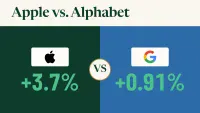
The P/E for Microsoft (NASDAQ:MSFT) is lower at 29 against Apple’s 39. On free cash flow, though, it costs 58 times versus Apple’s 38, because capital spending rose 102.99% last quarter. Even though Alphabet (NASDAQ:GOOGL) looks cheap at a P/E of 13, its free cash flow came in at negative $9,065 million last quarter. It is also paying for its AI build-out partly by issuing new shares and taking on debt. I want the cash a company earns to reach shareholders, and Apple delivers that.
Memory Costs Could Squeeze Margins
Management guided December-quarter gross margin to between 45% and 46%, down from 47.9%, and expects memory prices to keep rising beyond the December quarter. Tariff refunds also added $0.05 to September-quarter EPS, and that boost won’t come back. Still, Apple raised iPhone prices in September, Services margins support the hardware side, and management expects the December quarter to be its best revenue quarter ever, with growth of between 7% and 10%.
What Keeps Me Adding From Here
Demand for the iPhone Duo is exceeding supply, Siri AI is rolling out across languages, and Greater China revenue rose 21%. Berkshire Hathaway (NYSE:BRK.B) held its 227,917,808 shares unchanged through June. Keep an eye on whether analyst models move closer to Apple’s share price as these drivers play out.
Contact [email protected] for any questions or corrections.
Alex Sirois is a financial writer with experience spanning both retail and institutional investing. He has written for InvestorPlace and held roles at BNY Mellon and Bernstein, giving him a perspective that bridges Main Street portfolios and Wall Street analysis.
Alex holds an MBA from George Washington University and has built his career across multiple industries, including e-commerce, education, and translation — a breadth of experience that informs how he breaks down complex financial topics for everyday investors. His writing is conversational, actionable, and grounded in long-term, buy-and-hold investing principles.
At 247 Wall St., Alex focuses on delivering analysis that is both accessible and useful, with a clear emphasis on helping readers make more informed decisions with their money.