Qualcomm’s CEO Says Chipmakers Are in an “Extreme Shortage”

This post may contain links from our sponsors and affiliates, and Flywheel Publishing may receive compensation for actions taken through them.
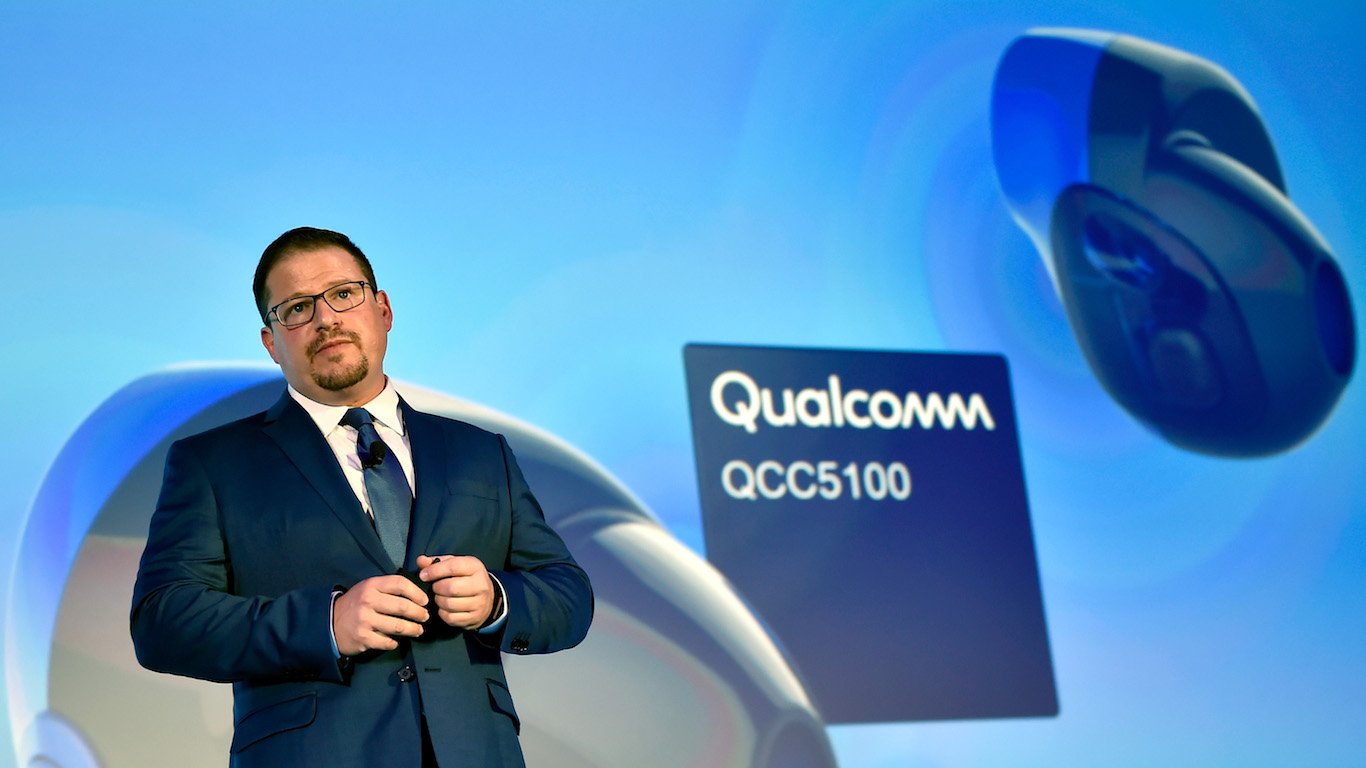
On Thursday, November 12, 2026, the chief executive of Qualcomm (NASDAQ:QCOM | QCOM Price Prediction) told an investor conference that chips are scarce, and the stock barely responded. Cristiano Amon said semiconductors are in an “extreme shortage,” with the industry short on wafers, substrate, and assembly capacity. He added that Qualcomm has the supply and the demand it needs.
Shares closed at $177.14, up 0.32%, for a market value of about $189.5 billion. A Thursday evening after-hours quote of $178.72, up 0.89%, can change before Friday’s open.

The quiet session followed a 13.01% gain from the close on November 5, the day the S&P 500 fell 4.4%, and the Nasdaq fell 4.8%. Even so, the stock trades well off its 52-week high of $259.92.
Separating Disclosure From Characterization
The shortage remark is Amon’s description of the industry, and he attached no lead times, prices, or forecast to it. What Qualcomm has disclosed in filings is narrower. It shows broad-based increases in semiconductor input costs across wafers, packaging and memory, met with price increases whose full benefit should reach QCT gross margins in the second half of fiscal 2027.
Amon maintained data center revenue targets of $5 billion for fiscal 2027 and $15 billion for fiscal 2029, saying supply limits the upside. Both are targets for a product line that only began shipping in October.
Current customers, including Meta Platforms (NASDAQ:META) for CPUs, cover about half of the 2029 goal. Amazon (NASDAQ:AMZN) could buy up to $60 billion of Qualcomm’s AI data center products, but that is a ceiling with no committed amount announced.
How the Shortage Lands on Margins
Qualcomm designs chips and pays others to build them, so a shortage gives pricing power to wafer, substrate and packaging suppliers, and Amon’s claim that he has supply means capacity is secured, although he did not say at what cost.
That cost already shows in results. QCT’s earnings-before-tax margin fell to 24% from 29% in the fiscal fourth quarter, and management expects custom data center chips to be dilutive to gross margins.
Scale also matters, because handsets produced $5.137 billion of $10.32 billion in fourth-quarter revenue, while data center sales are guided to exceed $650 million for the December quarter.

What Amon Left Unsaid
He named no suppliers, capacity costs, or new customers. He added that energy projects set the real pace of AI buildouts, which could delay customer deployments as easily as it extends demand.
Energy limits do help his pitch for Dragonfly as a power-efficient alternative to NVIDIA (NASDAQ:NVDA) for inference, meaning running trained models. However, NVIDIA is the incumbent, cloud companies design their own chips, and a supplier with targets to maintain has reason to describe demand as overwhelming.
What Could Drive Qualcomm Stock From Here
At a P/E of 14 with a 2.03% dividend yield, the price mostly reflects a shrinking handset business and gives little credit to data center targets that current customers already partly cover.

The risks include reliance on Amazon, supply limits capping upside, and high volatility. NVIDIA’s earnings report is the next test for chip stocks. Expected November 17 after the close but not yet confirmed, it is also a test for the power, cooling, and networking suppliers riding the same expansion (we covered seven of them in a free report here).
The deciding test is Qualcomm’s next quarterly report. If data center revenue comes in under $650 million or QCT revenue falls below $9.0 billion, the shortage talk was a warning about timing rather than a demand signal.
Contact [email protected] for any questions or corrections.
Omor Ibne Ehsan is a writer at 24/7 Wall St. He is a self-taught investor with a focus on growth, cyclical, and dividend equities that have strong fundamentals, value, and long-term potential. He also has an interest in high-risk, high-reward investments such as penny stocks.