Union Pacific Beat the S&P 500 by 28.76 Points in the Past Year, and $1,000 From a Decade Ago Is Now Worth $3,693

This post may contain links from our sponsors and affiliates, and Flywheel Publishing may receive compensation for actions taken through them.
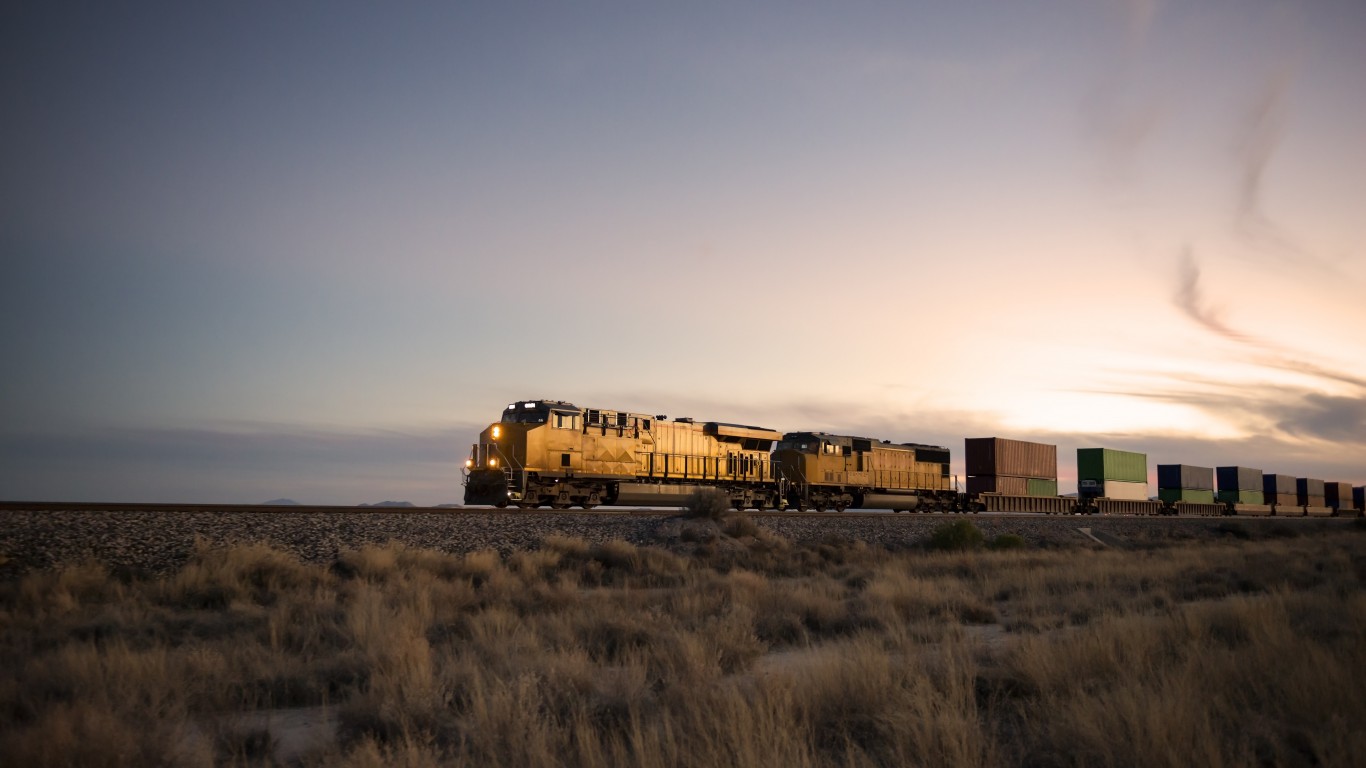
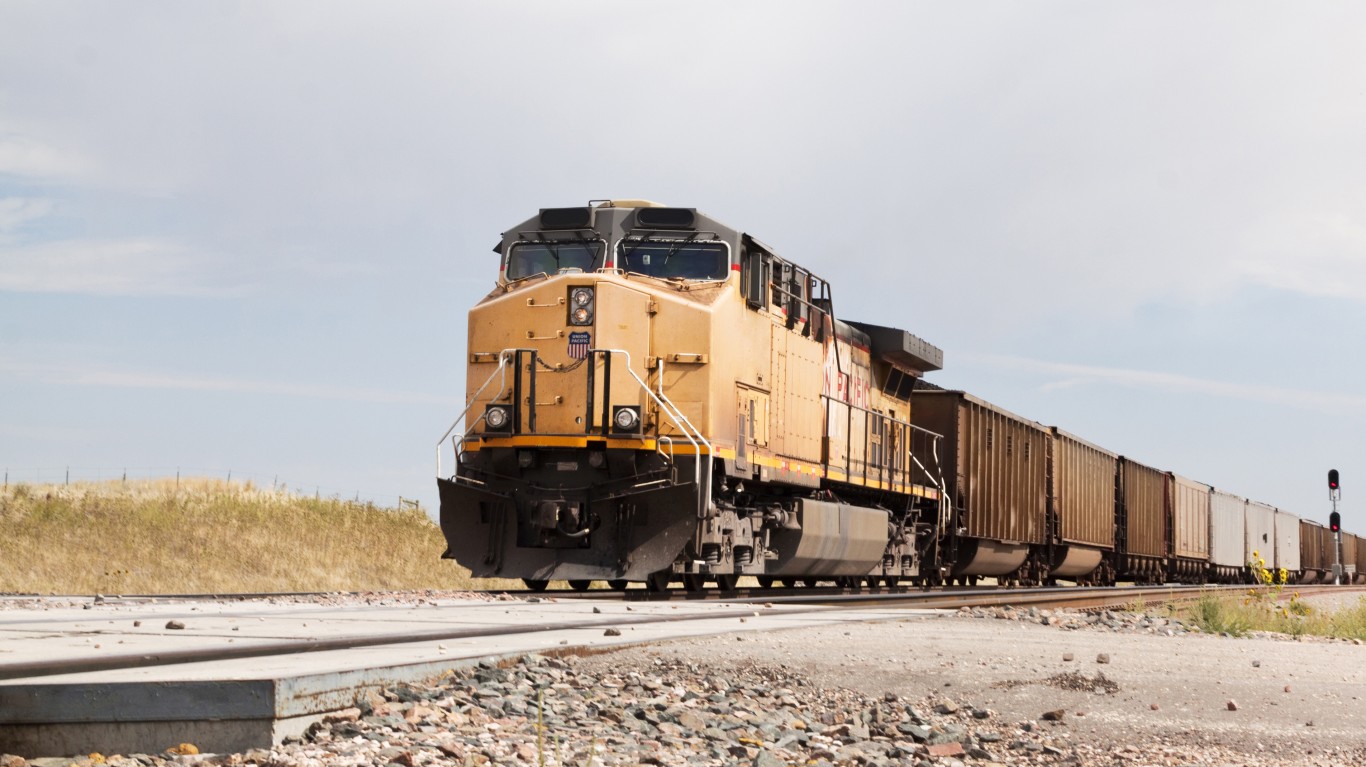
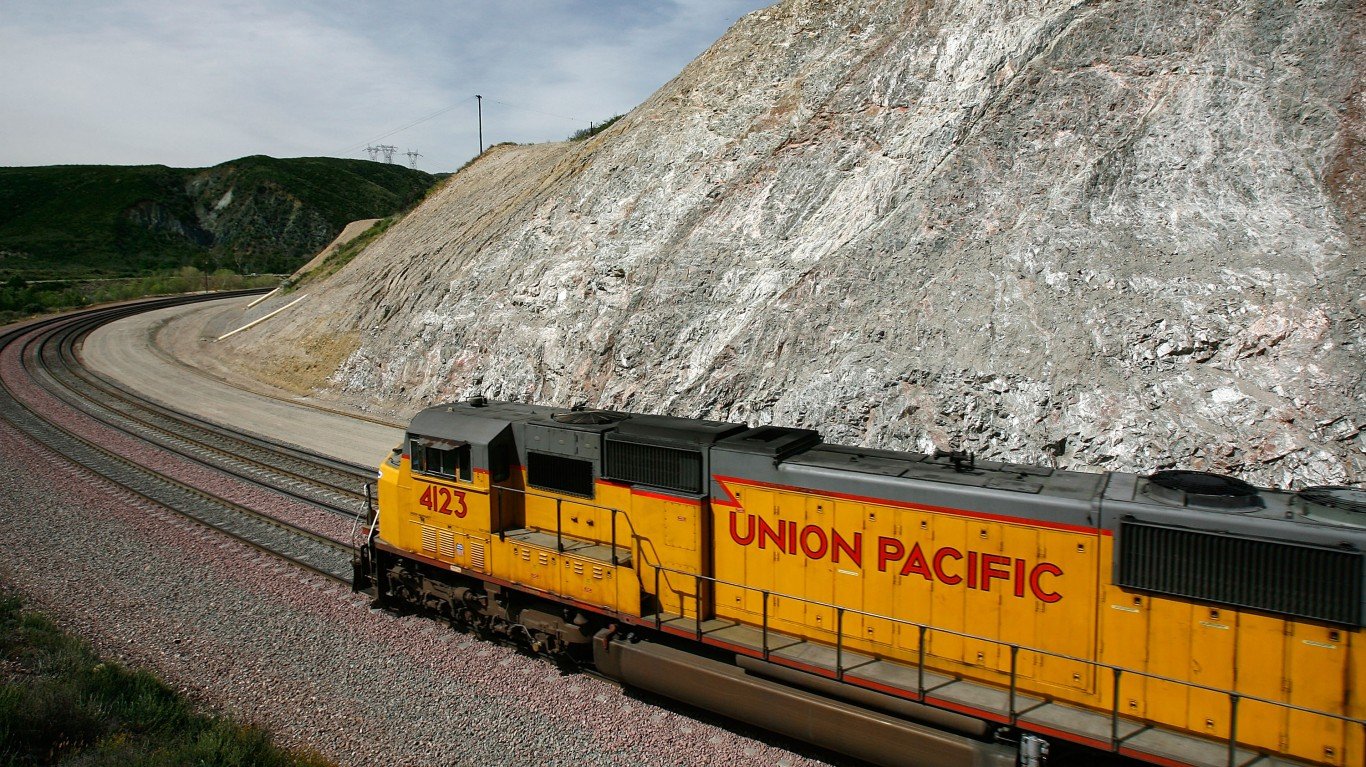
Union Pacific (NYSE:UNP | UNP Price Prediction) hauls freight across 23 western U.S. states, and its stock has moved well ahead of the broader market over the past year. Here is what caused that gain and what $1,000 became over one, five, and ten years.
Container Growth and a Merger Plan Powered Union Pacific’s Year
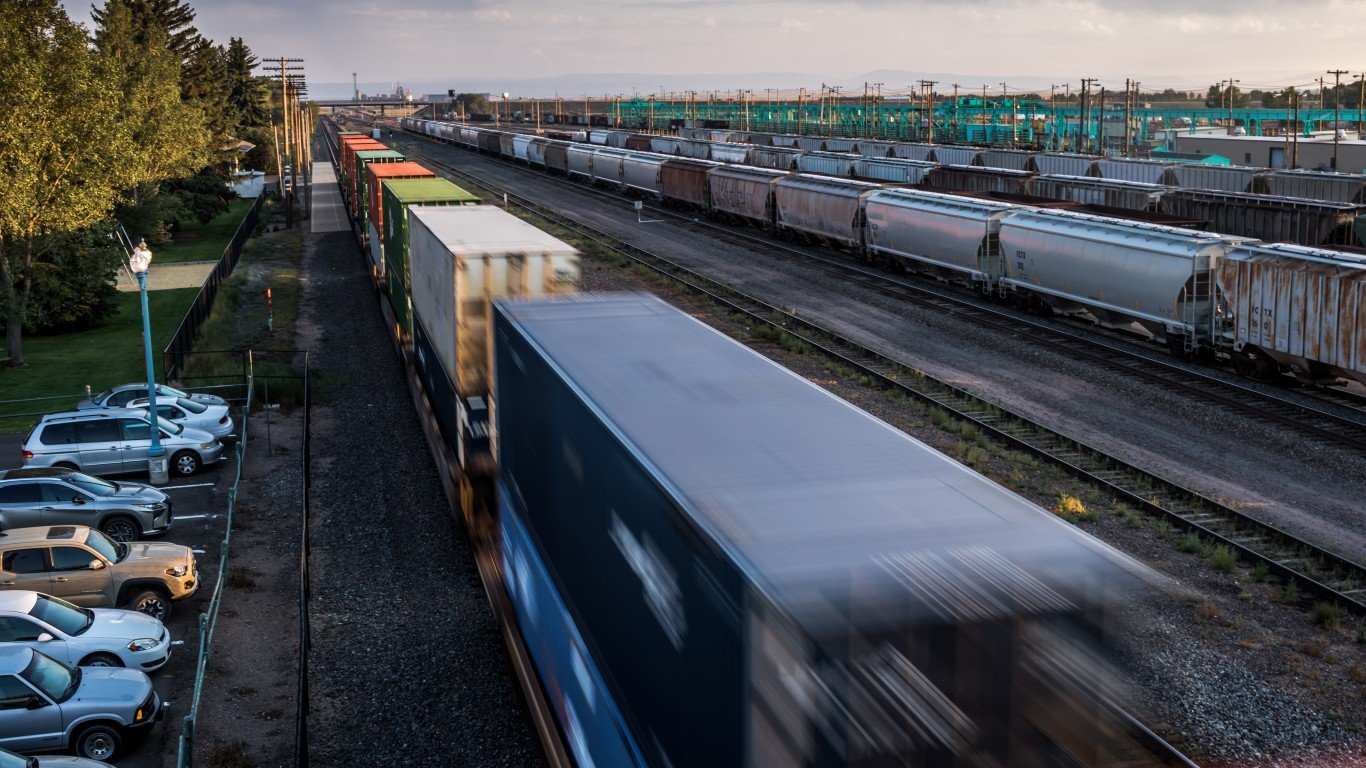
Railroads make money by billing shippers to move grain, chemicals, steel and shipping containers. They keep more of each dollar when trains run longer and fuller with fewer crews and locomotives. Union Pacific’s operating ratio, the share of revenue spent on running the railroad, was 58.8%[1] in the third quarter. A lower ratio means more profit.
Third-quarter revenue rose 15.3%[2] to $7.197 billion. Intermodal revenue, from containers that switch between ships, trucks, and trains, climbed 27%[2]. Workforce productivity reached a record 1,219 car miles per employee[2]. Fuel costs increased, with the price per gallon going from $2.56[1] to $4.21.

The pending purchase of Norfolk Southern (NYSE:NSC) would create what the company calls America’s first transcontinental railroad. It remains under Surface Transportation Board review, and management expects its first combined earnings report a year from[1] the October 22, 2026 call.
$1,000 in Union Pacific Grew to $3,693 Over a Decade
The one-year figures use the latest available price on Nov. 13, 2026. The SPDR S&P 500 ETF Trust (NYSEARCA:SPY), stands in for the index.

1-Year Return
- Initial Investment: $1,000
- Current Value: $1,406.30
- Total Return: 40.63%
- S&P 500 (SPY): $1,118.70 (11.87%), a gap of 28.76 points
5-Year Return
- Initial Investment: $1,000
- Current Value: $1,406.80
- Total Return: 40.68%
- Annualized Return: 7.06%
- S&P 500 (SPY): $1,609.30 (60.93%)
10-Year Return
- Initial Investment: $1,000 invested on Nov. 30, 2016 in $101.33
- Current Value: $3,693 with dividends reinvested ($2,986 on price alone)
- Total Return: 269.3%
- Annualized Return: 13.96%
- S&P 500 (SPY): $3,445 (244.5%, price only, from Nov. 15, 2016)
The adjusted price five years back was $216.80, almost identical to the $216.88 from a year ago. Nearly all of the five-year gain came in the last twelve months. The latest close was $302.59.
Dividends added to returns during the flat stretch. The quarterly payout rose from $0.605 in late 2016 to $1.42 in August 2026. Buybacks fell to $26 million in the first nine months of 2026, down from $2.679 billion a year earlier, because of the pending merger.
Merger Approval and Fuel Costs Frame Union Pacific at $300
The stock trades at about 24 times trailing earnings and 21 times forward earnings, with a 1.84% yield. Management forecasts high-single-digit[2] EPS growth for 2026.

The bull case rests on regulators approving the merger, intermodal volumes holding up, and pricing improving as contracts reset in early 2027. The bear case is an economic slowdown, a stopped or delayed deal, and fuel prices, with the company expecting to average about $4.85 per gallon in the fourth quarter.

Union Pacific trailed the index for years before this run, and the quarterly dividend kept rising through the flat stretch. It is the kind of setup most investors walked past at the time, which is the pattern we broke down in a free report on the winners you already missed.
Contact [email protected] for any questions or corrections.
David Beren has been a Flywheel Publishing contributor since 2022. Writing for 24/7 Wall St. since 2023, David loves to write about topics of all shapes and sizes. As a technology expert, David focuses heavily on consumer electronics brands, automobiles, and general technology. He has previously written for LifeWire, formerly About.com. As a part-time freelance writer, David’s “day job” has been working on and leading social media for multiple Fortune 100 brands. David loves the flexibility of this field and its ability to reach customers exactly where they like to spend their time. Additionally, David previously published his own blog, TmoNews.com, which reached 3 million readers in its first year. In addition to freelance and social media work, David loves to spend time with his family and children and relive the glory days of video game consoles by playing any retro game console he can get his hands on.