Elon Musk Warns Nvidia Will Lose ‘Critical Deals’ Without Jensen Huang

This post may contain links from our sponsors and affiliates, and Flywheel Publishing may receive compensation for actions taken through them.
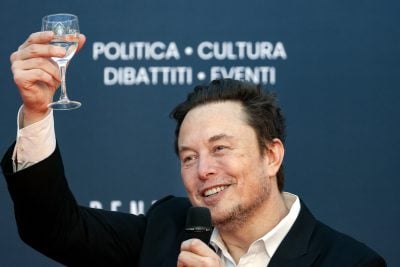
Elon Musk says the biggest threat from Jensen Huang’s exit at NVIDIA (NASDAQ:NVDA | NVDA Price Prediction) is in its supply chain. Huang resigned as CEO on November 12, 2026, and CFO Colette Kress became interim CEO. Two days later, Musk wrote on X: “Jensen drove supply chain brilliantly at Nvidia, but many of those deals were a handshake with Jensen, not a written contract. Without Jensen, at least some of those critical deals will be lost.”
That could matter more than the leadership change itself. NVIDIA’s growth has been limited by supply, and the stock closed at $162.85 on November 13, down 26.41% over the past month.

Musk Echoes an Analyst’s Account of Huang’s Supplier Ties
Musk was replying to a CNBC interview with Dylan Patel, founder and chief analyst of SemiAnalysis. Patel said Huang personally persuaded executives at even small suppliers to dedicate production capacity to NVIDIA. Patel added that Alphabet (NASDAQ:GOOGL) unit Google is already seeking additional capacity from those same suppliers. Musk based his claim on his own experience as an NVIDIA customer. No specific NVIDIA agreement has been confirmed lost or went to a rival.
Huang Told Investors Supply Was the Bottleneck
Huang’s own comments on NVIDIA’s August 26[1] earnings call show why goodwill with suppliers matters. “Even though our demand is much greater than 70%, our supply allows us to confidently deliver 70%,”[1] he said. “I’m going to need the help of the entire supply chain to help me out here. They all know that.”[1]
He also described his own role in coordinating suppliers: “What I’m telling you about our needs for next year is exactly consistent with what I’ve told them. Everybody is on the exact same song sheet.”[1] He added that NVIDIA works “with power generator companies”[1] and “with land, power, and shell companies all around the world.”
Securing that supply paid off in the results. Second-quarter fiscal 2027 revenue reached $96.22 billion[2], up 105.8% year over year and above of the $92.07 billion consensus. Data Center revenue hit $89.023 billion[2], up 117%. Supply obligations rose to $279.0 billion[2], mostly linked to memory purchases for Vera Rubin. Management expected supply to remain a bottleneck at least through the end of fiscal year 2028[1].

What Could Limit the Damage Before Earnings
Disruption is far from certain. NVIDIA has said it expects operations, customer commitments and its product roadmap to continue without interruption. The supply obligations are already on the books. The company also had Vera Rubin purchase orders from every major hyperscaler, AI cloud, and system OEM[1]. Third-quarter guidance calls for revenue of $108.0 billion, plus or minus 2%[2], with gross margin near 74.0%.


NVIDIA reports on Nov. 17. Investors can track changes in supplier commitments, lead times, and production capacity, along with any management comments on whether deals from Huang’s tenure hold. Chip benchmarks cannot answer the question Musk raised: how much of NVIDIA’s advantage depended directly on Huang?
Contact [email protected] for any questions or corrections.
After two decades of patrolling the dark corners of suburbia as a police officer, Rich Duprey hung up his badge and gun to begin writing full time about stocks and investing. For the past 20 years, he’s been cruising the markets looking for companies to lock up as long-term holdings in a portfolio while writing extensively on the broad sectors of consumer goods, technology, and industrials. Because his experience isn’t from the typical financial analyst track, Rich is able to break down complex topics into understandable and useful action points for the average investor. His writings have appeared on The Motley Fool, InvestorPlace, Yahoo! Finance, Money Morning, and, of course, 24/7 Wall St. He has been featured in both U.S. and international publications, including MarketWatch, Financial Times, Forbes, Fast Company, and USA Today.