Amazon Just Lost 40 Leo Satellites. The Bigger Problem Is the Rocket It Booked 38 Launches On

This post may contain links from our sponsors and affiliates, and Flywheel Publishing may receive compensation for actions taken through them.
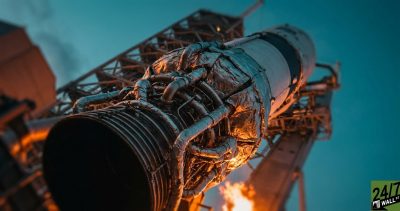
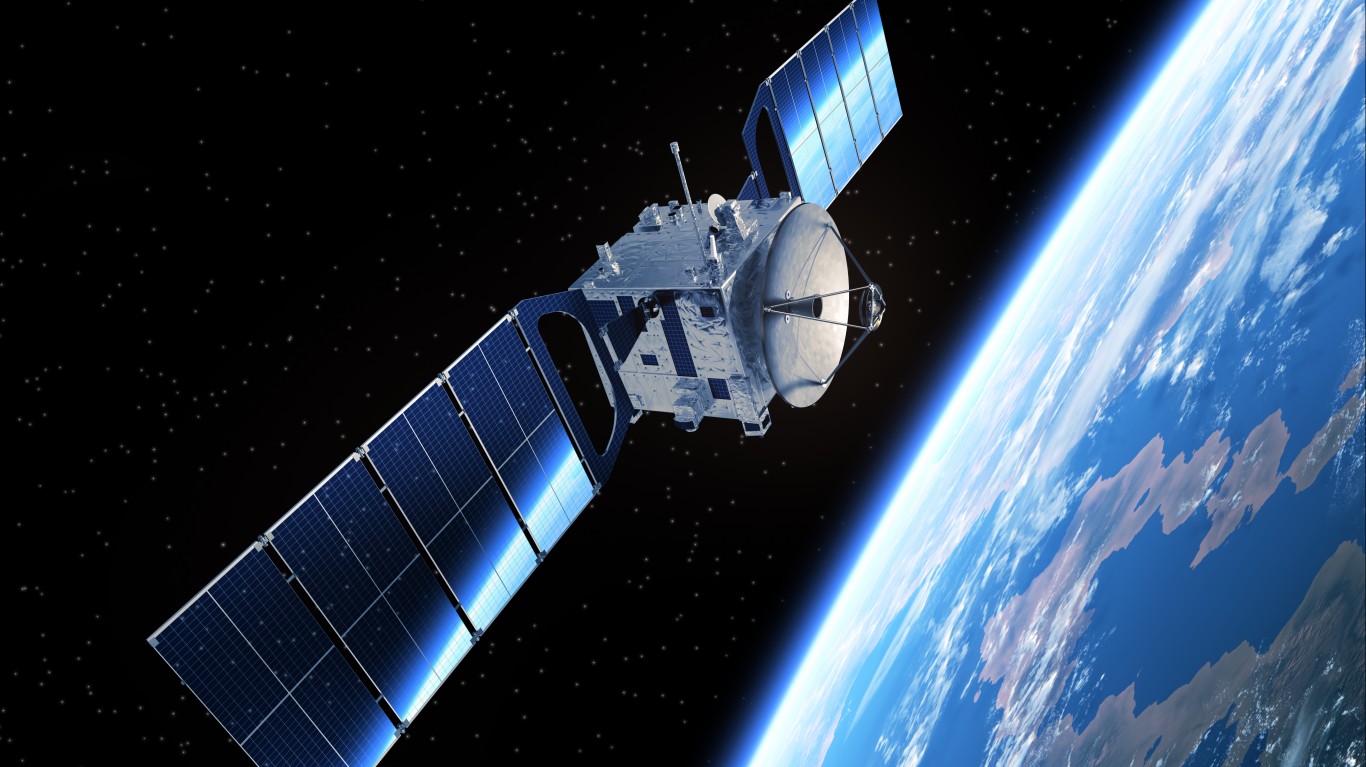
GeekWire reports a United Launch Alliance (ULA) Vulcan rocket failed about 10 minutes[1] after liftoff from Cape Canaveral on Nov. 15, 2026. It did not reach orbit, and the failure destroyed 40[1] Leo satellites from Amazon (NASDAQ:AMZN | AMZN Price Prediction). ULA is a 50/50 joint venture of Boeing (NYSE:BA) and Lockheed Martin (NYSE:LMT). GeekWire and Spaceflight Now report this was ULA’s first total mission failure since the venture formed in 2006.
Most of the stocks barely moved in Monday’s premarket trading. Amazon was indicated at $265.25, down 0.5%. Boeing slipped 0.7% to $170.36, and Lockheed Martin eased 0.1% to $595.20. L3Harris (NYSE:LHX) fell the most, 3.4% to $263.00. Barron’s had already linked weakness in L3Harris shares to an FAA nationwide groundstop, which has nothing to do with the launch.
What Amazon Lost, and What It Still Has Booked
According to GeekWire, this was the first of 38[1] Vulcan launches Amazon has purchased. It also reports that Vulcan is scheduled to carry more than 1,500[1] first-generation satellites, more than any other rocket in the program. Amazon’s director of launch systems called Vulcan the program’s “primary workhorse over the next several years.” Those launches are signed purchases. Amazon had also said a second Vulcan mission could fly within weeks, but that now waits on ULA’s investigation.
The cause of the failure has not been confirmed. ULA says it does not yet have specific data. Spaceflight Now reported that the problem came during the Centaur upper stage burn (the rocket’s second stage) and that the first stage appeared to burn longer than planned. Both details are preliminary.
Amazon Leo posted on X on Nov. 15, 2026: “There is risk with any launch, and that’s especially true for inaugural missions like LV-01. ULA has been a trusted partner for Amazon.”
How Big the Hit Is for Each Stock
Amazon
GeekWire reports Amazon had launched 396[1] satellites on 14 missions since April 2025. It adds that Amazon must deploy and operate all 3,232[1] first-generation satellites by July 30, 2029. In June, the FCC let Amazon keep deploying even though it missed a July 30 target of having about half the constellation in service. Satellites that are not operational by then temporarily lose priority in key spectrum bands. Measured against a market cap near $2.88 trillion and about $220 billion[2] in 2026 capex (capital spending), the lost hardware is small, and the larger exposure is to the schedule.


Boeing and Lockheed
Neither company reports ULA results separately. Boeing’s Defense, Space & Security backlog is $101 billion[3], and Lockheed’s backlog is a record $292 billion[4]. Their exposure is to reputation and to Vulcan’s national security launch work. The Space Force paused those launches after a February booster nozzle problem.


L3Harris
The company builds the RL10 engines that power the Centaur stage. No cause has been identified, and nothing has been attributed to any supplier. Its growth comes from defense propulsion, including a $6.3 billion[5] THAAD contract and a $4.7 billion PAC-3 MSE contract.


Amazon Has Few Backup Rockets
GeekWire reports Amazon holds 24[1] launch reservations on Blue Origin’s New Glenn, which has been grounded since a May ground-test explosion. Blue Origin is privately held. Amazon also has launches booked on Arianespace’s Ariane 6 and on SpaceX’s Falcon 9. That makes the company behind Starlink, Amazon’s main competitor, one of its launch providers. The Northrop Grumman (NYSE:NOC) solid rocket boosters, which caused problems on two earlier Vulcan flights, appeared to perform normally this time.
Several things were not disclosed: the cost of the lost satellites, whether they were insured, and any revised deployment or service timeline. No Amazon press release had been issued as of early Nov. 16.
Does This Delay Amazon Leo?
Yes, it slows deployment. Amazon’s third-quarter release promised initial service “later this year,”[2] and that can still happen with satellites already in orbit. Filling out the constellation cannot stay on plan while both New Glenn and Vulcan, the rocket assigned the most satellites, are grounded. GeekWire reports the next Leo launch is an Ariane 6 carrying 36[1] satellites, targeted for Nov. 23 at the earliest. If that launch happens close to Nov. 23 and ULA names a root cause and a return-to-flight date before Amazon’s next earnings report, the setback remains contained. If either one slips, the July 30, 2029, deadline becomes the story.
Contact [email protected] for any questions or corrections.
Trey has been an editor and author at 24/7 Wall St. for more than a decade, where he has published thousands of articles analyzing corporate earnings, dividend stocks, short interest, insider buying, private equity, and market trends. His comprehensive coverage spans the full spectrum of financial markets, from blue-chip stalwarts to emerging growth companies.
Beyond 24/7 Wall St., Trey has created and edited financial content for Benzinga and AOL's BloggingStocks, contributing additional hundreds of articles to the investment community.
Trey's editorial expertise extends across multiple publishing environments. He served as production editor at Dearborn Financial Publishing and development editor at Kaplan, where he helped shape financial education materials. Earlier in his career, he worked as a writer-producer at SVE. His freelance editing portfolio includes work for prestigious clients such as Sage Publications, Rand McNally, the Institute for Supply Management, the American Library Association, Eggplant Literary Productions, and Spiegel.
Outside of financial journalism, Trey writes fiction and has been an active member of the writing community for years, moderating workshop sessions at regional conventions.