Elon Musk’s SpaceX Has Spent $15 Billion on Starship. Tonight Could Change Everything

This post may contain links from our sponsors and affiliates, and Flywheel Publishing may receive compensation for actions taken through them.
The space business is moving beyond simply getting rockets off the ground. The next challenge is making launches cheap enough to support businesses that need thousands of satellites in orbit. Reusable rockets have already changed the industry, but today’s systems still throw away expensive hardware on every flight. The company that solves that problem could gain a cost advantage that competitors will struggle to match.
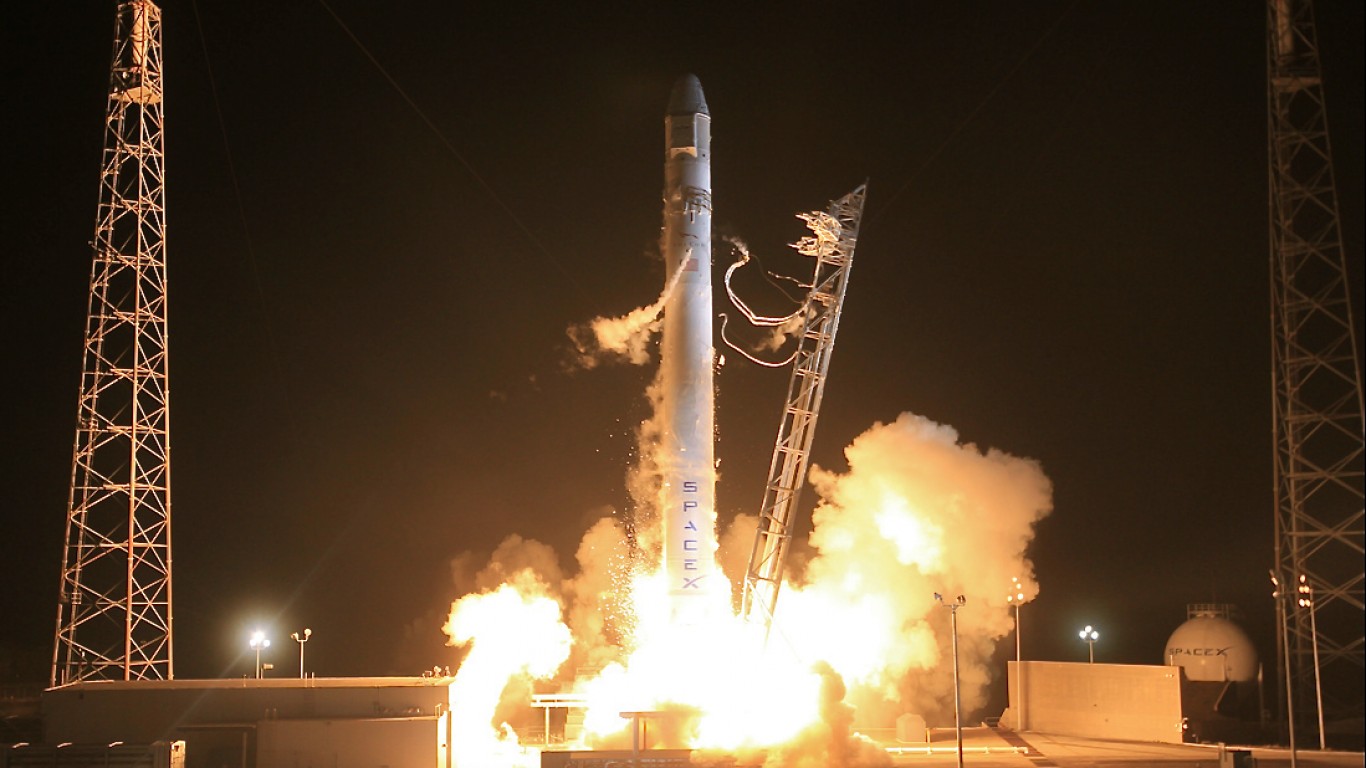
Elon Musk’s SpaceX (NASDAQ:SPCX | SPCX Price Prediction) has spent at least $15 billion developing Starship, according to Reuters. Tonight, the company plans to attempt something no orbital launch system has accomplished: recover both stages of its giant rocket.
The implications extend well beyond an impressive landing.
A $15 Billion Investment Faces Its Biggest Test
SpaceX’s 15th Starship test flight is scheduled for today, Nov. 13, during a 75-minute launch window beginning at 5:45 p.m. Eastern, pending regulatory approval.
The mission has two recovery targets:
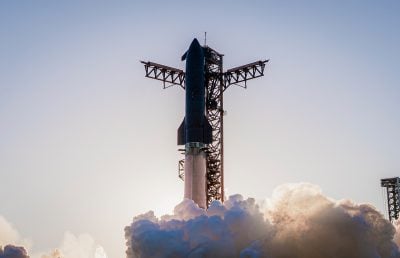
- First, SpaceX will attempt to catch the Super Heavy booster using mechanical arms attached to its launch tower in Texas, approximately six-and-a-half minutes after liftoff. Then comes the harder part.
- The Starship upper stage will deploy 26 next-generation Starlink satellites, complete roughly 14 orbits, and attempt its own tower catch Saturday afternoon, about 22.5 hours after launch.
SpaceX has previously caught Super Heavy three times. It has never recovered the upper stage this way. If tonight’s mission succeeds, SpaceX will have demonstrated a capability its smaller rockets were never built to achieve.
The company’s previous Starship flight reached orbit and deployed 26 Starlink V3 satellites. Tonight’s mission aims to advance from delivering payloads to recovering the entire launch system.
A successful catch would be a milestone. Repeatedly flying the same hardware with limited refurbishment would be the business breakthrough.
Why Starship Could Transform SpaceX’s Economics
SpaceX already knows the value of reusable rockets. Its Falcon 9 booster returns to Earth while the upper stage is discarded. Starship is designed to recover both. The difference could reshape the economics of satellite launches. Starship is designed to carry more than 100 metric tons to low Earth orbit, over five times Falcon 9’s payload capacity.
More cargo per flight, combined with reusable hardware, could lower the cost of placing each satellite in orbit. That’s important because SpaceX isn’t building Starship merely to compete for launch contracts. It’s building a delivery system for its own growing businesses.
Starlink now serves more than 13 million customers across over 170 countries, according to Barron’s. Its third-quarter earnings before interest, taxes, depreciation, and amortization reached approximately $3.5 billion, up from $1.9 billion a year earlier.
The next generation of Starlink satellites promises more network capacity. Starship could deploy that capacity faster while reducing the launch expense required to support it. That creates an advantage competitors can’t easily copy: SpaceX owns both the rockets and the satellite network generating demand for them.
The Bigger Opportunity Beyond Starlink
Musk also envisions using Starship to deploy orbital AI data centers, adding another potential source of demand for frequent, heavy-lift launches. But that vision requires more than one successful test.
SpaceX must demonstrate reliable recovery, rapid refurbishment, and repeated flights. It also needs regulatory approval to increase launch frequency. The Federal Aviation Administration currently permits 25 annual Starship launches from Starbase, while SpaceX has proposed increasing that to as many as 456.
The company has already demonstrated how reusability can support its launch business. Starship would extend that approach to a much larger vehicle.
Granted, a successful landing doesn’t establish the cost of refurbishment or prove Starship can fly economically every week. A failed recovery wouldn’t erase the progress already made, either.
Key Takeaway
In short, tonight’s Starship flight is about more than recovering a $15 billion development investment. It’s about proving the technology behind SpaceX’s next stage of growth.
For investors, the most important result won’t simply be whether both stages return safely. It will be how quickly SpaceX can inspect, refurbish, and fly them again.
A successful double catch would strengthen the company’s long-term investment case. But with Starship’s commercial economics still unproven, shareholders should view tonight as a major milestone — not the final verdict on SpaceX stock.
Contact [email protected] for any questions or corrections.
After two decades of patrolling the dark corners of suburbia as a police officer, Rich Duprey hung up his badge and gun to begin writing full time about stocks and investing. For the past 20 years, he’s been cruising the markets looking for companies to lock up as long-term holdings in a portfolio while writing extensively on the broad sectors of consumer goods, technology, and industrials. Because his experience isn’t from the typical financial analyst track, Rich is able to break down complex topics into understandable and useful action points for the average investor. His writings have appeared on The Motley Fool, InvestorPlace, Yahoo! Finance, Money Morning, and, of course, 24/7 Wall St. He has been featured in both U.S. and international publications, including MarketWatch, Financial Times, Forbes, Fast Company, and USA Today.