Cathie Wood Buys Archer, Down More Than 40% in 2026. Is Joby the Better Air Taxi Bet?

This post may contain links from our sponsors and affiliates, and Flywheel Publishing may receive compensation for actions taken through them.

Cathie Wood’s Ark Invest added to Archer Aviation (NYSE:ACHR | ACHR Price Prediction) on Thursday, Nov. 12, according to the Motley Fool, which said the stock had fallen 42% in 2026 through that day’s close. The fall has gotten worse since then. Live price data show Archer down 51.33% year to date at $3.66, including a 9.31% drop this morning. Our Nov. 12 coverage described it as Ark’s second straight day of buying. According to its 13F, Ark held 33,822,169 Archer shares as of Sept. 30, 2026. The Motley Fool gave no share count or dollar amount for the November purchase.
Ark’s purchase raises an obvious comparison with Joby Aviation (NYSE:JOBY), Archer’s closest U.S. rival.
Archer Still Has to Fly Its Transition
Hanneke Weitering of Aviation International News (AIN) reported that Archer lost $274.6 million[1] in the third quarter on $5.1 million in revenue. Weitering also reported that Archer ended the quarter with $1.35 billion[1] in cash and short-term investments after its balance fell by $207 million, per AIN. The revenue came from electric engine deliveries to Anduril and from airport services and leasing at Hawthorne, as Archer’s third-quarter 8-K shows.

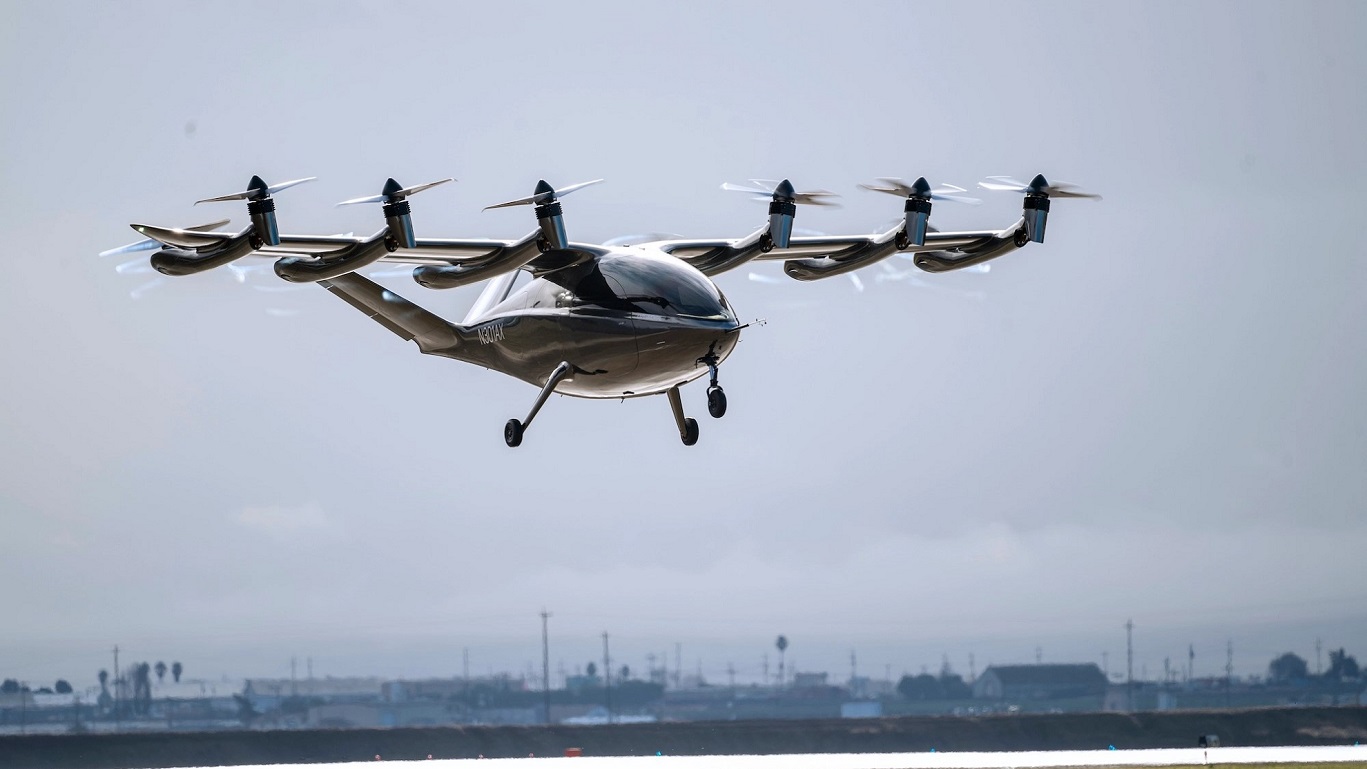
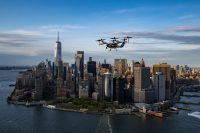
Archer’s Midnight is an eVTOL (electric vertical takeoff and landing aircraft). It is a battery-powered air taxi that lifts off like a helicopter and cruises on its wing like a plane. Per the Motley Fool, it takes a pilot plus four passengers and travels 100 miles between charges.
Archer has yet to complete its first piloted transition, the switch from hover to wing-borne flight. Joby completed that step in April 2025. On the earnings call, Archer’s Benjamin Lyon said, “We’re on track for the end of this year.”[2] After that, Benjamin Lyon said, Midnight must log 50 hours[1] of flight testing before Archer can seek approval for vertical flights. AIN reported that CEO Adam Goldstein told investors he plans to be Midnight’s first passenger in 2027[2].
Archer is also buying Wisk, Insitu and SkyGrid from Boeing (NYSE:BA) in an all-stock deal, and Archer Aviation says Insitu generates more than $200 million[1] in annual revenue. Because the deal is all stock, Archer will issue new shares to pay for it, and Boeing is set to become its largest shareholder.

Joby’s Revenue Comes Mostly From Helicopters
Hanneke Weitering reported that Joby lost $211.8 million[1] on $55.1 million in revenue, $53.2 million of which came from its Blade helicopter service. Joby used $195 million[1] during the quarter, Weitering added, and ended it with $2.2 billion in cash and short-term investments, per AIN.

Revenue beat the $40.4 million consensus. TIKR (via Yahoo Finance) reported that Joby raised its 2026 outlook to $135 million to $140 million, up from $115 million to $125 million. TIKR also reported 1.01 billion shares outstanding at Sept. 30, up from 784.2 million at the end of 2024, and a cash burn of about $200 million a quarter that is funded partly by share sales. Joby Aviation is buying Resonant Sciences for $500 million[1] and says the defense firm generated more than $100 million in revenue over the past 12 months. Neither company has takes a paying air taxi passenger.

Both Companies Now Point to 2027
Both companies once targeted 2025 for passenger service. Joby’s latest SEC filing still lists 2026 for first passengers. However, CFO Rodrigo Brumana placed the “initial launch of commercial operations” under the FAA’s pilot program in 2027. Chief policy officer Greg Bowles said, “Commercial flights under eIPP will be tied to substantial TIA flight testing.”[3]
The eIPP is the White House-backed eVTOL Integration Pilot Program, which lets operators fly in cities before full certification. TIA (Type Inspection Authorization) is the stage where FAA pilots fly the aircraft themselves for certification credit. Joby expects FAA pilot training and its own pre-TIA flight testing in the first half of 2027[4]. Bowles said TIA testing takes between six and 18 months[3].
Cash, Cash Use and Stock Performance Compared
| Metric | Archer | Joby |
|---|---|---|
| Cash and short-term investments, Q3 end | $1.35 billion[1] (AIN) | $2.2 billion[1] (AIN) |
| Q3 cash fall or use | $207 million[1] (AIN) | $195 million[1] (AIN) |
| 2026 stock performance (live) | -51.33% | -63.94% |
These numbers will shift. Archer’s Boeing deal, Joby’s Resonant purchase and Joby’s continuing share sales would all change both the cash positions and how many shares are outstanding.
What Each Company Has to Prove Next
Joby leads on flight testing and holds more cash. Its stock has also fallen harder this year, nearly all its revenue comes from helicopters, and its share count continues rising. Archer has Ark’s backing and a lower share price after its slide. Per Lyon, it still has to complete the piloted transition and then log 50 hours of flight testing.
For Joby, the next milestones are FAA pilot training and the start of TIA. For Archer, they are the transition flight and closing the Boeing deal. Past stock moves and company timelines do not forecast what comes next. Both companies have already pushed back their passenger launch dates once.
Contact [email protected] for any questions or corrections.
AJ spent 10 years writing about financial markets at The Motley Fool. His coverage centers on technology stocks and the broader macroeconomic trends, from interest rates to geopolitics, that shape where markets are headed next. AJ is drawn to the stories where big-picture economics and individual companies collide.