Bill Ackman Just Sold 35% of His Microsoft Stake

This post may contain links from our sponsors and affiliates, and Flywheel Publishing may receive compensation for actions taken through them.
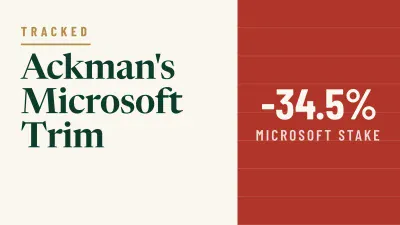
Pershing Square Inc. (NYSE:PS) held 4,064,779 Microsoft (NASDAQ:MSFT | MSFT Price Prediction) shares on September 30, 2026. On June 30, it held 6,206,730 shares. The figures come from its Form 13F, the quarterly holdings report that large managers file with the SEC. Pershing filed it on November 16, 2026, the deadline for third-quarter reports.
That works out to 2,141,951 fewer shares, a 34.5% cut. It reverses the prior quarter, when Pershing added about 553,000 shares.
Microsoft closed November 16 at $517.99, down 1.12%. One fund’s filing can’t account for such a small move in a company with a $3.85 trillion market value. Pershing Square’s own stock closed higher at $45.68.

When the stake became public on May 15, 2026, Bill Ackman, who runs Pershing, called Microsoft’s valuation “highly compelling.” The stock then gained 37.5% between June 30 and September 30, the same quarter in which Pershing reduced the position.
What the 13F Shows
A 13F lists what a fund held on the last day of the quarter. It shows no trade dates or sale prices, and it says nothing about what Pershing has done since September 30.
The filing gave no reason for the cut. Pershing’s third-quarter release lists reliance on Bill Ackman’s X account for Regulation FD disclosures[1] as a risk factor. If an explanation comes, it will most likely appear on that account.
As of September 30, the remaining stake was worth $2.085 billion. That made Microsoft the No. 3 stock holding, about $30 million ahead of Meta Platforms (NASDAQ:META).
The filing totals $30.80 billion across 16 positions. However, $10.31 billion of that is Pershing Square Inc.’s own stock. Leave those shares out, and the stock portfolio is about $20.5 billion.
Why Microsoft Barely Feels It but PS Holders Do
At the November 16 close, the shares Pershing no longer holds would be worth about $1.11 billion. That is a tiny fraction of Microsoft’s market value.
Ackman started buying after the stock fell on slower cloud growth and heavier spending. Cloud growth has since sped up. In the quarter ended September 30, Azure grew 48%,[2] and Microsoft Cloud grew 30%. Commercial remaining performance obligations, meaning revenue under contract that Microsoft hasn’t yet recognized, reached $677 billion[2].

Spending kept rising too. Property and equipment additions were $39.37 billion[2], compared with $19.39 billion a year earlier. Management expects about $170 billion[3] in capital spending for the calendar year.
Pershing Square Inc. makes fees from the funds that own Microsoft. Third-quarter revenue came in at $56.60 million[1], short of the $75.47 million estimate, and it makes no performance fees. The stock is also below its $55.94 close on September 30.
Profit-Taking or Fading Conviction?
One reading is profit-taking. A quarterly run that big expands any position, and Pershing trimmed Microsoft instead of selling out, so it remains near the top of the portfolio.
The other reading is fading confidence, and the speed of the reversal supports it. In the same quarter, Pershing raised its Netflix (NASDAQ:NFLX) stake 18% to 15,412,744 shares and cut Meta 11%. That rotation suggests Ackman’s confidence has moved elsewhere.
What Microsoft’s Numbers Say for Investors
Microsoft’s fundamentals remain strong. It trades at 29 times earnings, revenue grew 18.8%,[2] and management expects Azure to grow 49% to 50%[3] in the fiscal second quarter.
Pershing Square Inc. offers a less direct way to track Ackman. It is a fee business that missed revenue estimates, plus indirect exposure to a Microsoft stake that just got smaller.

The biggest risk is that spending grows faster than the returns it produces. That makes the capital spending numbers more important to Microsoft holders than any 13F. All that capex has to be powered, cooled, and networked by someone, and we pulled together seven of those suppliers in a free AI infrastructure report.
In Microsoft’s next quarterly report, Azure growth below 49% would weaken the growth case. Pershing’s next 13F, due February 16, 2027, will show whether it kept cutting.
Contact [email protected] for any questions or corrections.
Omor Ibne Ehsan is a writer at 24/7 Wall St. He is a self-taught investor with a focus on growth, cyclical, and dividend equities that have strong fundamentals, value, and long-term potential. He also has an interest in high-risk, high-reward investments such as penny stocks.