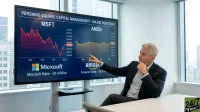
Bill Ackman Is Piling In Again — Pershing Square’s Newest Big Bet
Bill Ackman just placed two massive bets on mega-cap tech stocks that the broader market has been punishing, and his reasoning reveals a sharp disagreement with Wall Street about where AI growth is actually headed.

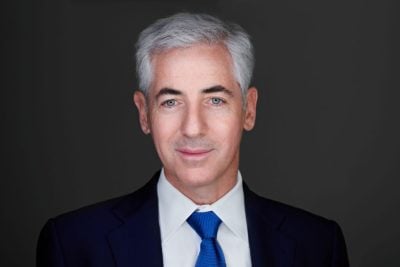
Bill Ackman’s Pershing Square Capital Management began accumulating Microsoft (NASDAQ:MSFT | MSFT Price Prediction) shares in February 2026 after the stock slid on its fiscal second-quarter report. Impressively, Akman has since built the stake to roughly $2.4 billion by the end of May 2026, funded in part by trimming his Alphabet (NASDAQ:GOOG) position.
Ackman disclosed the position in a lengthy post on X ahead of Pershing Square’s quarterly 13F filing, describing Microsoft as a “core holding.” Separately, Fortune reported on June 25, 2026 that Pershing Square has been building an Amazon (NASDAQ:AMZN) stake from scratch since roughly mid-2025, and that the roughly $2.4 billion position is now the firm’s second-largest holding.
What Ackman Bought, and Why It Matters
Two mega-cap tech names now sit near the top of a portfolio historically built on concentrated, activist-flavored positions in consumer and real estate names. The Microsoft entry was timed to weakness, with MSFT stock trading right around $392 per share (down roughly 20% on a year-to-date basis), and well below its 200-day moving average of $444.22. Ackman’s public rationale is that Microsoft stock had de-rated to about 21x forward earnings on what he framed as overblown fears about Azure durability and Microsoft’s competitive position in AI.

The Amazon thesis is a valuation-plus-AI story. The company’s core profit center (AWS) grew 28% year over year in the March quarter, its fastest growth in 15 quarters, on a 37.7% operating margin. Amazon’s custom Trainium and Graviton silicon crossed a $20 billion annual run rate, and the company has locked in landmark commitments for up to 2GW of Trainium capacity for OpenAI and 5GW for Anthropic.
Ackman is far from alone here. Other notable billionaires and hedge funds including David Tepper, Seth Klarman, Al Gore’s Generation Investment Management, and Sanders Capital have been accumulating Amazon in recent filings.
The Underlying Thesis
Both trades share a common structure. That is, buy a dominant AI beneficiary after the market has punished it for spending too aggressively on that same AI opportunity.
Microsoft posted EPS of $4.27 versus $4.07 estimated, revenue of $82.89 billion (+18.3% YoY), Azure growth of 40%, an AI business at a $37 billion run rate (+123% YoY), and commercial RPO of $627 billion (+99% YoY). Capex hit $30.88 billion, up 84%, and that spending, rather than the demand backlog, is what compressed the multiple.
On the other hand, Amazon’s Q1 EPS of $2.78 versus $1.73 estimated and planned 2026 capex near $200 billion tell the same story.

Should Retirement Investors Follow?
This is a defensible follow for a retirement-focused investor, with caveats. Ackman is buying quality on a drawdown rather than a distressed turnaround. Microsoft carries an operating margin of 45.6%, ROE of 33.28%, and a forward P/E near 20, with 54 buy or strong-buy ratings against 3 holds. Amazon offers 22.29% ROE and AWS-driven operating leverage. For a curated view of how professional money is positioning around AI infrastructure, our research team’s 7 Stocks Powering the AI Boom report frames the broader field.
My take is simply that Ackman’s timing looks reasonable, the fundamentals support the thesis, and both names screen as long-duration compounders. Following at these levels is worth serious consideration, though chasing them 20% higher after a rebound carries a very different risk profile.
Contact [email protected] for any questions or corrections.
Chris MacDonald is a 24/7 Wall St. contributor and long-time contributor to other notable finance publications, including The Motley Fool and InvestorPlace. With an MBA in Finance, and more than a decade of experience in venture capital and the corporate finance world, Chris brings a long-term perspective to his analysis of equities and alternative assets.
His love of investing and focus on finding quality undervalued stocks is complemented by recent research into alternative assets as well. He takes a long-term approach to analyzing companies and cryptos, with a focus on directing the reader to the most sustainable and important catalysts for each respective potential investment.