Warren Buffett Tripled Down on the Stock Bill Ackman Is Selling
Berkshire Hathaway (NYSE:BRK.B), now run by CEO Greg Abel with Warren Buffett serving as chairman, disclosed in Q1 2026 13F filings that it increased its Alphabet stake by more than 200%. Berkshire then continued buying in Q2 2026, including a…


Berkshire Hathaway (NYSE:BRK.B), now run by CEO Greg Abel with Warren Buffett serving as chairman, disclosed in Q1 2026 13F filings that it increased its Alphabet stake by more than 200%, bringing its holding to roughly 54 million shares. That was only the beginning. In Q2 2026, Berkshire added another roughly $17 billion in Alphabet (NASDAQ:GOOGL | GOOGL Price Prediction) shares, including a $10 billion private placement as part of Alphabet’s $80 billion capital raise, pushing the combined stake to approximately $41 billion and vaulting the Google parent into Berkshire’s fourth-largest equity holding.
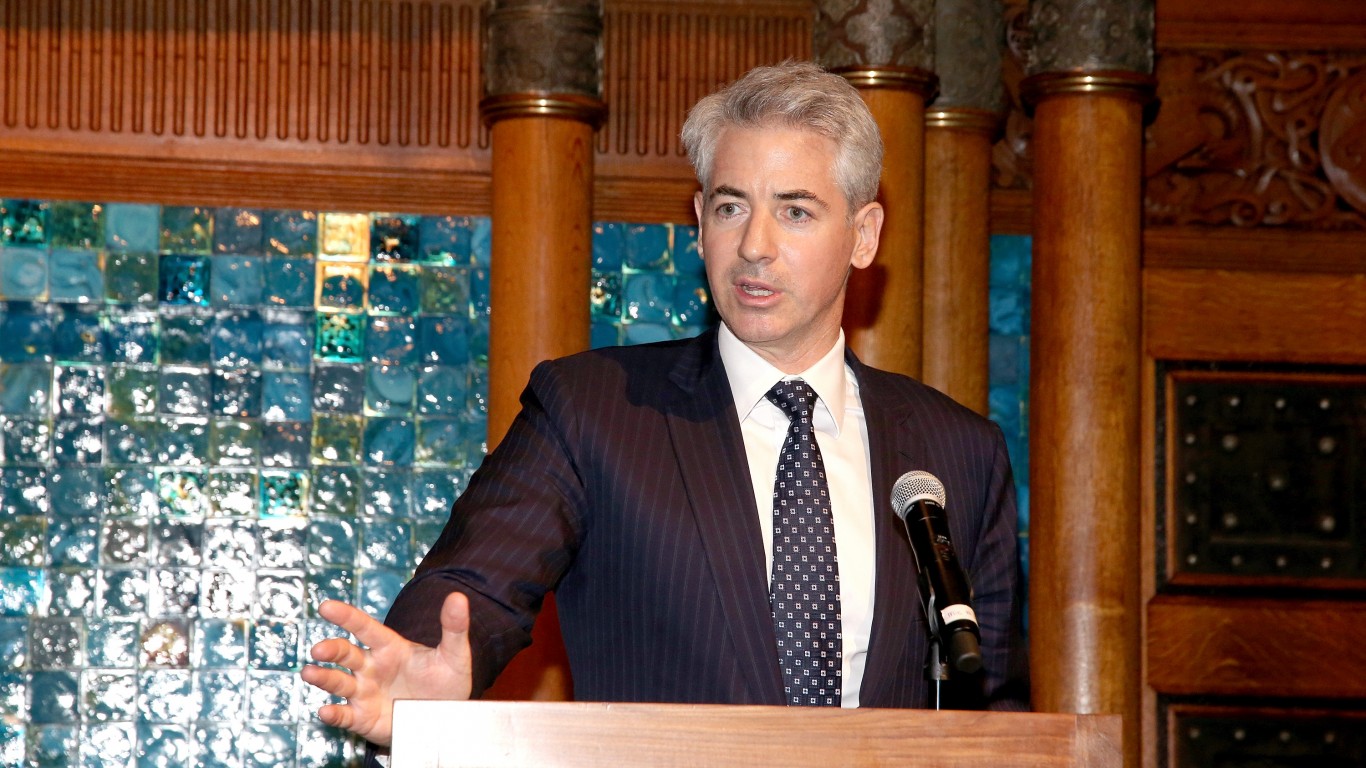
Notably, Buffett revealed in a post-Q1 interview that he personally initiated the Alphabet position, not Abel, putting the trade squarely in Buffett’s own column despite the leadership transition. In the same Q1 window, Bill Ackman’s Pershing Square reduced its Alphabet position by 95% and reallocated into Microsoft (NASDAQ:MSFT), later completing a full exit. Ray Dalio’s Bridgewater bought alongside Berkshire, while Trump and Pelosi both disclosed early-2026 purchases of Alphabet. The smart money fractured sharply over the same stock.
Why Berkshire kept buying Alphabet
The operating case for Alphabet is concrete. Q1 2026 results showed EPS of $5.11 against a $2.63 consensus, revenue of $109.90 billion (up 21.8% year over year), and Google Cloud revenue of $20.03 billion (up 63%). Cloud backlog nearly doubled quarter over quarter to more than $460 billion. That backlog figure is contracted future demand, not a projection, and it dwarfs anything Alphabet had previously reported on this metric.
Q2 2026 added fresh momentum: revenue rose to $119.80 billion, up 24% year over year, with the Google Cloud backlog expanding further to $514 billion. Valuation has also compressed. Alphabet now trades at a trailing P/E of roughly 18x, a steep discount to the 28x multiple cited when the Q1 13F first drew attention, with an analyst consensus target of approximately $425. Sundar Pichai’s framing at Q1 earnings was characteristically measured: “Our AI investments and full stack approach are lighting up every part of the business.” Berkshire bought a compounder at a contracting multiple, and then kept buying.
Ackman’s pivot to Microsoft
Ackman’s exit from Alphabet should be read as a reallocation, not a thesis-breaking sell signal. He described the move on social media as a “tactical reallocation” and was explicit that he remains bullish on Alphabet’s competitive moat long term. His fund built a position of roughly 5.65 million Microsoft shares during Q1 2026, worth about $2.1 billion at quarter-end, funded by the Alphabet sale. By June 30, Pershing Square had grown that Microsoft stake to more than 6.2 million shares worth approximately $2.3 billion, making it a core holding in both Pershing Square Holdings and its newly launched Pershing Square USA fund.
The timing proved sharp. Microsoft was trading around $379 when Ackman built the position, roughly 26% below its July 2025 peak. The stock has since recovered to approximately $535. The Microsoft fundamental picture supported the entry: Q3 FY2026 results showed an AI business annual revenue run rate of $37 billion (up 123% year over year), Azure growth of 40%, and commercial remaining performance obligations of $627 billion (up 99%). The full FY2026 results were even stronger, with Azure crossing $100 billion in annual revenue for the first time and cloud revenue reaching $59.3 billion in Q4 alone. The restructured OpenAI partnership gives Microsoft a roughly 27% stake worth approximately $135 billion at the restructuring valuation, with IP rights locked in through 2032. Analyst consensus on Microsoft currently sits around $588, with 56 analysts rating it a Strong Buy.
What the divergence actually signals
Both positions are bets on AI infrastructure economics. The disagreement is about which company captures more of the margin. Berkshire’s wager is that Alphabet’s planned 2026 capital expenditure in the range of $175 to $185 billion translates into durable cloud market share at a price the market still treats with skepticism. Ackman’s wager is that Microsoft’s enterprise distribution, anchored by Microsoft 365’s deep workflow integration across large organizations, converts AI workloads into recurring revenue faster than any other platform.
The honest framing for a retirement-focused investor is that neither trade makes sense to copy without understanding the thesis behind it. Following Berkshire into Alphabet makes sense if you believe cloud backlog is a real forward signal and the antitrust overhang is already priced in. Following Ackman into Microsoft makes sense if you believe enterprise AI monetization has been mispriced relative to Azure’s trajectory. The institutions running these positions have different time horizons, cost bases, and concentration tolerances than most individuals. Sizing to your own situation matters far more than picking a winner in someone else’s argument.
Editor’s note: This article has been updated to reflect Berkshire Hathaway’s Q2 2026 Alphabet purchases, which brought the total stake to approximately $41 billion and confirmed it as Berkshire’s fourth-largest holding; Warren Buffett’s disclosure that he personally initiated the position; Alphabet’s updated trailing P/E of roughly 18x and analyst consensus target of approximately $425; Microsoft’s recovery to approximately $535 from its earlier lows; and the completion of Pershing Square’s full exit from Alphabet by mid-2026.
Contact [email protected] for any questions or corrections.
Omor Ibne Ehsan is a writer at 24/7 Wall St. He is a self-taught investor with a focus on growth, cyclical, and dividend equities that have strong fundamentals, value, and long-term potential. He also has an interest in high-risk, high-reward investments such as penny stocks.